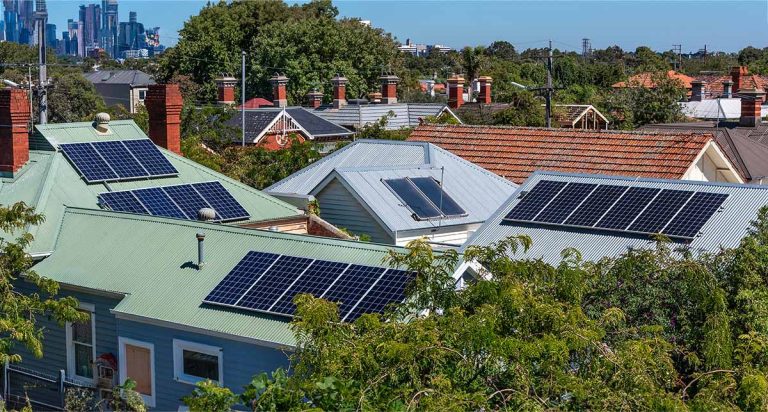
ACAP Secures Funding for Ultra-Low Cost Solar Research
The University of New South Wales-led Australian Centre for Advanced Photovoltaics (ACAP) has received an extension of federal funding for an additional six years, ensuring the continuation of its pioneering research into foundational solar photovoltaic (PV) technologies and ultra-low cost solar energy solutions.
This week, the Australian Renewable Energy Agency (Arena) announced the funding extension until 2032, which will support a national research initiative valued at $220 million, backed by co-investment from ACAP’s seven partner universities and various industry stakeholders.
Funding for Future Breakthroughs
The annual funding of $7 million will provide the necessary long-term stability to drive forward significant advancements in solar technology, aiming to make solar power even cheaper, more durable, and scalable. This is all part of strengthening Australia’s commitment to the global renewable energy transition.
“Solar is still a relatively young technology with plenty of room for improvement,” stated Professor Renate Egan, ACAP’s executive director, in a recent statement. “Arena’s substantial investment is crucial for our future developments—much like the breakthroughs of the 1980s set the stage for today’s solar industry, the research we pursue now will be fundamental to the energy landscape of the 2030s and 2040s.”
“Our focus with ACAP 3.0 is on driving down costs while enhancing performance, durability, and sustainability. This will enable solar technology to meet the multi-terawatt demand necessary for a prosperous net-zero future for Australia,” Egan added.
A Legacy of Solar Research
According to Darren Miller, CEO of Arena, this renewed commitment to solar research and development in Australia fosters a legacy that began in the 1970s and has since positioned solar as the fastest-growing energy technology. “Australia hosts some of the world’s leading solar researchers, and ACAP has been pivotal in transforming this expertise into internationally recognised breakthroughs,” he remarked.
Miller stressed that this extension ensures Australia remains at the forefront of solar innovation, reducing production costs of next-generation technologies and facilitating the nation’s transition to cleaner energy.
Collaboration and Innovation
Founded in 2013 with support from Arena and spearheaded by UNSW Sydney, ACAP unites institutions such as the Australian National University, CSIRO, University of Melbourne, Monash University, University of Queensland, and University of Sydney alongside industry partners and global manufacturers.
Reflecting on ACAP’s rich history, Egan highlighted the contributions of Professor Martin Green and his team at UNSW, whose advancements in high-efficiency silicon solar cells laid the groundwork for the modern PV manufacturing sector. “This legacy continues through ACAP’s close connections with global manufacturers and our leading researchers, facilitating rapid translation of innovations into real-world applications,” she noted.
Notable advancements supported by ACAP include SunDrive’s copper-based solar cells and Hello Again Solar’s patented chemical-free solar panel recycling technology, showcasing the direct commercial potential that stems from Australian research.
“Additionally, Lab 360 Solar is gaining recognition for its innovative drone-based daylight photoluminescence imaging of solar farms, which provides precise diagnostics,” Egan explained. “Our investigations into silicon materials and defect control at ANU are paving clearer paths for manufacturers towards improved efficiency and yield.”
“Moreover, our research at UNSW focusing on field performance and reliability, including issues related to corrosion and UV-induced degradation in TOPCon technologies, is shaping industry testing standards and design strategies, assuring long-term performance for solar modules in real-world conditions,” she concluded.
“These advancements are firmly supported by the robust skill set fostered through ACAP.”