The Key Role of EVs in Australia’s Energy Transition
In Australia, home batteries, electrification, and electric vehicles (EVs) are coalescing to transform residential energy consumption, positioning households as significant contributors to the nation’s energy transition.
After igniting a boom in rooftop solar installations, Australia is ready for its next phase with the increased adoption of both utility-scale and household batteries.
Significant Growth in Battery Capacity
During the June quarter, the National Electricity Market (NEM) saw the commissioning of fourteen new generation and storage projects, producing a total output of 3.9 gigawatts (GW). Home battery capacity expanded by 3,283 megawatt-hours (MWh), marking a 41 per cent increase. The grid-scale battery capacity surpassed 9 GW as of June 30, more than doubling within a year.
The Cheaper Home Batteries scheme recently reached a milestone of 500,000 installations since its launch in July 2025.
Insights from Energy Consumers Australia
In a recent discussion with Energy Consumers Australia (ECA) general manager for advocacy and policy, Brian Spak, insights were shared regarding the current trends impacting consumer energy resources (CER).
Spak referred to a newly completed ECA survey, stating, “It’s encouraging to see the government’s funding aimed at increasing household battery uptake, which has clearly resonated with many consumers.” He noted that interest in battery ownership was evident before and after the introduction of the rebate programme, although the overall interest in batteries among the wider population has not significantly changed. “This implies that a little over half of Australian households are not researching or contemplating battery purchases.”
Benefits of Home Batteries
Spak highlighted the advantages of increased battery adoption, emphasising that a grid supported by more behind-the-meter batteries creates a robust foundation for the electricity system. “Home batteries can often provide greater benefits than larger transmission-level batteries,” he remarked. “They enable households to secure their own backup power while addressing issues faced by Distribution Network Service Providers (DNSPs) and Transmission Network Service Providers (TNSPs).”
By supplying power directly to the household, home batteries can mitigate electricity flow through local distribution lines during peak times, ultimately alleviating congestion in residential networks. Furthermore, when connected with other households, these batteries can collectively reduce demand on the grid and assist in balancing supply and demand at wholesale levels.
Rooftop Solar’s Pivotal Role
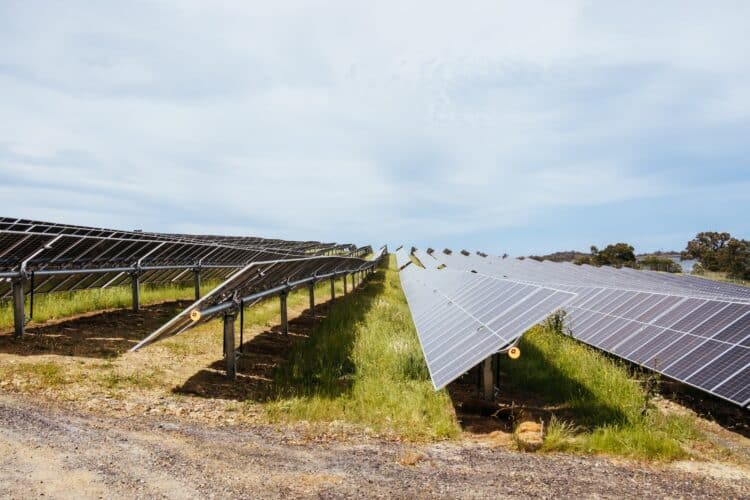
The importance of rooftop solar energy in Australia cannot be overlooked, with reports indicating that it powered South Australia’s entire grid for a period on March 8, 2026, marking the 18th instance of this happening since September 16, 2023.
Spak also noted that households can play a vital role in the overall energy transition. “This process is vast, necessitating the integration of various new technologies while simultaneously addressing two key tasks. While Australian consumers are essential in adopting renewable energy, they must also embrace the shift towards electrification.”
Understanding the Energy Transition
However, Spak remarked on a prevailing disconnect, with only a minority of households grasping their multi-faceted role in this transition. “Despite over 60 per cent of households expressing support for the energy transition, merely 21 per cent claim to know what it signifies for them.” He cautioned that not replacing gas water heaters with electric systems could lead to significant financial surprises as gas bills increase due to the transition away from this energy source.
New legislation in Victoria mandates that from January 1, 2027, all new homes and commercial buildings must be fully electrified. Additionally, any gas hot water systems that fail after March 1 of next year must be replaced with electric alternatives. Sydney has adopted a similar policy for new residential developments as of this year.
Encouraging Consumer Participation
Despite these initiatives, Spak believes further support is necessary for “the stars of the show.” He stated, “Consumers are the key players in the energy transition, yet to encourage their participation, we need additional incentives, similar to those offered through the Cheaper Home Batteries programme.”
The ECA commissioned CSIRO to create FlexCost, a recent study comparing costs for demand-side resources, such as home batteries, EVs, and heat pumps. While CSIRO’s GenCost study focuses on optimal energy supply mixes, FlexCost provides insights on unit costs for demand flexibility and energy efficiency options, particularly for residential and small businesses.
The Impact of Electric Vehicles
According to Spak, electric vehicles will play a crucial role in the energy transition, not only due to their lower operational and maintenance costs but also because they assist in the efficient functioning of the electricity network and help reduce costs for other consumers. ECA research indicates that Australia’s collective EV fleet could save households over $100 annually today, rising to $500 by 2050.
Spak asserts, “EVs are advantageous for households that own them, as well as those that do not. They support the electricity grid, enhance environmental sustainability, and improve national security amid the ongoing fuel crisis.”
EV Charging Infrastructure Challenges
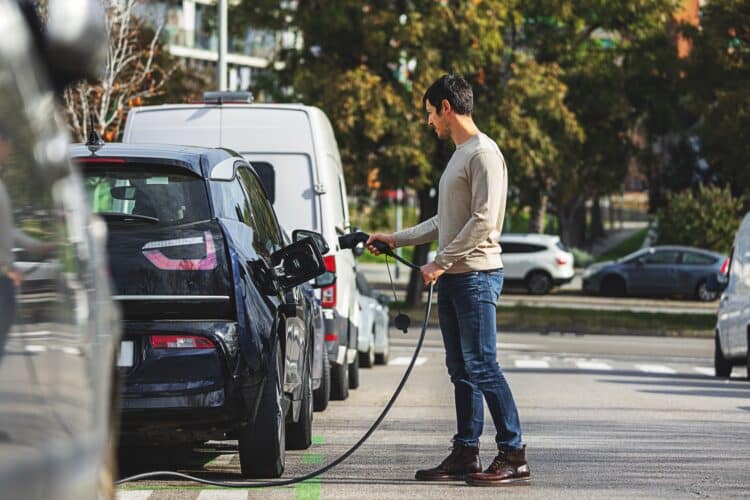
However, Spak emphasised the need for improved EV charging infrastructure, citing findings from the International Energy Agency which indicate Australia has one of the lowest public EV charging deployments globally. “For those without off-street parking or apartment access to charging facilities, owning an EV can be challenging,” he explained, advocating for kerbside charging solutions.
Initiatives in Victoria, including a partnership between RACV and kerbside charging manufacturers, aim to facilitate this, while the NSW Government’s Electric Vehicle Kerbside Charging Program has allocated $6.9 million for 1,000 kerbside charging ports across the state.
Research on Charging Behaviour
Research funded by ECA and conducted by the University of New South Wales (UNSW) uncovered insights into the behavioural drivers behind charging technology, observing usage patterns in a kerbside charging network in Sydney. The study revealed that chargers near shops and apartments enjoyed the highest utilisation, provided signs were in place to limit parking to actively charging vehicles.
Despite this progress, challenges remain due to restrictive Australian regulations regarding kerbside installations. Recently, Energy Networks Australia (ENA) submitted a proposal to the Australian Energy Market Commission to enable regulated networks to install and maintain kerbside chargers, which was previously unfeasible.
ENA’s CEO, Dominique van den Berg, noted that the lack of accessible public charging infrastructure is deterring consumers from switching to electric vehicles, suggesting a “chicken or egg” scenario. “Without sufficient chargers, the transition to EVs is hindered. Conversely, without enough EVs on the market, investment in charging remains stagnant.”
Spak echoed this sentiment, advocating for targeted public investment in areas where market gaps exist. He concluded that with the current energy crisis underscoring the benefits of electrification, it’s essential to accelerate the development of EVs and charging infrastructure.
As home batteries, electrification, and EVs interconnect within a consumer-driven energy landscape, ECA and its industry partners are working to enhance consumer awareness, infrastructure, and policy support to ensure all households can benefit from these innovations.