244-Tonne Transformer Arrives at New England Solar Site
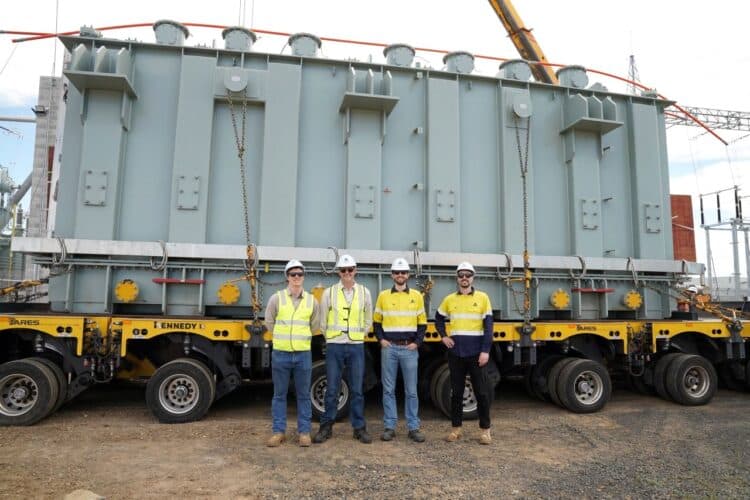
A hefty transformer weighing 244 tonnes has officially arrived at ACEN Australia’s New England Solar site in New South Wales, marking a significant step in the project’s Stage 2 development.
The transformer was transported over a winding 2165km journey from Port Adelaide to the site’s substation. Notably, this transformer stands as the largest and heaviest to be incorporated into the New England Solar project, measuring 11 metres in length and 4.4 metres in height.
Transport Logistics and Coordination
The delivery process for this substantial piece of equipment necessitated an advanced 18-axle modular platform trailer, while a fleet of prime movers managed the lengthy 70-metre convoy.
Ares Group, an Australian heavy haulage specialist, took charge of the planning and execution of the transport operation, ensuring a smooth ride. Concurrently, One Global Logistics handled the shipping logistics and overall delivery coordination.
Currently, installation of the transformer is in progress, paving the way for further advancements in the project.
Transformer’s Role in Solar Energy Transition
This new transformer is crucial for the second phase of the New England Solar venture, with EPEC Group assigned to construct the associated substation.
Power transformers are vital in utility-scale solar projects as they convert the electricity generated by solar panels into higher voltages that are necessary for efficient transmission.
The arrival of this transformer marks a key construction milestone for the project, especially considering the lengthy lead times associated with such equipment. Data from Rystad Energy indicates that the lead time for transformers has now exceeded 12 months for most units, and can reach up to 24 months for the larger variants.
Research Collaborations in Solar and Agriculture
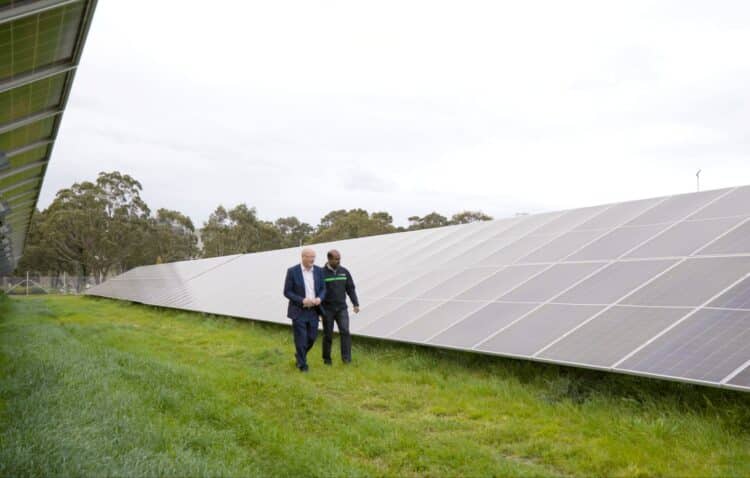
In addition to its primary development goals, New England Solar is actively engaged in research that examines the compatibility of large-scale solar initiatives with agricultural practices. ACEN Australia is collaborating with CSIRO and Macquarie University on a project that aims to utilise satellite imagery and artificial intelligence for enhanced vegetation management across the solar site.
This research explores how to effectively manage bushfire risks while accommodating livestock grazing needs. The objective is to identify an ideal balance in grass length—kept short enough to satisfy insurance and fire services yet maintained at a healthy length for livestock welfare and productivity.