Essential Civil Lessons for Renewable Energy Developers
Investing time in early civil engineering decisions can significantly reduce the risk of expensive redesigns and ensure that battery storage and solar initiatives progress smoothly from their initial concept to actual construction.
CivEng Consulting possesses extensive expertise in the civil and structural engineering factors essential for the success of renewable energy ventures.
Key Lessons from Industry Experience
As consultants working on various Australian battery energy storage systems (BESS), substations, and solar farms, CivEng recognises the pressure that developers face in meeting installation timelines, which often tests civil engineering boundaries.
Here are five crucial lessons derived from decades of experience in the field.
Avoid Early Capacity Fixation
CivEng has observed that many BESS developers tend to pinpoint site boundaries and the megawatt capacity too early in the planning cycle, leading them to maximise the number of batteries to bolster their financial projections.
A civil assessment may later uncover inadequacies regarding access roads, turning circles, drainage systems, earthworks, and other vital considerations. If these challenges aren’t identified and rectified early on, developers may face costly solutions like retaining walls or extended underground drainage systems to meet compliance standards.
“In a previous project, the arrangement of batteries was optimised for maximum output but disregarded the site’s topography,” shared Vincent Kelly, co-founder of CivEng Consulting. “It necessitated a tiered layout with prolonged retaining walls to resolve the issue.”
By prioritising civil works during the design phase, developers can gain insights into the advantages offered by the terrain, allowing them to arrange layouts and platforms in harmony with the natural landscape. This proactive approach also helps integrate civil and electrical layouts more efficiently, reserving routes for direct cabling and positioning electrical hubs to facilitate better logistics and avoid unnecessary rerouting.
The Importance of Early Contractor Involvement
Optimising construction methodologies relies significantly on the choice of the contractor, as different firms may have varied approaches and cost structures for executing similar designs. Early Contractor Involvement (ECI) guarantees that the most suitable civil contractor is selected for the task.
CivEng recently took part in a BESS project where they modelled earthworks and firefighting ponds from the onset, ensuring the project was set up for success. “By understanding how the developer planned to construct the project, we tailored our designs accordingly,” noted Dave Jones, another co-founder of CivEng Consulting. “The developer could then take these estimates to the market for better pricing from civil contractors, clearly understanding their options before finalising anything.”
In contrast, when contractors become involved late—often at the 70-80% design completion mark—the groundwork is largely set, making any changes to the construction plan both problematic and costly.
Aligning Design with Reality
CivEng frequently encounters situations where the construction team adheres too rigidly to 3D designs without aligning them with actual site conditions. “An increasing number of earthworks are being executed purely based on CAD files,” Kelly explained. “If the tangible application of the design is overlooked, discrepancies with the actual site requirements may arise.”
One instance involved inaccurate surveys that failed to account for overland water flow, resulting in a road constructed per model specifications that was ultimately washed away due to water running across it. “This had to be addressed post-construction, leading to unnecessary headaches and costs for the asset owner,” Kelly added. Effective solutions, he argues, should stem from constructive discussions. “Discrepancies between design models and ground realities will persist, but engaging in on-site conversations can clarify design intentions and facilitate appropriate adjustments with contractors.”
Getting the Footing Right
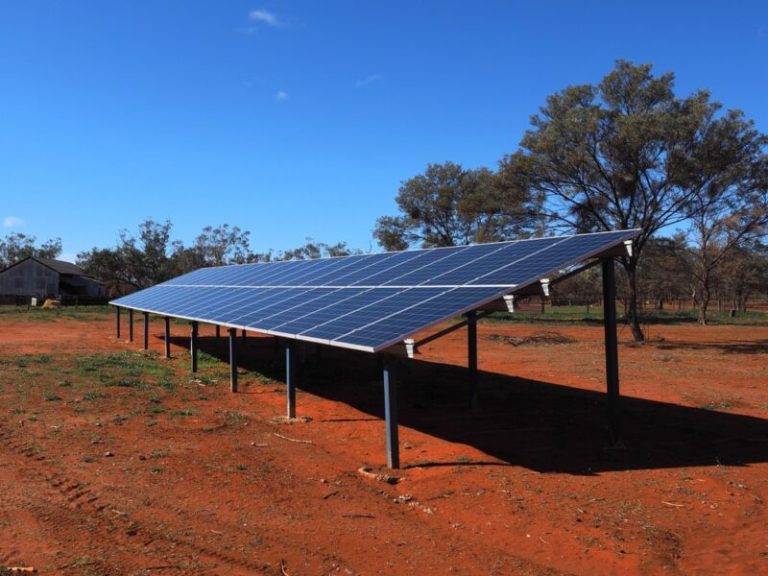
A critical and often misunderstood aspect of battery and solar developments is the foundation choices: from piles to pads, slabs on the ground to bored piers, among others. Determining the ‘correct’ footing isn’t merely an engineering question; it’s also a significant practical decision.
“From the outset, we always ask, ‘What are your footing preferences?’” Kelly noted. “While we can adapt most options, the ideal solution can vary by region and depend on factors such as concrete availability, fabrication capabilities, and the contractors’ expertise.”
However, developers often default to the generic footing designs found in OEM manuals, which are frequently not adapted for specific Australian sites or contractors. “We’ve encountered OEM guides featuring nothing but square blocks, which can misdirect the entire footing strategy,” Kelly cautioned. It is recommended for developers to establish a footing plan early on, with local supply chains and contractor methodologies explicitly considered.
Incorporating Civil Perspectives Early
For any battery or solar initiative, the most impactful engineering work occurs during the concept phase or around the 30% design stage when key elements like layouts, foundation strategies, access routes, and drainage systems remain flexible. Without the early input from civil engineers, crucial determinations regarding these priorities may be deferred or made by default, potentially leading to complications down the line.
Jones recalled a BESS project where his team sought to push for optimized footing solutions early but faced resistance as the developer prioritised project timelines and power purchase agreements over civil considerations. “While this might not seem critical at the beginning, neglecting these decisions for too long can lead to significant complications later on,” he warned. Engaging civil input at the outset allows developers to sidestep expensive modifications as they enter tendering or construction phases, ensuring their design works effectively within the physical site constraints and context.
CivEng Consulting, equipped with a combined 80 years of industry knowledge, is actively leveraging its accumulated wisdom to guide Australian BESS, solar, and substation projects toward lasting success.