Solar Farms Reduce Dust Storms, New Research Shows
A recent study conducted by Chinese researchers has shown that solar farms can significantly help reduce dust pollution affecting major cities, unveiling a surprising bonus of renewable energy initiatives.
Similar to Australia, China has a diverse range of climates and landscapes, prominently featuring the vast Gobi Desert, which extends across parts of northern China and into Mongolia. Spanning approximately 1,295,000 square kilometres, the Gobi is the sixth largest desert globally and is known to produce dust storms that increasingly threaten air quality and public health in northern China. These storms can carry dust into large urban areas, including Beijing.
The Role of Solar Farms in Dust Mitigation
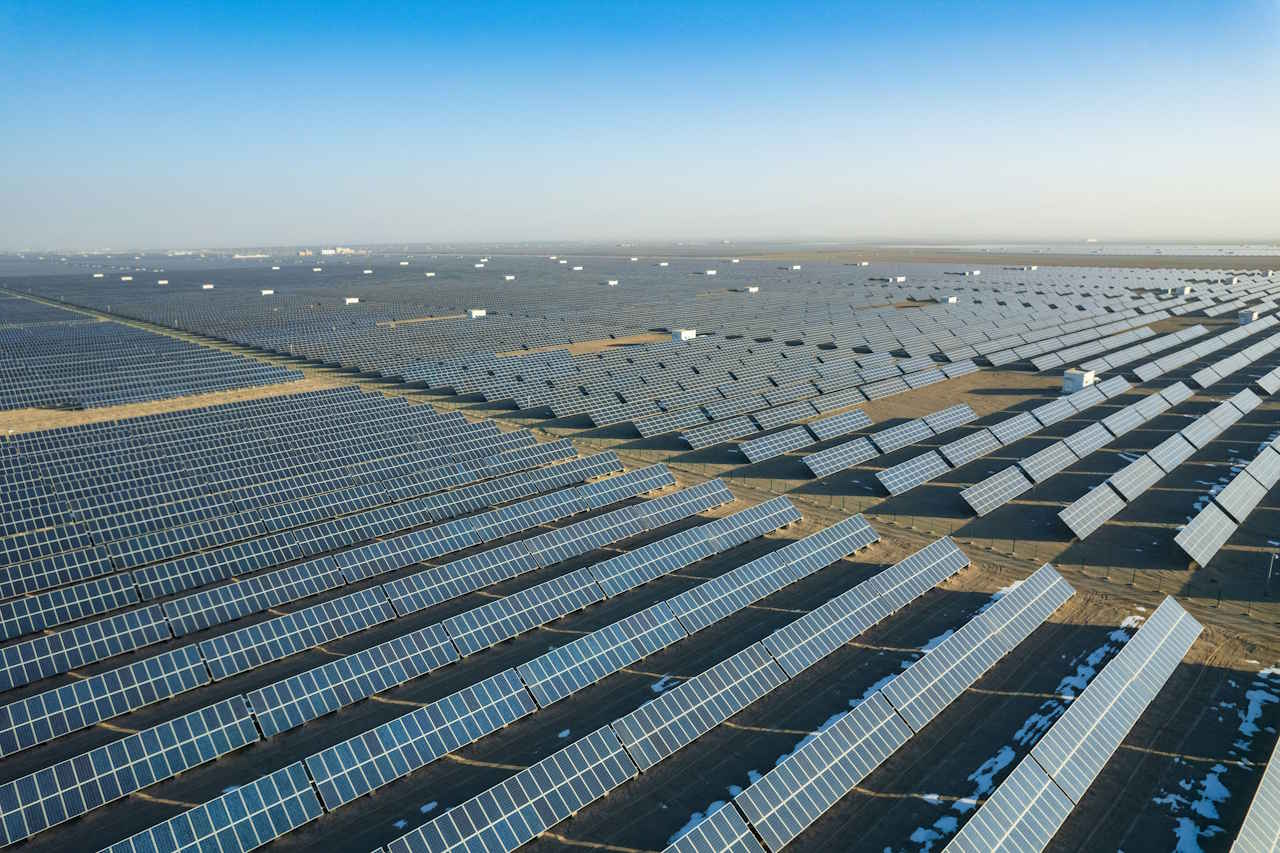
The Gobi Desert has become a significant area for the installation of solar farms, aligning with China’s ambition to achieve net zero emissions by 2060. The focal point of the new study, published in the journal Geophysical Research Letters, is these very solar farms, which have shown a remarkable capacity to reduce dust levels.
The research evaluated 17 of the 42 solar farms identified in the Gobi Desert up to 2020. It found that these solar installations effectively stabilise the surface and can reduce soil erodibility by as much as 17 per cent, thereby directly contributing to lower dust levels in their surroundings.
Meteorological Impacts of Solar Farms
The study also highlighted various meteorological effects that solar farms have, which typically lead to the generation of dust storms across the expansive desert, directing dust towards populous areas. It was noted that the increased surface roughness created by the solar installations diminished near-surface wind speeds within these farms by over 9 per cent.
According to the researchers, “By combining land surface and meteorological impacts, solar farms improve surface stability and aerodynamic resistance, reducing soil erodibility and near-surface wind speeds and consequently lowering Gobi Desert dust emissions by 352.4 kt/month.”
Furthermore, solar farms located along the desert edges function similarly to windbreaks, mitigating near-surface wind speeds from the south and east and promoting low-level atmospheric convergence. This process diminishes the downstream spreading of low-altitude dust particles towards major cities.
The current expansion of solar initiatives in China is already demonstrating tangible reductions in dust levels throughout northern regions. With the nation’s renewed commitment to enhance wind and solar capabilities to 1,200 gigawatts (GW) by 2030, the array of benefits from solar farms is set to increase further.