New Gigawatt-Scale Wind Project Set to Begin Construction Soon
The Australian federal government’s latest renewable energy auction launches on Monday, aiming to secure an additional 5 gigawatts (GW) of wind and solar capacity. This follows the recent selection of 7.9 GW of new capacity announced just days ago.
As part of the Capacity Investment Scheme (CIS), 58 wind and solar projects have already been selected, bringing the total to 18.8 GW, with an additional 1.9 GW sourced from seven projects in the specific Western Australia market.
Growing Project Numbers
If the new auction succeeds in attracting 17 more projects, the total number selected will reach 82, although this does not guarantee the government will meet its renewable energy targets for 2030.
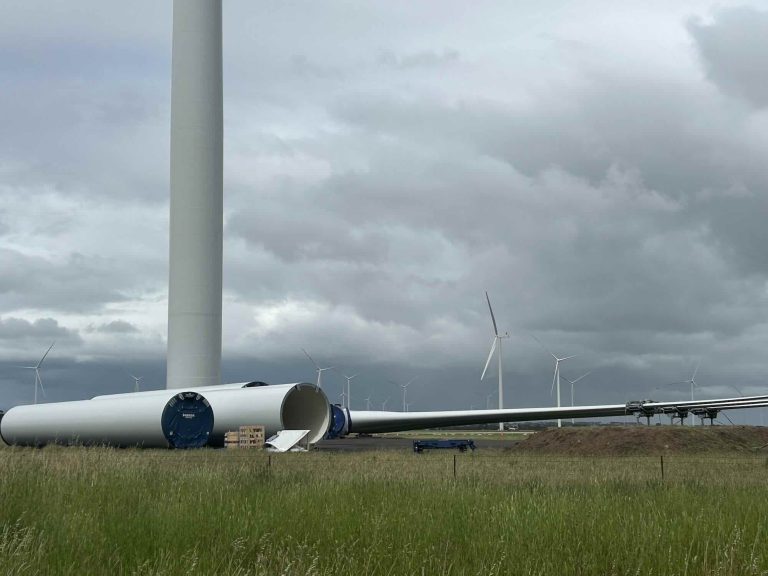
While only a few smaller wind and solar projects have progressed to construction, improvements are on the horizon. Notably, the 1.1 GW Theodore wind project in Queensland, announced on Saturday, is set to reach financial close and commence construction later this year, pending necessary approvals.
Approval and Construction Plans
Dan Belton, CEO of RWE Renewables Australia, the local arm of German energy firm RWE, indicated that the $3 billion project is still awaiting federal approvals under the Environment Protection and Biodiversity Conservation (EPBC) process but has already secured state approval and enjoys robust local support.
“Construction is expected to kick off later this year, assuming the EPBC approvals and final investment decision are granted,” he stated. The project aims to take four years to complete and will create a peak workforce of up to 500 people. It has wide community backing and was amongst the most recently approved wind projects in Queensland.
Concerning Trends in Large Projects
However, recent trends show that large wind initiatives have faced challenges in reaching financial investment decision (FiD) in Australia due to rising expenses, planning hurdles, social acceptance issues, and network complications. The Theodore project is noteworthy as it will be the largest to break ground since the Golden Plains wind farm in Victoria commenced construction in 2023.
David Dixon, an analyst with Rystad Energy, emphasises the urgency of advancing larger projects. He stated that if constructions of projects exceeding 600 MW do not commence soon, it’s improbable they will contribute significantly by 2030, even if they proceed in subsequent years.
New Developments in Queensland
Located near Gladstone in central Queensland, the Theodore project is situated in an area poised for new developments, particularly following Rio Tinto’s announcement to close its ageing coal-fired power station and transition to wind, solar, and storage solutions for its vast smelters and refineries.
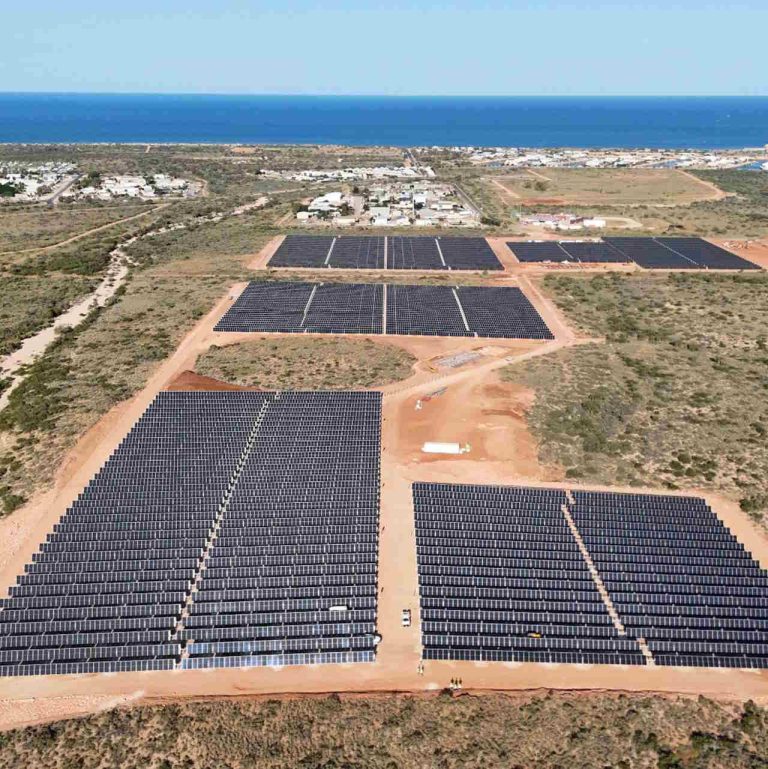
Last week, the Smoky Creek and Guthrie’s Gap solar and battery hybrid projects attained FiD, becoming the most substantial to do so, backed by both a CIS agreement and a long-term offtake deal with Rio Tinto for 90% of their output. Both projects are currently under construction.
Upcoming Projects and Agreements
Additionally, Windlab’s 1.4 GW Bungaban wind project has also entered into a long-term power purchase agreement with Rio Tinto and is expected to advance to FiD quickly. It recently secured a tender for 1.15 GW of capacity, along with 1,400 MWh of battery capacity.
Origin Energy has secured the largest single project capacity in the CIS with its 1.45 GW Yanco Delta wind farm in south-west New South Wales, aiming to reach FiD by the end of the year or early next year, pending state approvals for some site changes.
Future Expectations
Meanwhile, French multinational Engie anticipates its winning 338 MW Willatook wind project to achieve FiD by 2027 and be operational by 2029, aligning with planned network investments in western Victoria.
EDF has been selected for both its 228 MW Banana Range wind project in Queensland and its 289 MW Whyte Yarcowie wind project in South Australia, which will enhance feasibility without providing a timeline for FiD.
On the solar front, European Energy projects its Bullyard solar initiative in Queensland to reach FiD this year, with the Kayuga solar and battery project expected in 2027. They have successfully completed the 46 MW Mokoan solar farm as part of the initial CIS tender.
Future Capacity Targets
Malaysia’s Gamuda plans to kick off construction on its 200 MW Weasel solar farm in Tasmania by early 2027, alongside the 341 MW Cellars Hill wind farm project set to start in 2028, pending achieving FiD.
Dixon from Rystad highlights that the solar and battery hybrid sector is set to flourish, noting the industry is close to optimising the construction of solar plus battery, DC-coupled hybrids on both grid and off-grid scales. Currently, Australia has just one operational solar and battery hybrid facility, while several more are nearing construction or FiD stages.
Key Initiatives in the Hybrid Market
Prominent projects like Edify’s Smoky Creek and Guthrie’s Gap, along with the Ganymirra and Majors Creek projects, are set to benefit from a pioneering financing platform supporting up to 3 GW of new capacity.
Spark Renewables indicated that its Dinawan solar battery hybrid and the Wattle Creek solar hybrid projects, both winners of the most recent tender, should reach FiD in late 2027 or early 2028 again depending on the outcome of the Dinawan wind component’s financial closure this year or early next year.
New Auction Details
The new CIS auction, designated as Tender 9, has commenced this Monday, aspiring to attract 5 GW of new capacity but will not consider New South Wales since it has already met its tender targets and will limit solar and battery hybrid capacity in Victoria, which is more focused on increasing its wind project capacity by at least 1.6 GW.
Tasmania is targeting at least 300 MW, while South Australia and Queensland have not established specific minimum requirements. Registrations will close on 6 July and submissions are due by 20 July.
Renew Economy awaits updates from other project winners from Tender 7 and will provide further information as it becomes available.