Rooftop Solar Sets New Output Records in South Australia and Victoria
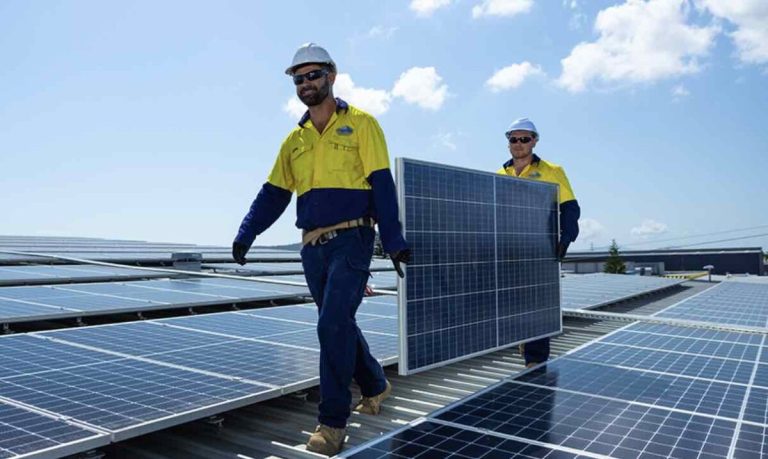
Sunny spring conditions have resulted in two remarkable milestones for rooftop solar energy generation across Australia, highlighting the growing importance of consumer energy resources, particularly solar panels on residential properties, to the country’s main electricity grid.
The first and most notable record was achieved on Wednesday in South Australia, where the amount of energy produced by rooftop solar surpassed the 2 gigawatt (GW) mark for the very first time, reaching a peak instantaneous output of 2,070 megawatts (MW) at precisely 12.30pm.
As Geoff Eldridge from Global Power Energy noted on LinkedIn, this new peak exceeds the previous record of 1,970 MW set on 22 September by 100 MW, demonstrating a 5% increase.
South Australia Leading in Renewable Energy
South Australia is already renowned for its leading position in global renewable energy integration, boasting a grid where solar and wind contribute significantly. The state is the first at the gigawatt scale where rooftop solar has been capable of fulfilling all local electricity demands.
According to the Clean Energy Council, by the end of 2025, South Australia had around 2.85 GW of rooftop solar capacity installed. The state consistently ranks first in the nation for per capita installed solar capacity, with solar panels installed on nearly half of all homes.
This dominance in rooftop solar has led to innovations in energy management, such as the introduction of flexible exports, and the establishment of an emergency backstop mechanism designed to remotely manage solar power systems in critical situations affecting grid stability.
Victoria Sets Its Own Record
The second record was set further east in Victoria, where midday rooftop solar output reached a remarkable 4,191 MW. Eldridge noted that this represented a 155 MW increase (3.85%) over the former record of 4,036 MW, which was established on 5 January 2026.
Eldridge clarified that these numbers indicate instantaneous output peaks rather than daily energy production levels, underscoring the increasing role of consumer energy resources and the evolving operational landscape throughout the National Electricity Market (NEM).
Charts provided by GPE NEMLog detail the energy mix and profiles for rooftop solar for 7 October, in addition to offering historical comparisons since March 2018.
At the time these records were set, regional demand was recorded at 201 MW in South Australia and 3,734 MW in Victoria, compared to native demand levels of 2,271 MW and 7,925 MW, respectively. Both regions were engaged in energy exports, with South Australia experiencing negative wholesale prices of -$59/MWh and Victoria at -$30/MWh. In South Australia, grid-scale batteries consumed 247 MW, while in Victoria, that figure was 917 MW, with renewable curtailment reaching 729 MW and 1,223 MW respectively.
This scenario illustrates the expanding influence of rooftop solar, storage solutions, and interconnectors in stabilising electricity systems rich in solar energy.
The Uncertainties of Home Battery Impact
Eldridge points out that the “big unknown” for South Australia and other states lies in how home battery systems are affecting peak rooftop solar output. As more households install batteries to store a portion of their solar energy for later use, this becomes a crucial factor.
He explained that during peak solar outputs, some energy would likely have been stored in batteries, while others could have been discharged for immediate use. The exact impact of these home batteries on overall output remains uncertain.
“Rooftop solar estimates, operational demand, and grid-scale battery statistics fail to deliver a complete understanding of electricity generation, storage, and consumption behind individual meters,” Eldridge noted. “As consumer battery installations increase, the need to address this visibility gap will become ever more pressing.”