New 4 GW Renewable Energy Project in Pilbara by SP Energy
A group of individuals who previously resisted the might of mining corporation Fortescue have embarked on an impressive endeavour, unveiling a 4 gigawatt (GW) renewable energy project in the Pilbara. This initiative aims to partly power their green iron startup.
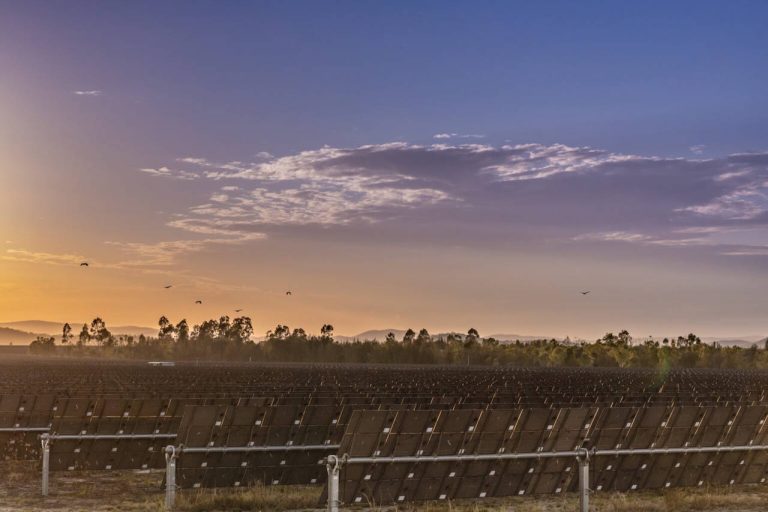
The project, named Wallareenya, plans to harness a mix of wind and solar energy across 200,000 hectares located approximately 30km south of Port Hedland in Western Australia’s Pilbara region.
Partnerships and Legal Battles
The company behind this development, SP Energy, is affiliated with Element Zero—the green iron venture embroiled in a contentious legal dispute with billionaire Andrew Forrest’s Fortescue. The mining giant accused the former employees, Michael Masterman, Bart Kolodziejczyk, and Bjorn Winther-Jensen, of misappropriating sensitive information to launch their own startup. However, this case was resolved last year with mutual agreement from both parties.
During a committee hearing in February, Masterman labelled SP Energy a “sister company” to Element Zero, noting that it will provide a portion of the electricity necessary for the innovative green iron process.
Matt Edwards, a project developer at SP Energy, informed Renew Economy, “SP Energy aims to supply renewable energy to Element Zero’s forthcoming green iron project in the Pilbara.” He highlighted the intention to cater to a variety of industrial clients instead of depending on a single customer.
Shared Leadership and Ambitious Plans
The relationship between the two companies extends beyond mere affiliation; they share several key executives. Steve Nethery, a veteran in the renewable sector, serves as the CEO of SP Energy while also taking on the role of chief development officer at Element Zero. Masterman heads the developer as executive chair, and Edwards, who has a background with Adani Solar and the UNSW solar research centre, functions as the solar officer for both firms.
Element Zero is in the process of creating an electrochemical technique for transforming iron ore into high-purity iron using renewable electricity. In September, the company was awarded a $26 million grant aimed at expanding its demonstration plant in Perth.
Rapid Development Goals
Although the Wallareenya project is still nascent, the developers are keen to make swift progress. SP Energy is looking to commence construction on the first stage of 1 GW by 2028, which will include generation as well as transmission to transport power to Port Hedland. Following this, they intend to begin work on additional 1 GW stages before 2030, as Edwards explains, “The demand, transmission infrastructure, and customer arrangements evolve.”
The phased development strategy allows for both generation and infrastructure to expand in line with customer demand. So far, SP Energy has obtained preliminary agreements with pastoralists and Native Title holders and has received state approval to carry out initial investigations, although full planning applications are yet to be submitted.
Data Centres in the Future
Data centres are also being considered as potential buyers for the generated power. Edwards pointed out, “Port Hedland boasts fibre connectivity to Perth and Singapore, which opens up opportunities for renewable-powered data centres and artificial intelligence computing serving Australian and export markets.” This sentiment echoed a recent justification from another developer regarding a large-scale data centre project in the Kimberley region.
Wallareenya isn’t the only ambitious renewable proposal directed at Port Hedland’s heavy industry and prospective data centre projects. The Australian Renewable Energy Hub (AREH), situated approximately 250 km east of Port Hedland, is a grand 16 GW initiative designed to fulfill the substantial electricity requirements of green hydrogen production.
As part of the newly developed Pilbara green grid, Fortescue has allocated 200 megawatts (MW) intended for data centres or other third-party usage, while the Ngarluma Aboriginal Corporation is transforming portions of its land into a 1.2 GW energy park available for lease to developers.