Hybrid Wind Project Approved with Conditions for Black Cockatoo Protection
A groundbreaking 2 gigawatt hybrid energy project, combining wind, solar and battery storage, has received federal environmental approval in Australia’s largest isolated power grid. The project comes with a series of conditions aimed at safeguarding endangered black cockatoos and various native plants.
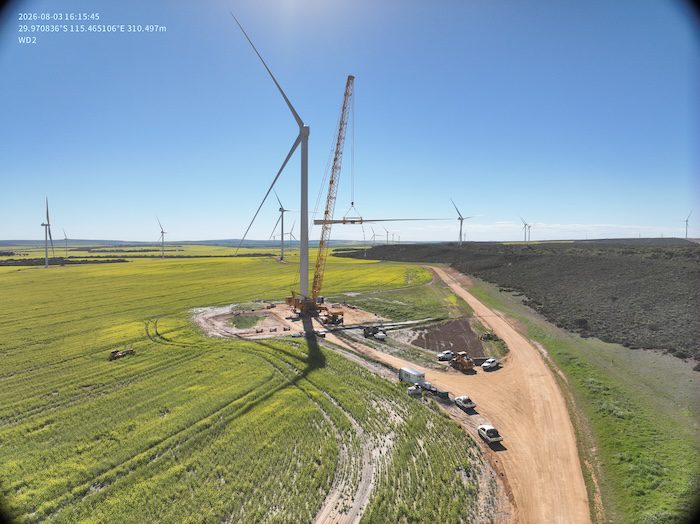
Referred to as the Tathra wind farm, the initiative plans to incorporate up to 1,000 megawatts (MW) of wind energy and a solar farm with a maximum capacity of 500 MW, alongside three battery energy storage systems (BESS) totalling 500 MW. The site is located approximately 15 km east of Eneabba in Western Australia’s mid-west.
Developer’s Vision and Land Use
Synergy Renewable Energy Developments (SynergyRED), a branch of the state-owned energy retailer Synergy, has branded the already state-approved project as vital for providing affordable and dependable electricity to consumers connected to the WA South West Interconnected System (SWIS).
As per the referral documents, the 140-turbine wind farm will cover 14 freehold lots of land zoned for rural use. Synergy has legal access to these areas through lease agreements or consent from landowners.
According to SynergyRED, the area designated for the project is primarily utilised for agricultural activities, featuring mostly cleared land with some remnant native vegetation that is intended to be mostly preserved.
Government Approval and Environmental Safeguards
In an EPBC ruling released last week, the federal government declared that the proposed project does not qualify as a ‘controlled action’ as long as it adheres to specific guidelines aimed at minimising substantial impacts on threatened species and ecosystems.
The environmental department’s outlined measures primarily focus on the protection of Carnaby’s Black Cockatoos. This includes a restriction on clearing more than 97 potential nesting trees, as well as a prohibition on clearing any known or favourable nesting trees for this endangered species.
The EPBC decision stipulates that the centre of any wind turbine tower situated outside the Targeted Survey Area must be at least 200 metres from any potential nesting tree trunk of the black cockatoo, and no less than 100 metres from existing habitats. Additionally, the wind turbine blades must be positioned no lower than 64 metres above the ground to prevent harm to these birds.
According to the project’s referral documents, the wind turbines are designed to reach heights of up to 160 metres, with blade lengths getting up to 90 metres, maintaining a minimum tip-height of 40 metres and a maximum of 250 metres. However, the final turbine model has yet to be decided, as flexibility in the layout is deemed necessary.
Timelines and Synergy’s Energy Transition
The EPBC approval was granted nearly five months after the project’s assessment was initiated, mirroring the swift turnaround experienced at the state level, where the wind farm component received approvals in just four months.
Synergy, which has traditionally relied on coal for power generation, intends to decommission its outdated 240 MW Collie A coal power station by 2027, alongside closing the Muja 7 and 8 (both 227 MW) by late 2029.
On the renewable energy front, Synergy is actively pursuing the development of four wind projects, including the Tathra site, with the largest being the expanded Warradarge wind farm, set to increase its capacity to 283 MW by 2027.
The company operates two small wind farms, each generating less than 2 MW, alongside the two-stage Kwinana battery system, which has a combined output of 300 MW and storage capacity of 1000 megawatt hours (MWh).
Synergy’s experience in grid-scale solar includes the two-stage Greenough River project with a total capacity of 47 MW, but their focus has recently shifted towards expanding battery storage capabilities.
Expanding Battery Capacity
Currently, Synergy is in the process of commissioning one of the largest battery projects in Australia, a 500 MW, 2,000 MWh facility located in Collie. This project adds to the existing two significant batteries established at their Kwinana gas generator, which collectively total 300 MW and over 1,100 MWh of storage.
The new Collie battery, situated near Neoen’s even larger 560 MW, 2,240 MWh facility, will elevate Synergy’s overall battery capacity to exceed 800 MW and approach 3,200 MWh.