Amazon’s Record Investment in Renewable Energy for AI Growth in Australia
Amazon has made a significant leap in its sustainability efforts by signing nine new agreements for wind, solar, and battery storage projects in New South Wales and Victoria. This move marks the company’s largest single-year investment in renewable energy globally, establishing it as the top corporate power purchaser in Australia for this financial year.
The tech giant announced on Wednesday a monumental investment totalling 430 megawatts (MW) and A$2.8 billion, with eight of these agreements featuring battery storage solutions. Notably, three of these deals involve utility-scale solar-battery hybrid projects, representing Amazon’s initial foray into this area outside the United States.
Details of the New Agreements
The newly formed portfolio includes a contract to procure over 201 MW from the largest operational wind farm in Australia, Tag Energy’s Golden Plains project, which is on its way to achieving a total capacity of 1.33 gigawatts (GW) following the activation of a 577 MW second stage.
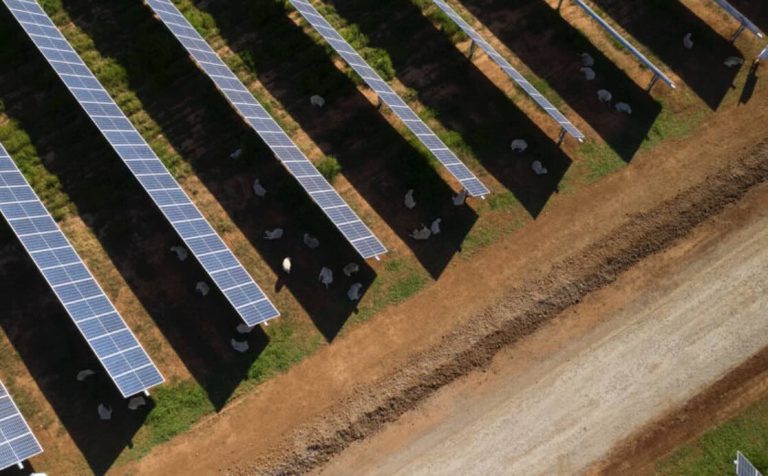
Additionally, the portfolio features a 32 MW offtake agreement for a new battery installation at the 46 MW Mokoan Solar Farm in Winton, Victoria, a project previously agreed upon with European Energy.
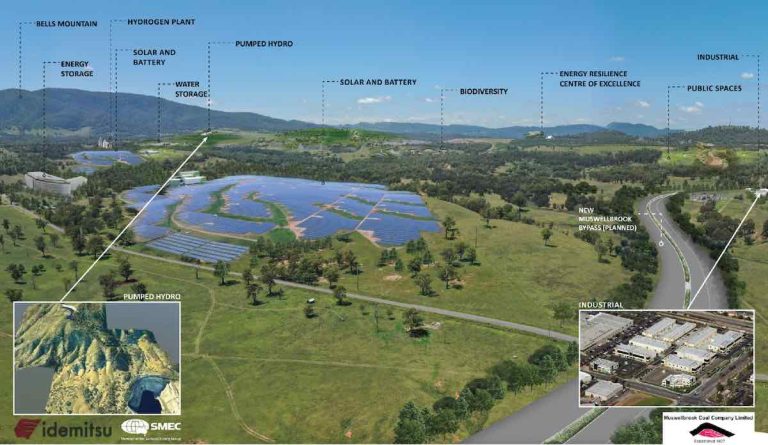
Among the three large-scale solar-hybrid power purchase agreements (PPAs) are 94.5 MW of photovoltaic (PV) and 70 MW of battery capacity from OX2’s Muswellbrook project in New South Wales, located in coal-producing regions. There’s also a contract for 72 MW each of PV and battery from X-ELIO’s Forest Glen project near Dubbo, and 48 MW each from Anza Power’s Laceby project in Victoria.
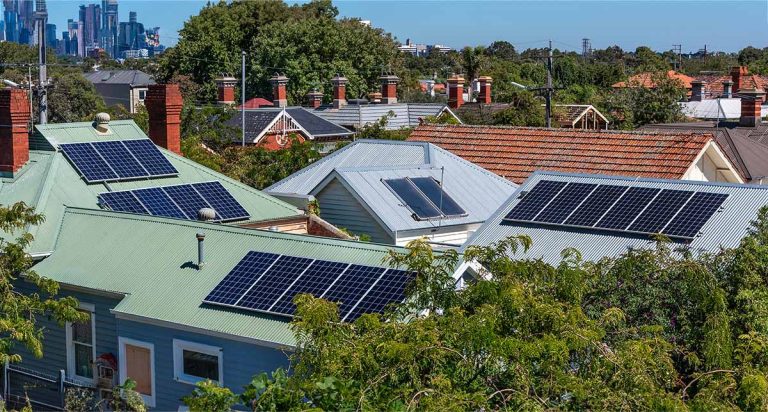
In addition, 14.4 MW of firm renewables is locked in across four distributed solar-battery energy storage systems (BESS) in Victoria and NSW, owned by Anza Power, with agreements ranging from 3.4 MW to 3.8 MW.
Growing Commitment to Renewable Energy
With these new projects, Amazon now boasts a total of 20 renewable energy initiatives in Australia, offering a combined capacity of 990 MW once all projects are operational. This output is sufficient to power over half a million homes annually, though it falls short of the energy needed for data centres.
Prior to this latest agreement, Amazon had already positioned itself as a key player in the renewable energy market in Australia, investing approximately A$2.8 billion in wind and solar initiatives between 2020 and 2025.
Matt O’Rourke, head of infrastructure and energy policy for Amazon Web Services in Australia and New Zealand, noted that this new phase of agreements indicates a shift towards projects featuring storage, reflecting the industry’s growing interest in hybrid solar and battery systems.
O’Rourke remarked, “In Australia, we’re entirely focused on renewables integrated with batteries.” He highlighted the importance of the Makoan project, which presents an opportunity to add battery storage to an existing solar setup.
As the company continues to drive forward, O’Rourke stated that they find ample options for solar and wind projects in Australia, but he emphasised the necessity for further developments to cater to the booming demands of artificial intelligence (AI) and data analytics.
Future Plans and Sustainability Goals
Last June, Amazon unveiled a substantial A$20 billion investment plan to expand its data centre infrastructure in Sydney and Melbourne by 2029, addressing the escalating requirements for cloud computing and AI, while facilitating the operational modernisation of businesses across the board.
“As we expand our cloud and AI infrastructure, we’re powering it not only with carbon-free energy but also incorporating battery storage that enhances grid reliability and demonstrates that data centres can function confidently within a more renewable energy framework,” he explained in another statement.
He further articulated that these long-term agreements backed by storage allow new projects to progress and help stabilise electricity prices, accelerating Australia’s shift to clean energy. This initiative aligns with Amazon’s Climate Pledge, which aims for net-zero carbon emissions across its operations by 2040.
O’Rourke added that Amazon is setting its own net-zero target a decade ahead of Australia’s, which serves as a guiding principle for all their sustainability efforts. As such, the company has no intention of engaging in any contracts related to fossil fuels.
While Amazon is typically reticent about disclosing financial specifics regarding its power offtake agreements, O’Rourke conveyed a sentiment shared among companies in this sector: “It’s crucial that the finances align, and we are establishing PPAs with our partners under mutually agreed terms.”
“As we continue to support projects, we offer revenue certainty, which aids in bringing them online and integrating them into the grid,” he noted, proud of Amazon’s status as the largest corporate buyer of renewable energy in Australia in 2025, with an aim to deepen this commitment further.