Industry Responds to Solar Waste Fear-Mongering Claims
The photovoltaic (PV) sector has countered assertions from the Murdoch media, claiming that solar panels are composed of hazardous materials that are non-recyclable and that recycling processes are economically unfeasible. This dismissal comes despite the fact that the industry already employs thousands of Australians across seven companies.
On Tuesday, The Australian highlighted the urgent challenge of managing solar waste, an issue that industry leaders have been urging federal governments to tackle for over a decade amid the country’s success in solar energy adoption.
Solar Waste: A Growing Opportunity
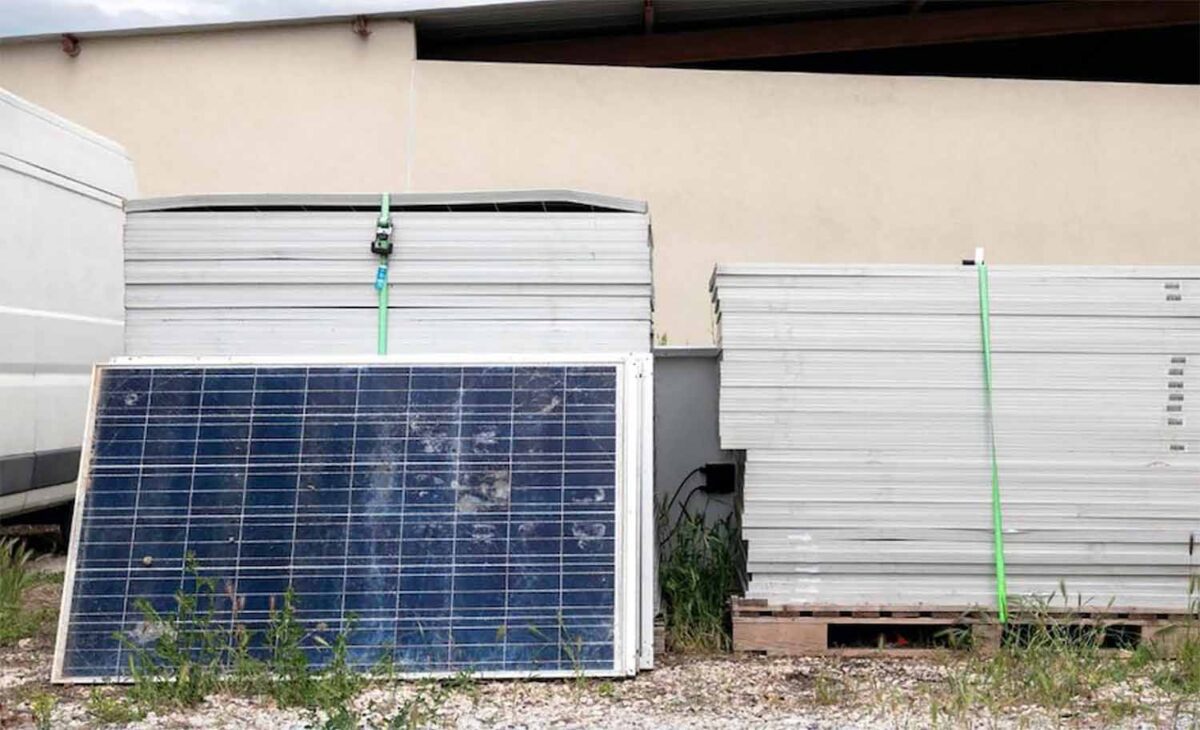
As explained by the Smart Energy Council (SEC) and various industry experts, the increasing accumulation of used solar panels presents both a significant challenge and a considerable opportunity due to the valuable materials contained within them, many of which are in high demand.
This year, following extensive campaigning and a successful trial led by the SEC in Queensland, the federal Labor government announced a $25 million pilot initiative to create up to 100 solar panel collection sites nationwide. This initiative aims to clear a significant obstacle in developing a sustainable sector for reuse and recycling.
Parliamentary Inquiry and Environmental Concerns
In conjunction with this pilot program, a federal parliamentary inquiry into solar stewardship has been launched after being referred by federal environment minister Murray Watt. Earlier this year, the inquiry sought written submissions to shape its terms of reference.
However, The Australian characterized solar waste as a significant environmental hazard, claiming it is “polluting the environment by leaching toxic chemicals into landfill with no viable reuse or recycling solutions available.” It further cites warnings from the Department of Climate Change and Energy.
The publication reported local councils and community groups expressing concerns that the Albanese government is investing in renewable energy deployment while neglecting the decommissioning aspect of the process. With Australia being the leading adopter of solar energy per capita, thanks in part to government subsidies, it now faces the initial wave of end-of-life rooftop systems while lacking the capacity to process the “hazardous” waste this entails.
Political Reactions and Industry Resistance
Dan Tehan, the opposition’s energy spokesman, claimed these observations are indicative that solar panels cannot be termed renewable and cautioned that disposal of these units may pose a significant future challenge for Australia. He declared, “All these panels are made overseas using materials which will not recycle,” urging the government to clarify plans for managing the resultant waste from these imported solar products.
This criticism from the opposition has been termed predictable and disappointing, particularly given their history of supporting subsidised rooftop solar since its inception in 2011. SunWiz managing director Warwick Johnston pointed out that the origins of Australia’s solar endeavour can be traced back to decisions made by former Coalition prime minister John Howard in 2007 when the Photovoltaic Rebate Programme was enhanced.
The Coalition has, however, also faced scrutiny for postponing the issue of solar recycling, having placed solar systems on the environment minister’s Product Stewardship Priority list back in 2016.
Positive Developments in Solar Recycling
In a positive turn of events, a federal government is finally showing willingness to heed industry calls for sustainable policies. The SEC is hopeful this will foster an emerging industry capable of tapping into what is often referred to as a significant “urban mining” opportunity.
“Solar recycling isn’t merely a waste dilemma; it’s a solution for resource recovery. Australia’s largest silver mine isn’t underground, it’s situated on our rooftops,” said Darren Johannesen, the SEC’s executive general manager of sustainability. He estimates that this could represent a $6.5 billion opportunity, enhancing mineral security and promoting domestic manufacturing.
According to Johannesen, Australia’s seven solar recyclers could recover up to 95% of valuable materials from the panels, including silver, copper, aluminium, and silica. He emphasized the missed opportunity as less than 5% of panels are currently recycled due to a decade’s worth of policy delays. While the Albanese government’s new pilot initiative is a welcome start, he advocates for a mandatory product stewardship scheme to follow.
Recognising Solar Recycling’s Potential
The DCCEEW’s submission acknowledges the significant economic and environmental prospects associated with solar reuse and recycling without receiving proper attention in The Australian’s report. The department expressed a strong intention to explore effective frameworks for capitalising on these opportunities.
Australia is in a unique position to establish a robust recycling industry, being one of the few nations with the capacity for panel recycling. To create an effective scheme, the DCCEEW identifies the need for a comprehensive understanding of the costs involved in collection, aggregation, transportation, and recycling processes across various regions.
Furthermore, the department indicated that an assessment of anticipated costs and investment in recycling infrastructure would be necessary to manage the projected waste inflow more efficiently.
Additionally, a preliminary cost-benefit analysis conducted by the department suggests that a national recycling scheme could yield substantial net economic and environmental benefits amounting to $7.2 billion.
Submissions from different organisations, including the Australian Council of Recyclers and the Australian Aluminium Council, underscore the vital role of recycling in contributing to economic value and environmental efficiency, bolstering the case for a sustainable recycling framework.
As noted by Andrew Blakers, a professor and renewable energy engineer at the Australian National University, the composition of solar panels primarily consists of glass and aluminium, with silicon being non-toxic and abundantly available.
Highlighting aluminium recycling’s benefits, the Australian Aluminium Council stressed the sector’s capability to create over 1,000 jobs while simultaneously promoting energy efficiency and supporting a resilient domestic market.
The overarching sentiment, as expressed by the CSIRO, is that solar panel recycling has the potential to unlock a new frontier in Australia’s mining industry, given their comparable content of valuable metals.