Chalmers Unveils $90 Billion Boost for Renewable Investments in Superannuation
The renewable energy industry is set to gain from recent changes made by Treasurer Jim Chalmers to the performance testing framework governing Australia’s $4.8 trillion superannuation sector. The revisions aim to discourage fund managers from “benchmark hugging” and stimulate more dynamic investment practices.
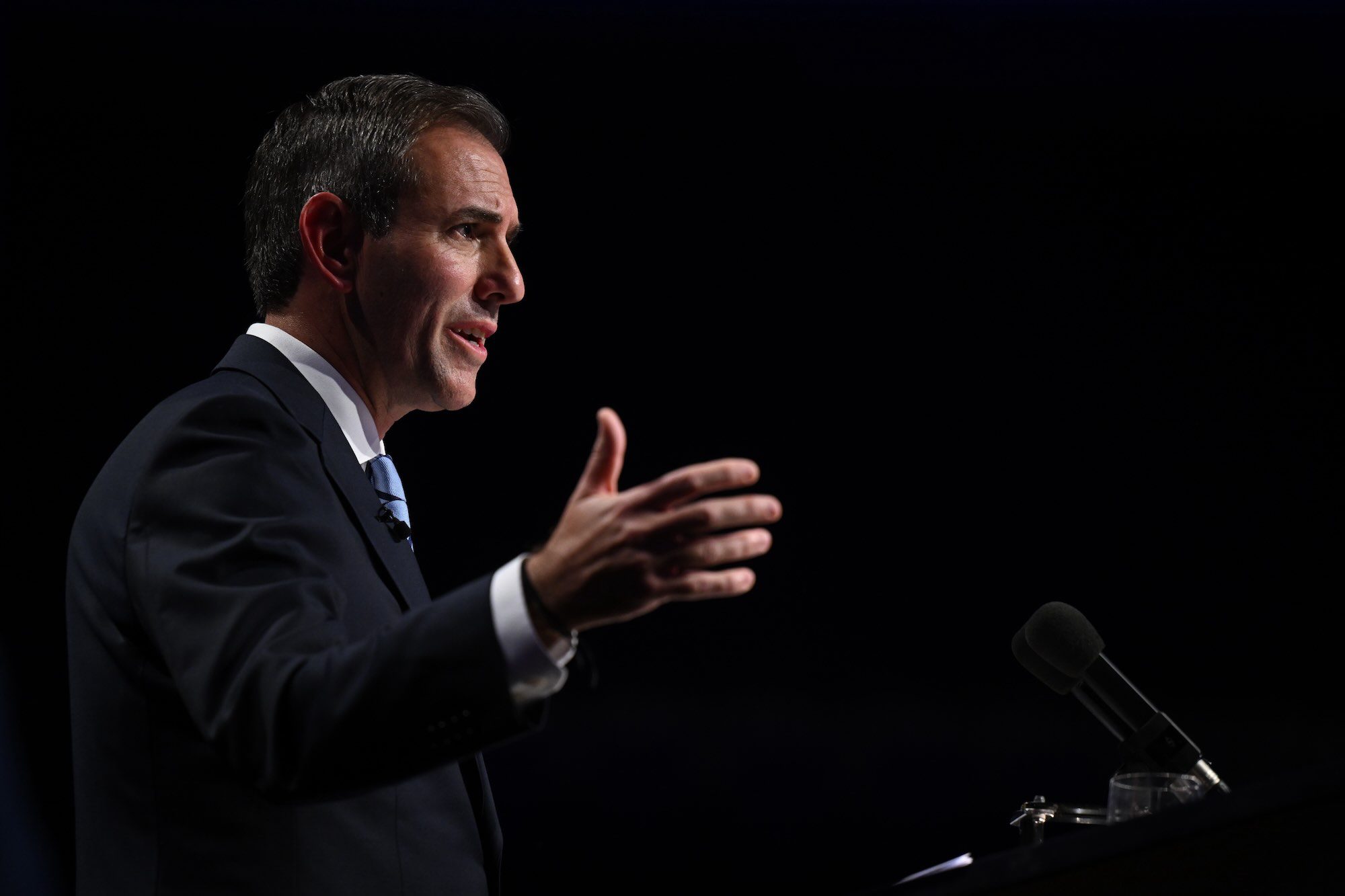
During a conference in Melbourne held by the Association of Superannuation Funds of Australia (ASFA), Chalmers highlighted that the elimination of certain investment restrictions could potentially release up to $90 billion into emerging assets.
New Investment Benchmark
The government plans to introduce a fresh benchmark, allowing for greater capital allocation towards transformative investments, including innovative start-ups, housing, and energy sectors. Chalmers pointed out that many valuable opportunities are currently overlooked by existing benchmarks.
Under a voluntary framework, trustees will be able to apply the new benchmark for up to 5% of their investments. This measure will be pegged at a margin above the consumer price inflation rate, with distinct thresholds for both growth and defensive assets. Chalmers acknowledged that while some stakeholders may prefer a higher allocation than 5%, this is a pragmatic initial step, with future reviews anticipated to reassess this level.
A Shift in Super Fund Dynamics
Australia’s superannuation assets are significant on a global scale, currently ranking as the fourth-largest capital reserve in the world and projected to become the second-largest by the early 2030s. However, existing performance mandates often dissuade investment in long-term assets if such investments jeopardise short-term returns.
Amid ongoing media focus on housing, the lack of investment by super funds in decarbonisation and climate adaptation initiatives has been noticeable. Matt Kean, chair of the Climate Change Authority, noted at a recent conference that investment mandates do not align with the necessity of securing returns for members in light of potential climate-related challenges in the coming decades.
Investment Needs for Future Goals
Kean stressed the urgency of aligning superannuation investments with goals for a net-zero emissions economy by 2050, considering that this target is just 24 years away. He estimated that Australia will require approximately $500 billion to transform its economy over the next two decades, with the Business Council of Australia projecting that the upper end of the 2035 emissions target could demand between $200 to $500 billion in investment.
Critique and Support for the Changes
While Chalmers mentioned “energy” in his address, he did not specifically refer to renewable sources. Currently, there are no indications from private firms or states showing interest in constructing new coal-fired power plants. Nuclear power remains supported only by the One Nation party and the federal Coalition.
Mary Delahunty, the chief executive of ASFA, endorsed the reforms, asserting they would enhance the performance test and mitigate unintended consequences that previously hindered investments with promising long-term returns. She explained that the indices used in the current performance test mostly pertain to established asset classes and fail to reflect the risk-return dynamics of emerging assets.
Impact on Energy Infrastructure Investment
Delahunty provided energy infrastructure as an instance where the current test has had negative implications. The development of new technologies, particularly artificial intelligence, necessitates advancements in generation, storage, and transmission, which portfolio managers are eager to invest in. However, the existing performance test tends to undermine these prospects.
Projects that generate minimal returns during their construction phases face comparison against benchmarks rooted in mature, steady-return assets, making sound long-term investments seem less justifiable in their earlier stages, despite their potential to benefit retirement savings significantly.
Broad Support for the Initiative
The Clean Energy Investor Group also expressed support for the Treasurer’s initiative, stating, “These changes will remove a significant barrier to super funds investing in clean energy in Australia,” underscoring the crucial need for heightened investment in the country’s energy transition.
They noted that until now, the benchmark has unfavourably pitted investments in new clean energy assets against mature assets from different sectors. Because new renewable energy investments take time to yield returns—due to lengthy construction periods—the short-term orientation of the existing annual super performance test discourages holding such assets, although they provide substantial value over their operational life.
Opposition to the Reforms
Despite the supportive feedback from the industry, Chalmers’ plan has faced criticism from the opposition. Kevin Hogan, spokesperson for financial services for the Coalition, asserted the Albanese government aims to funnel super funds into Net Zero 2050 initiatives at the expense of Australians’ financial interests. He maintained that superannuation is personal money meant for individual benefit.
Hogan argued that while the performance test introduced by the Coalition in 2021 aimed to safeguard Australians from poor-performing funds, he is concerned that the proposed changes could lower the benchmarks for super fund performance.
Commitment to Improvement
Chalmers, however, clarified that the reforms are intended to enhance, not diminish, the performance test. He indicated that these modifications are expected to provide a tangible boost to retirement balances, estimating that a greater allocation towards venture capital or private equity could add around £20,000 to the retirement savings of the average income earner, although he did not disclose the source of this estimate.
The new benchmark will offer a sector-neutral definition for qualifying assets, aiming to address the gaps in current benchmarks, based on independent guidance from the Australian Government Actuary and administered by the Australian Prudential Regulation Authority, according to Chalmers.