Carlyle Group’s Revera Energy Abandons Solar Farm for Larger Battery Project
A subsidiary of the global investment firm Carlyle Group, Revera Energy, has decided against proceeding with a significant solar farm project in Australia’s leading renewable state, opting instead to expand the size of a planned standalone battery facility.
The UK-based Revera Energy initially aimed to establish a 500 megawatt solar farm close to Robertstown, aligning with the new transmission project, Project EnergyConnect, that links New South Wales (NSW) to South Australia.
Shift in Focus
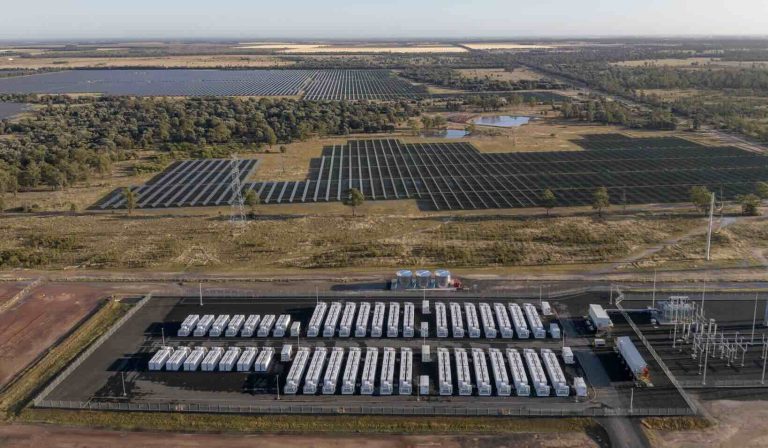
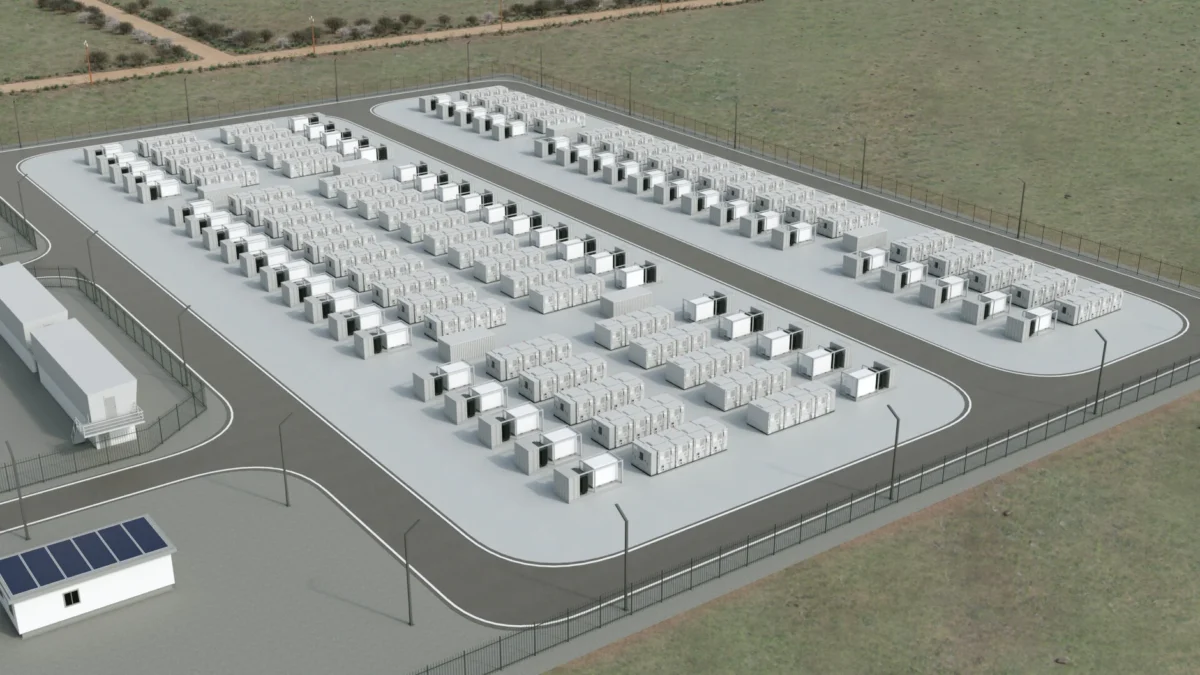
In a recent submission to the federal government’s environmental assessment process, Revera concluded that pursuing a new solar farm in South Australia is currently unfeasible. The company now aims to concentrate efforts on a 500 MW, 2,000 MWh battery project at the same location.
The firm stated in its documentation, “Solar farms are not currently assessed as economically viable in South Australia.” Consequently, they announced that no further work would be done on the anticipated solar project and that they would continue to evaluate crucial market factors for potential future development.
Context of Market Conditions
This decision comes as little surprise, considering South Australia already boasts an impressive average of 75 per cent power generation from wind and solar sources, with a goal to achieve 100 per cent “net” renewable energy by the close of next year. The term “net” indicates an active balance of energy imports and exports.
The state also leads the world in rooftop solar adoption, sometimes generating excess electricity that exceeds state demand, leading to instances where operational solar farms must shut down due to negative pricing issues.
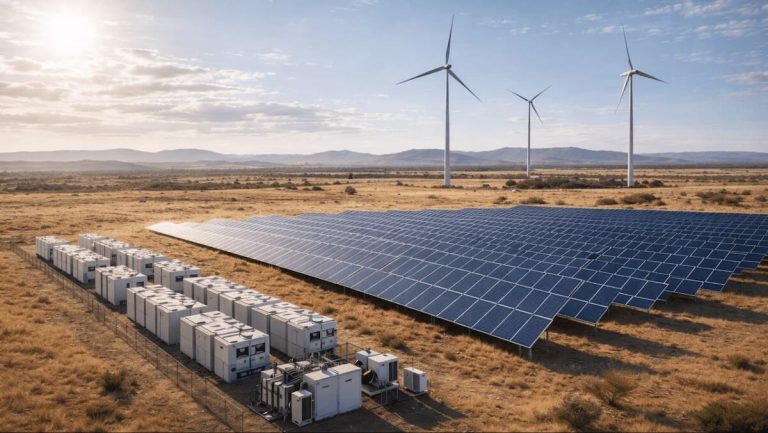
Solar-battery hybrids are being viewed as a viable solution to these challenges, allowing solar energy production to be stored for release into the grid during high-demand evening periods. However, it appears that Revera intended for the solar and battery projects to operate as separate entities, thereby missing out on the advantages of interconnected operations.
Previous Projects and Current Plans
Revera’s strategy is reminiscent of its approach with the Bungama facility, situated near Port Pirie in South Australia, where they progressed with a 150 MW, 300 MWh battery but halted the development of the planned solar farm.
The Robertstown solar and battery project received planning approval back in 2018, which was subsequently revised in 2023 to accommodate a larger battery in response to decreasing storage costs and enhanced market prospects.
Currently, Revera emphasises that only the standalone battery is regarded as “economically viable,” with plans to implement it in two phases, each with a capacity of 250 MW and 1,000 MWh. The battery will link to the Robertstown substation through an underground transmission line.
Landscape of Renewable Projects
Solar and battery hybrids are increasingly becoming essential components of the Australian energy grid, with nearly twenty-two projects underway, despite currently having only one large-scale solar-battery hybrid operating in the market, the Quorn Park project, which is still undergoing finalisation.
South Australia did secure one solar-battery hybrid project in the latest Capacity Investment Scheme auctions, although the majority of successful proposals in the region were wind-based.
Notably, three of these four projects, including Neoen’s 300 MW Goyder North, Tilt Renewables’ 274 MW Palmer wind, and Aula’s 247 MW Carmody Hill, have successfully obtained power purchase agreements and are either under construction or set to commence shortly.
Future Endeavours
Revera also has several large-scale renewable ventures underway in South Australia, such as the Yoorndoo Ilga solar (300 MW) and battery (250 MW, 1,000 MWh) project, in addition to the Cape Hardy green hydrogen initiative on the Eyre Peninsula, which is set to combine wind, solar, and battery storage along with an electrolyser of up to 50 MW.
If you’re interested in receiving the latest clean energy updates directly to your inbox at no cost, consider subscribing to our free daily newsletter.
Your support of independent journalism is crucial; you can assist by making a one-time donation or becoming a regular patron of Renew Economy.