SRES Expansion: Catalyst for Commercial Battery Growth
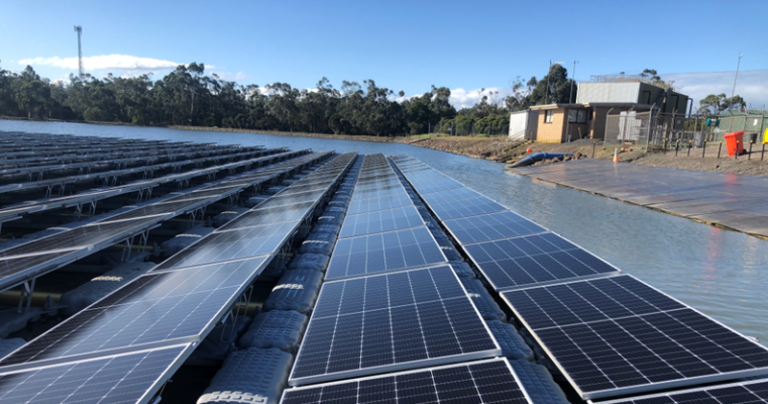
From the start of October, the landscape for federal incentives surrounding mid-scale solar installations has shifted due to enhancements in the Small-scale Renewable Energy Scheme (SRES).
As a result, solar projects ranging from 100kW to 1MW will now qualify under the SRES, replacing the Large-scale Renewable Energy Target (LRET) and granting access to Small-scale Technology Certificates (STCs).
Understanding STCs and Their Benefits
STCs are generated upfront based on expected energy production and are usually claimed by the installer, providing a point-of-sale discount that can significantly lower initial installation costs by approximately 15 to 20 per cent. In contrast, the Large-scale Generation Certificates (LGCs) associated with the LRET are issued only post-energy generation, requiring businesses to cover the total cost of the system upfront while waiting to recuperate the certificate value.
The Federal Government estimates that the savings from the newly expanded SRES for a 250kW solar installation could reach around $68,000, while a 500kW system set up for a small manufacturing facility could yield savings of about $136,000. Furthermore, a 250kW solar array, generating roughly 345MWh of electricity annually, might save around $50,000 on electricity bills each year.
A Game Changer for Commercial Installations
Will Hall, managing director of Sigenergy for Australia and New Zealand, believes these changes represent a pivotal moment for commercial and industrial (C&I) solar installations, including the essential battery equipment that accompanies them. “Many commercial installers have revisited their project pipelines,” he noted. “They have re-evaluated quotes on jobs where the return on investment previously fell short or where larger systems were needed but considered too costly. Now, many larger projects are financially viable.”
He also mentioned that Sigenergy has landed a 16-megawatt-hour battery system for a manufacturing site in New South Wales, planning to install six megawatt-hours before December and an additional ten by February or March of the coming year. “This push wouldn’t have been possible without these incentives,” he added.
Investing in Energy Independence and Storage Solutions
According to Hall, the savings generated by the revised SRES incentive can be strategically reinvested into battery solutions for storing surplus energy. “For our customers, this offers a much more favourable financial outcome,” he remarked.
Pradeep Anasuri, solutions director at Sigenergy, highlighted that the federal incentives are aimed at promoting energy independence within the C&I sector to support the grid. “Photovoltaic systems are excellent during daylight, but some factories operate around the clock, often when solar energy is unavailable,” he explained. “Batteries provide a solution by storing power and delivering it later.”
Sigenergy’s Innovative Battery Solutions
Recognised as the leading home battery brand in Australia for 2025 by Sunwiz, Sigenergy is now entering the C&I market with its innovative battery solutions, including the SigenStack and the newly launched SigenCube.
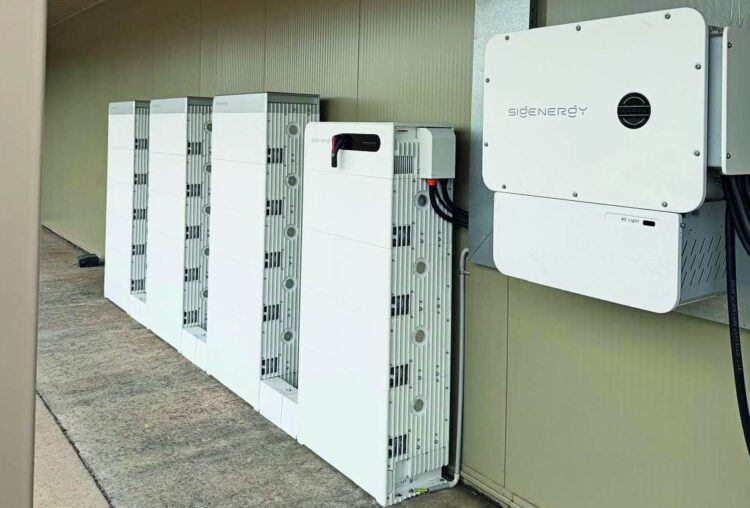
The SigenStack is a modular, DC-coupled battery system designed to work with Sigen hybrid inverters, while the SigenCube is an all-in-one AC cabinet incorporating the inverter, liquid cooling, and fire safety systems. The SigenStack is particularly ideal for smaller C&I applications and projects where DC coupling enhances efficiency, while the SigenCube caters to larger C&I sites with more space constraints.
Hall has expressed confidence in Sigenergy’s diverse product range. “We offer a versatile modular solution that requires significantly less space than conventional battery cabinets, alongside a more economical option,” he noted. “I am not aware of any other manufacturer providing such varied storage solutions for the C&I sector.”