Record Renewable Energy Commitments: Wind and Battery Projects Surge
The September quarter has witnessed unprecedented commitments to large-scale renewable energy projects, particularly in wind and battery sectors, which play a crucial role in closing the gap towards the Albanese government’s goal of achieving 82% renewable energy by 2030, according to a comprehensive new report.
The Australian Renewable Energy Scorecard, produced by the Institute for Energy Economics and Financial Analysis (IEEFA) alongside Green Energy Markets (GEM), highlights notable advancements in wind and battery storage investments, especially in Queensland and South Australia, as well as outside the National Electricity Market (NEM) in Western Australia.
Significant Construction Milestones
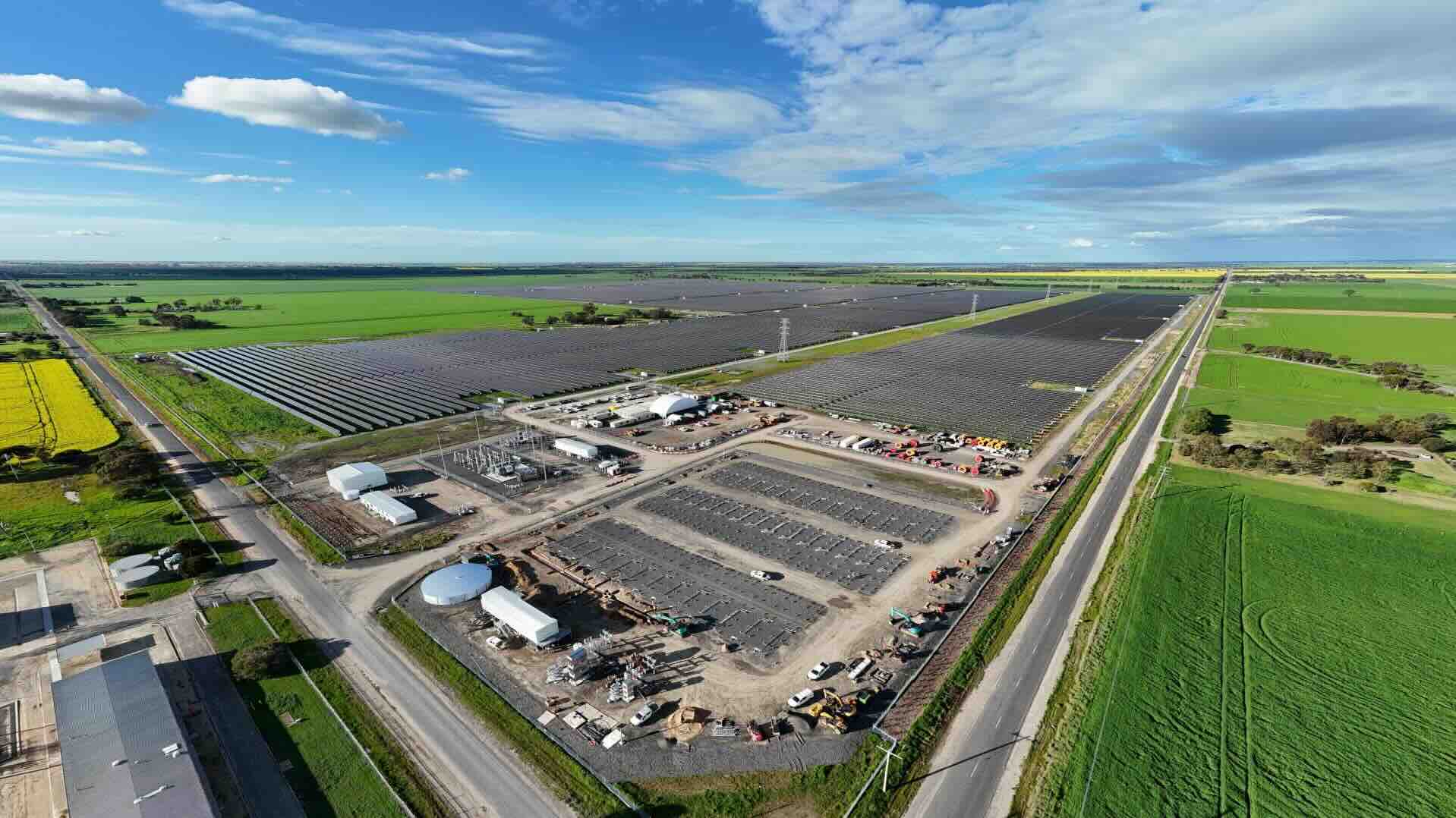
This quarter has set a record with 2.4 gigawatts of renewable energy projects committed to construction, marking a 20% increase over the previous record set in the first quarter of 2022, and a substantial rise from the lower figures experienced earlier this year.
As outlined in the scorecard, battery projects now account for 28% of the new capacity needed, with wind contributing 21% and solar 16% towards meeting the 2030 threshold.
Wind Farm Commitments Flourish
There was a particularly strong surge in commitments for wind farm construction during the July to September period, which reached the second highest level for any quarter since 2015. Only one of the last six quarters had recorded new commitments for this energy type.
Tristan Edis, CEO of GEM, remarked that Queensland is now 90% on track to meet their 2030 Integrated System Plan requirements due to projects currently underway. He noted the role of state governments, particularly in Queensland and WA, in facilitating power purchase agreements that bolster renewable progress.
Current Renewable Energy Contributions
The latest market report from AEMO cites that renewables accounted for approximately 44.3% of electricity generation in the NEM and 36.4% in the primary grid of WA during the September quarter.
Despite this progress, Climate Change and Energy Minister Chris Bowen maintains that reaching the 2030 objective will be challenging, yet thinks it’s feasible. He recently expressed confidence, notably while presiding over negotiations at the COP31 climate summit in Türkiye, stating Australia is progressively moving away from fossil fuels.
Challenges in Meeting Targets
However, forecasts from Bloomberg New Energy Finance suggest Australia may fall short of the 82% target by 2030, possibly achieving only 61% or 64%. They even project that the 82% milestone could be reached by 2035 instead.
The IEEFA/GEM scorecard indicates that renewable energy developers are pushing for capacities that surpass what is needed for the 2030 target, but the current construction levels remain inadequate to meet those demands.
Investments and Job Creation
Investment in large-scale renewable and battery projects that are already underway is estimated to be around $8 billion, generating approximately 21,600 job years. Should all approved projects commence construction, projected investments could rise to about $51 billion, creating an impressive 142,500 job years.
The Wind and Solar Capacity Gap
The report highlights that while the wind capacity in many states exceeds that of solar in proposed and potential projects, none of the states, particularly New South Wales (NSW), are currently on track to meet the new capacities necessary for the 2030 goal.
The gap is especially pronounced in NSW, where 17.5 gigawatts of new wind and solar generation capacity must be developed.
Development Roadblocks
Interestingly, project approvals do not seem to be the bottleneck. Instead, the primary challenge appears to be securing favourable financial conditions for projects to commence. Only 6% of fully approved projects across Australia’s main grids have entered into contracts.
Battery Capacity Trends
Conversely, the outlook for energy storage has become more promising. The latest quarter saw a notable increase in battery commitments, marking the progress at 34% towards closing the battery capacity gap for 2030, up from only 21% previously.
If the current pace of progress continues, utility-scale battery capacity could potentially close the remaining gap within 1.5 years.
Effects of Government Policy on Small-Scale Installations
The September quarter did, however, reflect a downturn in small-scale solar and battery system installations following a reduction in government subsidies. Despite a significant drop in battery installations, rooftop solar figures remain robust and above historical averages.
The scorecard recorded a 44% decline in small-scale battery installations, coupled with a 20% reduction in installation sizes, indicating a clear need for ongoing government support to facilitate further investments in renewable technology.
Nonetheless, the size of installations has consistently exceeded the averages observed prior to the introduction of the Cheap Home Battery scheme in July 2025, indicating positive long-term trends.