Australia’s First Solar and Battery Hybrid Project Secures Financing
Australia is witnessing a significant transition in its energy landscape, moving from wind energy projects towards more financially viable solar and battery hybrids. One of the pioneering projects in this shift is the Winton North project, located near Wangaratta in Victoria, which has successfully closed financing with support from two international banks.
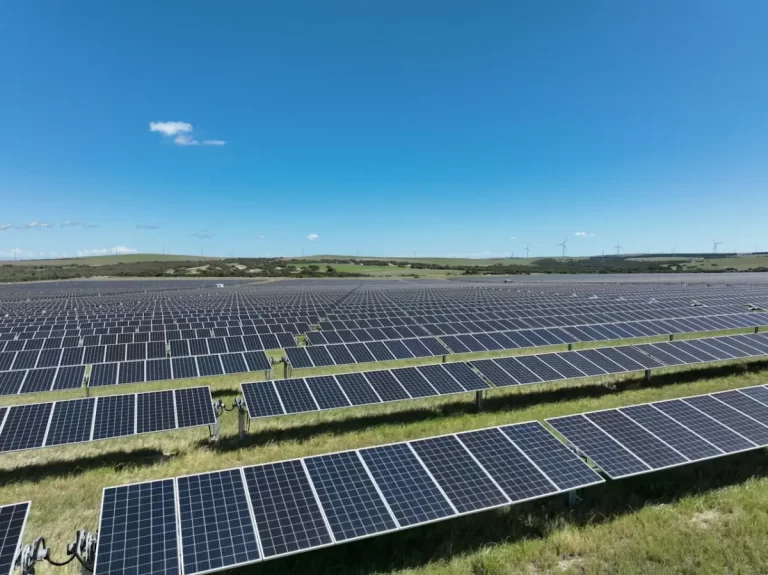
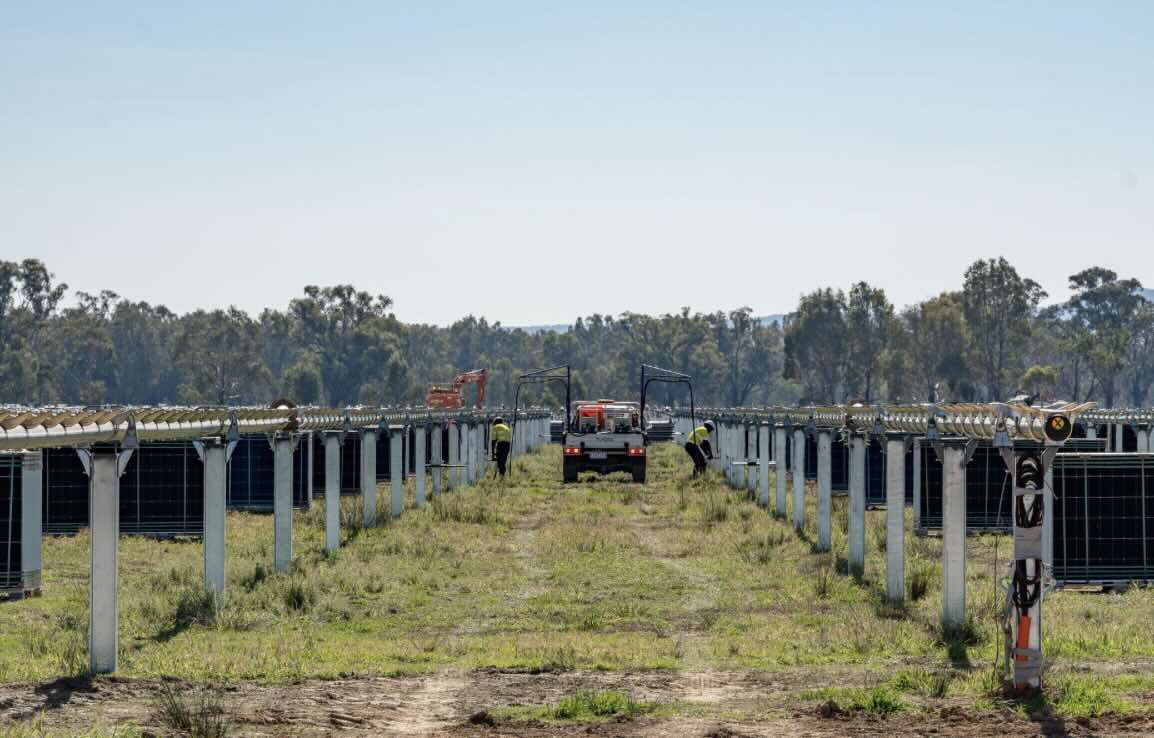
European Energy, a Denmark-based company actively involved in Australia’s renewable industry, has announced that it has secured finance from Commerzbank AG and Société Générale for its ambitious project, which consists of 130 megawatts (MW dc) of solar power paired with a 100 MW, 220 MWh battery system. Construction of Winton North is already underway, with an expected completion date later this year. The project is supported by a power purchase agreement with Amazon, which has recently extended its initial deal to include battery storage.
Insights from European Energy
Catriona McLeod, the Australian country manager at European Energy, remarked that “Winton North is another example of the high-quality assets we are developing in Australia, enhancing our position for future investments, partnerships, and sustainable growth.” The recent financing reflects ongoing support from international lenders for hybrid renewable energy solutions and battery storage initiatives.
Expanding Renewable Energy Portfolio
European Energy’s activities in Australia are on the rise, with the company also managing the Mokoan solar farm and working on several additional projects. Among these, the most significant is the 1.1 GW Upper Calliope solar and battery project in Queensland, which has secured a power purchase agreement with Rio Tinto to supply energy to its extensive Gladstone aluminium operations.
The company has also received underwriting agreements from the federal government for its Bullyard and Kayuga solar and battery projects through the Capacity Investment Scheme (CIS). The trend towards solar and battery hybrids is gaining momentum, as these projects boast competitive costs and are generally easier to construct and gain planning approvals for, while wind projects face financial hurdles due to rising expenses and grid connectivity issues.
Demand for Renewable Energy
With a burgeoning need for power supplies driven by the growth of data centres, companies like Amazon are leading the way as significant purchasers of renewable energy in Australia. Recent weeks have seen the announcement of several new agreements, including one concerning a major battery project in South Australia.
Matt O’Rourke, Amazon’s head of infrastructure policy for Australia and New Zealand, noted that integrating battery storage with solar generation allows clean energy to be stored and delivered when the grid requires it most, thereby enhancing reliability during the transition to renewable energy sources. He stated that this move represents another step in Amazon’s commitment to achieving net-zero carbon emissions by 2040.
Financing and Future Growth
Jens Peter Zink, the deputy CEO of European Energy, expressed that securing financing from prominent international banks highlights the quality and bankability of the company’s renewable assets. This financial backing enables European Energy to optimise its capital structure, reinvest in new development opportunities, and expand its portfolio in key markets. Zink emphasised that maintaining access to competitive project financing is crucial for scaling their operations and generating long-term value.