Record Investment in Australia’s Renewable Energy Needs Acceleration
Australia is witnessing unprecedented investment levels in both large and small renewable energy and storage initiatives. This momentum must be sustained or even accelerated to meet the nation’s targets for clean energy and emissions reduction.
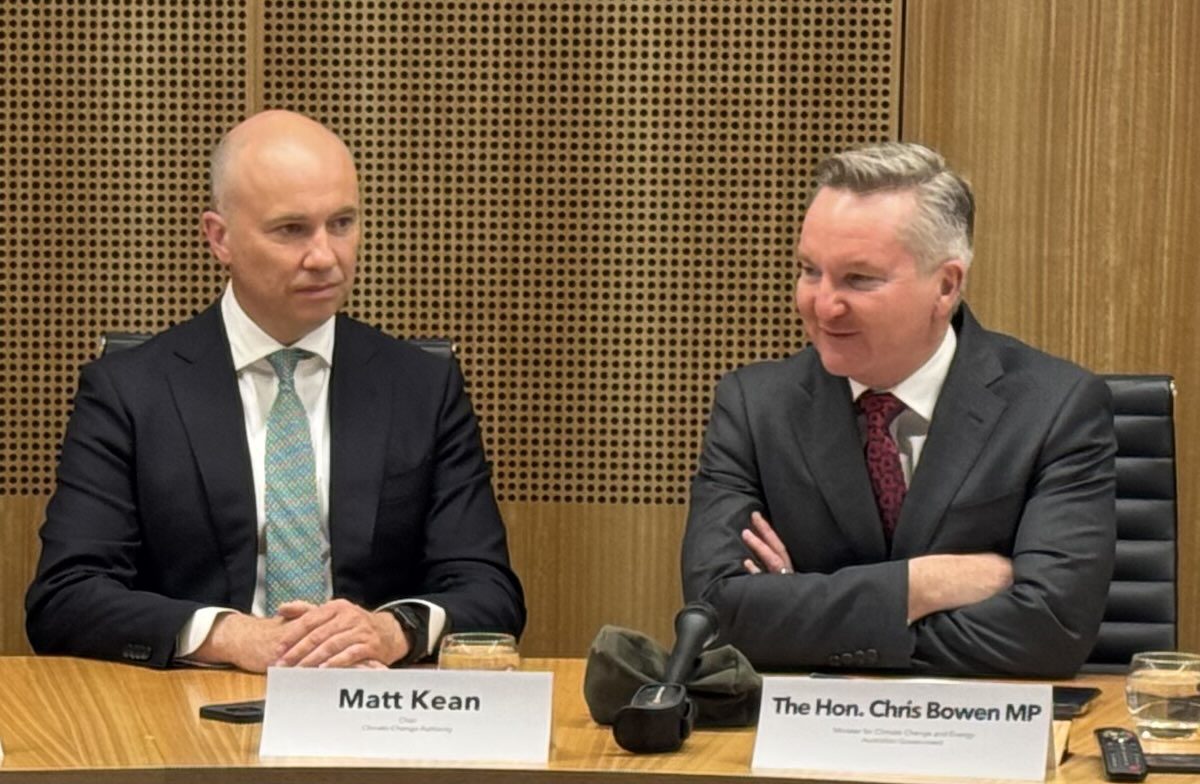
During the September quarter, investors approved 2.1 gigawatts of large-scale renewable energy capacity, matching a previous record and sufficient to power approximately 1.2 million homes, as stated by the Minister for Climate Change and Energy, Chris Bowen.
Record Investments in Wind and Solar
In this latest round of investment, new wind projects accounted for 1.1 GW, surpassing the 1 GW allocated to solar farms, marking the highest quarter for wind capacity yet. However, the solar sector had a stronger performance in the previous quarter, achieving a final investment decision (FID) of 2 GW.
The total capacity achieving FID so far in 2026 stands at 5 GW—this already exceeds last year’s total of 4.9 GW, with three months still remaining. Notably, solar energy constitutes a remarkable 3.5 GW of that total, a record for this technology in any single year, according to Bowen.
Challenges Ahead for Clean Energy Goals
Former head of the Clean Energy Finance Corporation, Ian Learmonth, highlighted Australia’s need to install approximately 29 gigawatts of large-scale renewable energy by the year 2030, which translates to about 6.3 GW of new capacity required annually.
While the increasing speed of FID approvals is encouraging, historical delays paired with the lengthy timelines for construction pose significant challenges for Australia to achieve its goal of 82% renewable energy in the electricity mix by 2030.
Australia has a legally binding target of reducing greenhouse gas emissions to 43% below 2005 levels by the same year. As of March, the country has achieved just around a 25 percentage point reduction, according to government data.
Momentum in Energy Transition
Minister Bowen expressed optimism regarding the figures, indicating that they reflect Australia’s momentum towards transitioning to cleaner energy. “This is what progress looks like: more renewable energy reaching final investment decisions, a boost in rooftop solar, increased battery storage for affordable solar power, and a downward pressure on energy prices,” he remarked.
Bowen also noted that renewable energy outpaced fossil fuels in the national grid for electricity generation last month, marking a significant milestone. The swift expansion of grid-scale storage has been propelled by the federal government’s Cheaper Home Batteries Program.
Boost in Home Battery Storage
As of the end of September, approved small-scale storage capacity surged to 15.3 GW-hours, up from less than 2 GWh at the same time last year, although growth has slowed after the government reduced benefits associated with the program. During the September quarter alone, 1.9 GWh of home battery capacity was added.
Australia’s total home battery capacity is now over five times that of when the programme was launched, as stated by Bowen. In terms of state contributions, New South Wales leads with 5.6 GWh of approved home battery capacity, closely followed by Victoria and Queensland, each with approximately 3.2 GWh.
Strong Growth in Rooftop Solar Installations
The upward trend in rooftop solar installations continues, with around 90,000 new installations contributing 894 megawatts of capacity in the September quarter alone. The total capacity for rooftop solar this year is now 45% greater than at the same stage in 2025.
“Households are taking proactive steps,” Bowen said. “They are installing solar panels on their roofs, putting batteries in their homes, parking electric vehicles in their driveways, and gaining better control over their energy bills.”
Since the election of the Labour government in May 2022, large-scale FIDs have totalled nearly 17 GW, while households have installed over 13 GW of small-scale solar systems during the same timeframe.