Sunshot Initiative Aims to Reduce Solar Construction Costs
The Australian Renewable Energy Agency (ARENA) has reported notable advancements in the quest for ultra-low cost solar technology at the panel and cell levels. However, it acknowledges that further strides are needed to reduce construction costs for utility-scale photovoltaic (PV) systems.
In a recent move, just after announcing the latest beneficiaries from its second funding round, ARENA has initiated the third round of its Solar Sunshot programme, offering $250 million in production subsidies and grants. This new phase aims to focus on technologies that can expedite and lower the costs of large-scale solar construction.
Shifts in Funding Strategy
Dan Sturrock, the general manager of solar investment at ARENA, emphasised that this round intends to build upon the groundwork laid in the previous phase, which targeted economical construction methods and integrated systems rather than merely slashing the prices of cells and modules.
This shift has been guided by an update on ARENA’s 30-30-30 vision, originally established in 2023. This goal aims for 30 per cent module efficiency and a cost of 30 cents per watt by 2030, which would reduce the levelised cost of electricity from solar PV systems to below $20 per megawatt hour, representing a significant cut from current pricing.
Insights on Construction Costs
According to a report released in July regarding the 30-30-30 initiative, while advancements in solar technology costs and efficiencies are evident, the expenses associated with deploying large-scale solar in Australia have not decreased correspondingly.
“We are approaching the halfway mark to the 2030 target, and it was indeed an ambitious goal to significantly lower capital expenditure on construction costs,” Sturrock mentioned during an appearance on the Solar Insiders Podcast. “We are making headway, but we still have a considerable distance to cover regarding construction cost reduction, especially as inflation and labour shortages are currently exerting upward pressure on costs.”
Introducing Solar Sunshot
The Solar Sunshot initiative, first unveiled in March 2024, boasts a total funding of $850 million aimed at positioning Australia within the global PV supply chain while also working to decrease the levelised costs associated with large-scale solar energy generation.
This programme was inspired by the significant findings from the Silicon to Solar Study, which demonstrated that establishing a manufacturing capacity of 10 GW of polysilicon—the primary raw material for PV production—along with 5 GW across the other components of the value chain (ingots/wafers, solar cells, and panels) is “credible and feasible” with appropriate government backing.
Prime Minister Anthony Albanese highlighted this initiative during its launch, stating, “Traditionally, Australia has excelled at transporting resources from the mining pit to the port, and we intend to maintain this trend. However, the government will also invest in the journey from pit to panels, ensuring that our economy and workforce reap greater benefits.”
Funding Success Stories
The inaugural beneficiary of the funding was 5B, an Adelaide-based innovator awarded $46 million to enhance the manufacturing of its prefabricated, pre-wired Maverick solar units, which can be deployed rapidly at construction sites using a forklift. This innovation accelerates the installation process by approximately tenfold compared to conventional large-scale solar farms.
Arena has supported companies across the solar supply chain throughout its funding rounds, including Australia’s only domestic PV module producer, Tindo Solar, which received $34.5 million. Additional grants have been awarded for a green polysilicon feasibility study conducted by Solquartz and a project by Stellar PV to explore setting up a 2 GW low-emissions polysilicon ingot and wafering facility near Townsville in Queensland.
Focus on Construction Technologies
The latest funding round highlights a diverse array of opportunities to reduce costs across the multiple stages of solar farm construction and operational processes—areas that have either stagnated or, in some cases, escalated in expense.
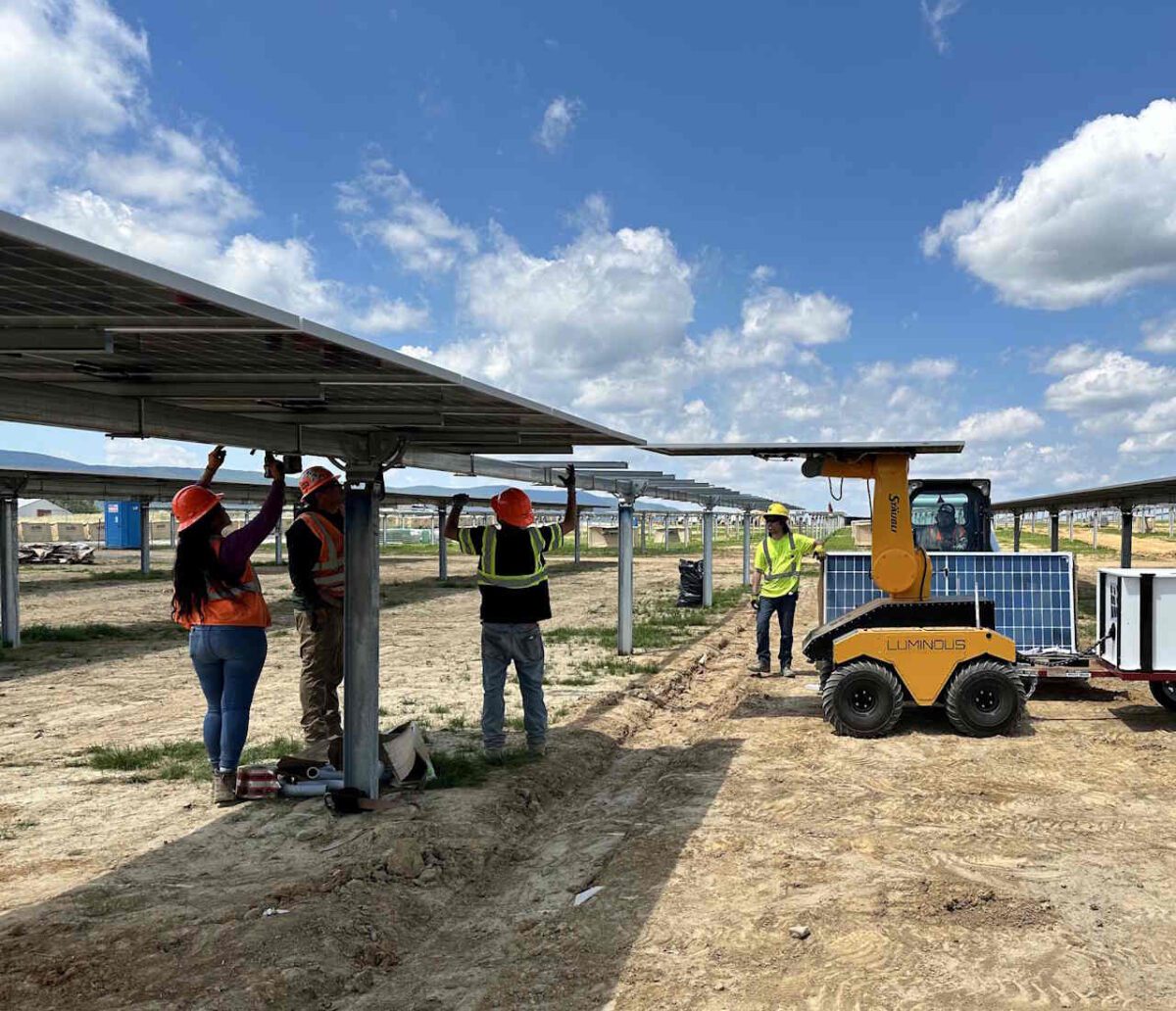
ARENA indicates that eligible technologies might encompass racking and tracking systems, robotics, advanced automation, and prefabrication techniques to lower the costs associated with building and operating large solar farms.
Sturrock pointed out, “While research and development in advanced solar cells and modules to enhance efficiency is progressing as planned, we must concentrate on construction costs. We need balance-of-system solutions to catch up and implement cutting-edge technologies emerging worldwide.”
Sturrock further elaborates, “In all sectors of the transition, monitoring and reducing costs is crucial. We must explore more efficient methods of operation and ensure we construct facilities affordably without compromising quality to ultimately reduce the long-term costs of energy generation.”
Investment Opportunities and Future Prospects
The recent funding recipients highlight a fresh emphasis on reducing balance-of-plant costs. Luminous Robotics, a US firm, has received up to $17.8 million to establish a Melbourne facility to manufacture 100 solar panel installation robots by 2029. Another recipient, a local arm of California’s Built Robotics, is set to receive up to $13.3 million to set up a Brisbane manufacturing base and operations centre for autonomous piling systems used in solar construction.
Sturrock expressed that alongside local innovations, there is a vast pool of talent from the US solar sector keen on entering the Australian market. “We welcome competition and the entry of top international technologies, which can drive rapid enhancements in their offerings,” he noted.
With expressions of interest for the third round of Solar Sunshot starting on 2 November, Sturrock mentioned that the maximum available funding during this cycle is up to $40 million. “This significant capital is necessary as we aim to foster disruptive technologies amidst existing proven components in the market,” he stated.
“Those companies face the challenge of not only having an outstanding product but also of consistently evolving that product and manufacturing it at scale to effectively reduce unit costs,” Sturrock concluded, highlighting the vast potential for solar technology and the need for innovation to diversify the economy and reduce solar farm construction costs in the crucial years ahead.