Solar Farms Regenerate Land While Producing Energy, Study Reveals
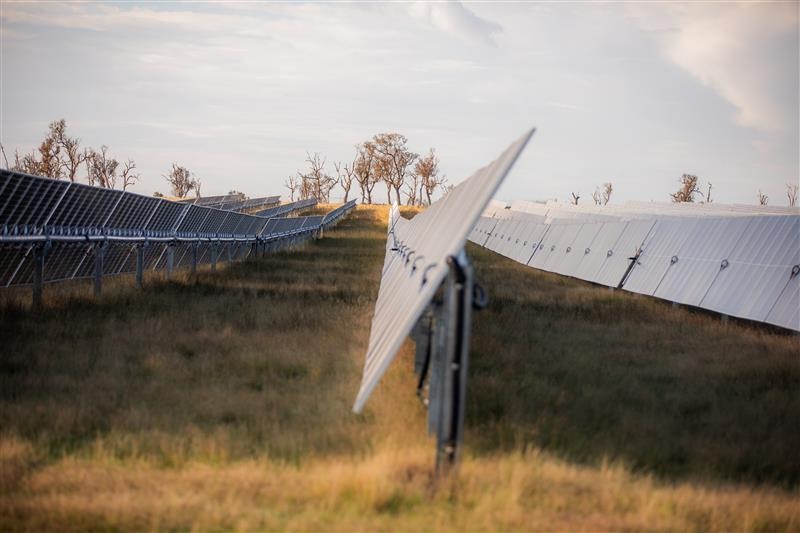
A recent study has revealed the positive impact solar farms can have on environmentally degraded and impoverished land. By providing shelter from strong winds, lowering surface and soil temperatures, and enhancing soil moisture, these solar installations contribute to land restoration.
The research, featured in the journal Geography and Sustainability, is a comprehensive synthesis of 147 individual studies examining various land types and climate conditions to understand the interactions between solar farms and their surrounding environments.
Significant Findings on Ecological Impact
The study points out that unlike fossil fuels, which primarily contribute to pollution, solar energy has beneficial effects on climate and ecology. It states, “Solar power exerts climate- and ecology-dominant influences on the entire environment.”
According to the findings, solar photovoltaic (PV) systems alter the radiative properties of land surfaces, which in turn creates new energy interactions with existing ecosystems. This process modifies land surface dynamics and the associated climatic variables.
Data from Extensive Analysis
In its broad-ranging meta-analysis, the report examined 609 solar farms, predominantly situated in the Northern Hemisphere. The largest concentrations were found in China (316 facilities), the United States (104), and India (44), reflecting their status as the top three countries for installed solar PV capacity.
The most frequently studied surfaces beneath these solar farms included grasslands (208), bare land (173), and cropland (159). Notably, a majority of the analysed solar farms were located in arid climates.
Impact on Climate Variables
The meta-analysis uncovered “non-significant positive effects” on various air temperature metrics, including daytime and nighttime temperatures, although results fluctuated based on the types of surfaces involved. However, marked reductions in wind speed were noted, with an overall decrease of 29.96%. Specific reductions for solar PV systems were 38.33% on cropland, 32.67% on grassland, 31.54% on water bodies, and 22.00% on bare land.
Solar farms also demonstrated a significant ability to lower albedo – a measure of the amount of sunlight a surface reflects rather than absorbs as heat. The study found that albedo levels in PV systems reached 82.51% of those in non-solar reference regions, reflecting a reduction of 17.49%. Individual reductions were substantial, with decreases of 9.51%, 13.57%, 18.17%, and 19.89% recorded over cropland, grassland, water bodies, and bare land, respectively.
Temperature Effects During Various Times of Day
In comparison to non-solar environments, daily land surface temperatures were significantly reduced in PV systems by 0.44°C, and daytime temperatures fell by 0.90°C. However, no significant changes in nighttime land surface temperatures were observed. Specifically, there were notable reductions of 0.84°C on grassland and 0.30°C on bare land.
During the day, the reductions were even more pronounced: PV systems on grassland, buildings, and bare land demonstrated significant decreases of 1.13°C, 2.54°C, and 0.76°C, respectively. While no overall effect was identified for thermal conditions at night, a significant decrease was found for solar PV systems over cropland (0.42°C) and grassland (0.31°C), though the increase for PV systems on buildings was not statistically significant.
Soil Temperature and Water Content Improvements
At a deeper level, the presence of solar farms reduced soil temperatures by 2.42°C and increased soil water content by 38.60% compared to reference regions. The decrease in soil temperatures was most marked on cropland and grassland, at 2.52°C and 2.88°C, respectively. Furthermore, soil water content saw significant increases of 41.20% on grassland and an impressive 58.03% on bare land.