Australia’s Path to Giga-Scale Solar Manufacturing: Arena’s Vision
The Australian Renewable Energy Agency (ARENA) is optimistic about enhancing the nation’s onshore solar module production capacity, aiming to reach an ambitious target of 1 gigawatt annually. This initiative looks to boost competition against Australia’s sole solar panel manufacturer, Tindo Solar.
This week, ARENA unveiled the third round of its $850 million Solar Sunshot funding programme, offering an additional $250 million in production subsidies and grants. Although the current focus has shifted from solar cells and modules to innovative construction techniques that reduce costs, Dan Sturrock, ARENA’s general manager for solar investment, reassured that the goal of an Australian-made solar industry remains a priority.
Changes in the Manufacturing Landscape
At present, Tindo Solar, based in Adelaide, stands as the only PV module manufacturer in Australia, a position it has held since its inception in 2011. Last year, Tindo secured $34.5 million in Sunshot funding to scale its production from 20 megawatts (MW) per year to a robust 180 MW, paving the way for a potential gigawatt-scale factory in the future.
An additional competitor has emerged in the form of a company led by renowned Australian solar researcher and developer Zhengrong Shi. Last December, this company secured over $150 million in Sunshot funding to establish a commercial-scale solar panel manufacturing facility in New South Wales. The Hunter Valley Solar Foundry, which also received $20 million from the state government, aims to operate a manufacturing facility with a capacity of 500 MW per annum, producing lightweight solar panels for Sunman while providing additional manufacturing capabilities for other producers.
Sturrock noted on the Solar Insiders podcast that competition can be beneficial: “We see competition as good… [and] there’s room in the market for multiple producers. We do have one more project in the pipeline that’s not yet announced, so … watch this space for potentially a third project. But we were always hoping to get to a gigawatt and we still hope that we might achieve that.”
Future Ambitions and Challenges
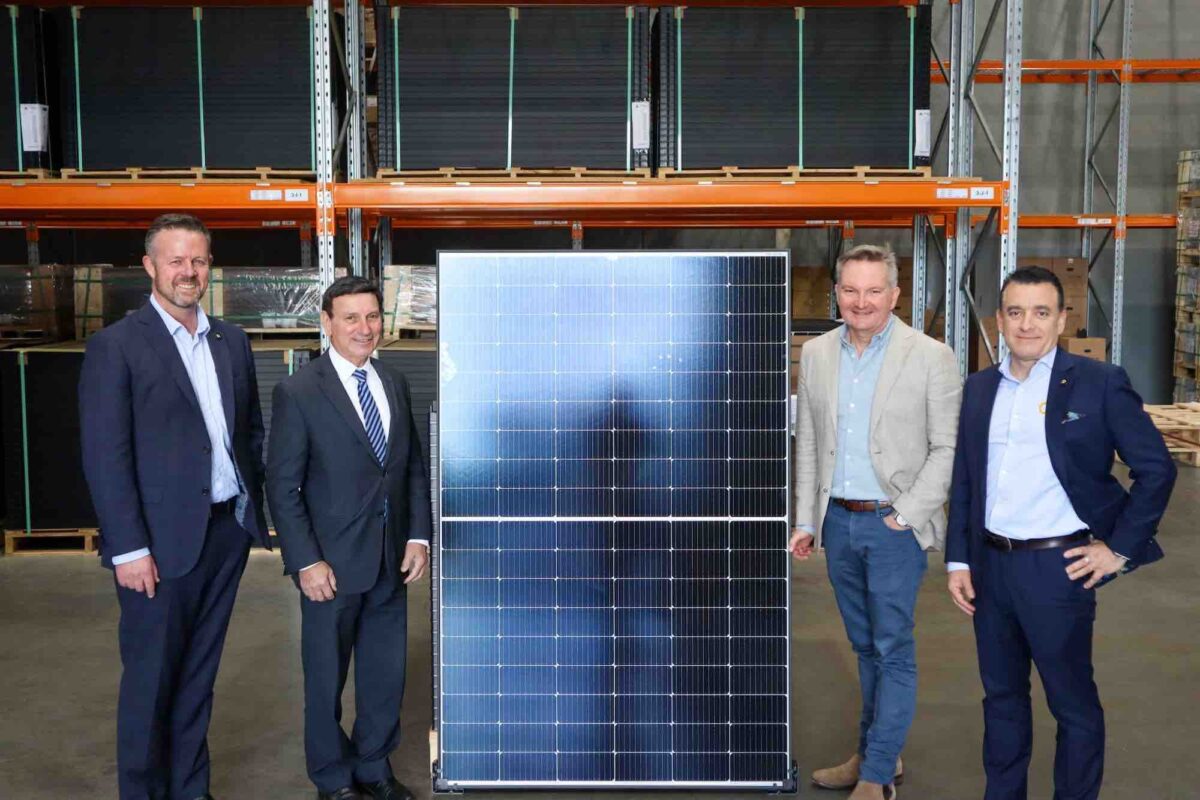
In 2024, Tindo outlined its ambition to create a solar panel “gigafactory” in Australia, claiming that with sufficient federal support, it could achieve this feat within two years at a cost of $90-100 million. When Tindo received its SunShot grant in August of last year, federal energy minister Chris Bowen, whose own rooftop solar system features Tindo panels, stated that the funding would enable Tindo to cover approximately 10 percent of Australia’s domestic demand for solar panels.
However, the path forward is fraught with challenges, particularly due to the fierce competition posed by inexpensive, readily available panels from China. Sturrock explained that ARENA is committed to ensuring accountability while also being flexible in response to the shifting market dynamics, competition, and regulations.
“We are the custodian of taxpayer dollars, and we take that quite seriously. There’s a balance to strike when working closely with these companies to ensure success, but also recognising that every success target may not be met,” added Sturrock.
Innovations and Ongoing Support
SunDrive, a solar cell innovator spun off from the University of New South Wales (UNSW), applied for initial Sunshot funding in partnership with Chinese photovoltaic giant Trina in 2024, with a proposal to set up a module manufacturing plant in Western Sydney capable of producing 1.2 gigawatts (GW). Although this bid was unsuccessful, SunDrive has received substantial support from ARENA through the Advancing Renewables Program, which includes a $25.3 million grant for developing its technology.
“We’ve supported [SunDrive] with their core technology development, and they’re continuing to bring their novel copper-based metallisation technology into the market,” Sturrock stated. He expressed optimism about seeing significant commercial progress in the next year but noted that SunDrive appears to be moving away from its module manufacturing aspirations.
In the meantime, Tindo is working to increase its production levels at its new Adelaide facility, while the Hunter Valley Solar Foundry is gearing up to commence construction next year, setting the stage for a new competitor in the solar module market.