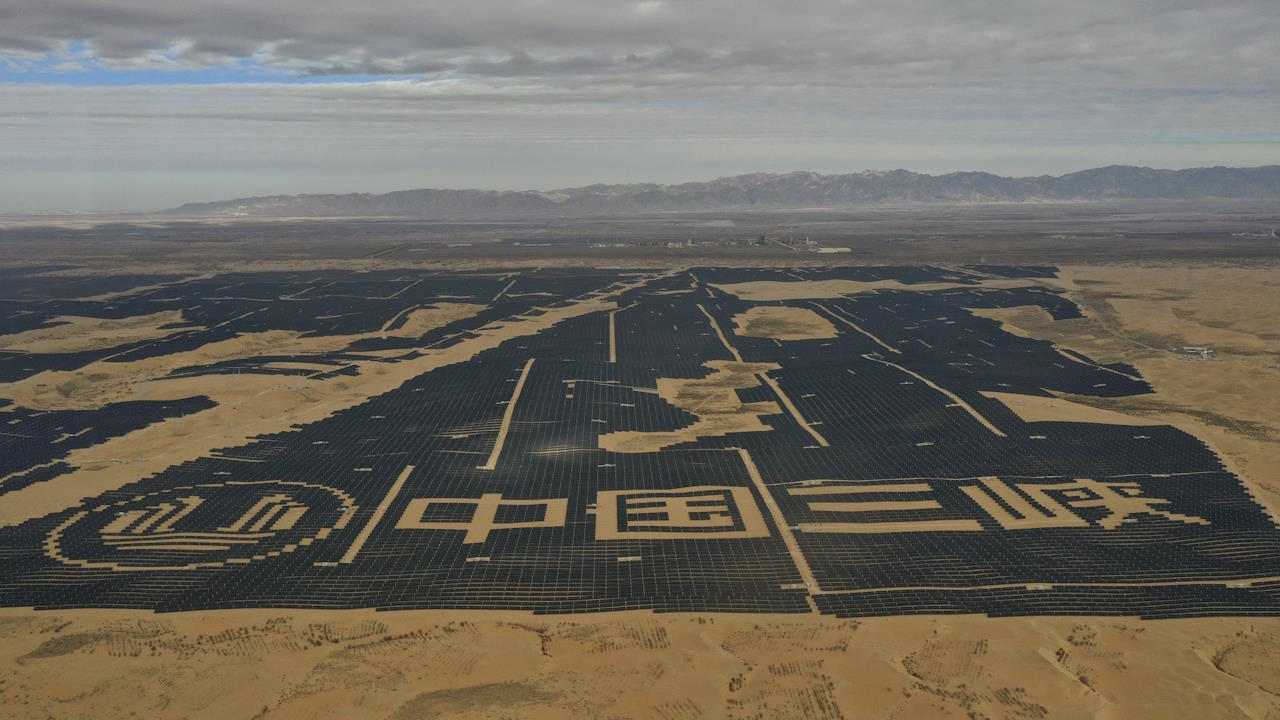
China’s Solar Farms Create Cool Habitats in Gobi Desert
China’s ambitious initiative to blanket its deserts with solar panels is yielding surprising results, fostering a cooler environment that promotes plant growth in areas once deemed uninhabitable. This finding emerges from recent research conducted by the Chinese Academy of Sciences in Lanzhou, published in the Ecological Indicators journal.
The study illustrates that the effectiveness of creating a ‘cool island effect’ relies heavily on the design of the solar farms, the prevailing climate, and the specific season during which the measurements are taken. It has been noted that while regions with more greenery or humidity often experience heat islands due to solar installations, the Gobi Desert’s unique conditions mean that solar panels can actually lower temperatures in the surrounding area.
Cool Island Effect in the Gobi Desert
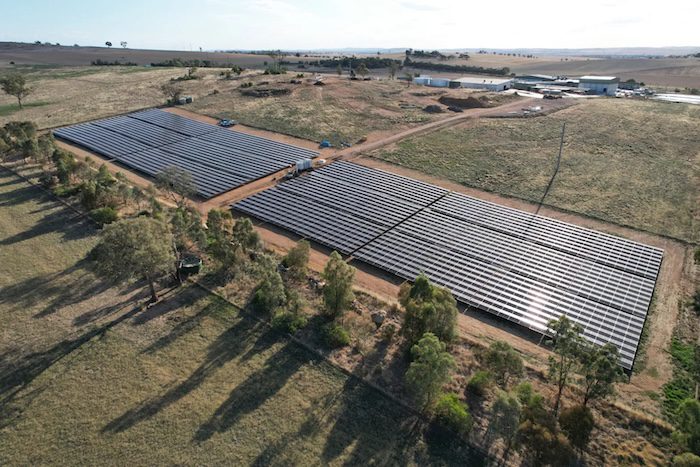
The research employed satellite imagery from 2022 to assess daytime cooling effects across eight solar farms, predominantly located in Xinjiang, Inner Mongolia, Gansu, and Qinghai. The most significant cooling of 3.1ºC was recorded at a solar farm near Wuzhong City in Ningxia province, whereas the lowest cooling effect of 0.2ºC occurred at a project near Hongshagang Town in Gansu. Interestingly, the solar farms proved to be more effective at fostering a cool island effect during the summer months.
Combatting Desertification
China has set an ambitious target of developing 455 gigawatts (GW) of solar power in the Gobi Desert and other desertified areas by 2030. This initiative is part of a broader effort undertaken by the state over the past decades to combat desertification, which includes measures to curtail dust storms through vegetation and afforestation programmes.
The study further found that the cool island effect typically extended between 120 and 540 metres around the solar farms. Previous research has noted a ‘desert greening effect’ stemming from solar installations, where reduced evaporation rates, increased humidity, and improved soil moisture contribute to creating microclimates conducive to plant growth.
The Refuge Effect
This phenomenon appears to extend beyond the immediate vicinity of the solar farms, creating what is termed a ‘refuge effect’ in the surrounding areas, although this aspect remains relatively unexplored. While solar farms situated in wetter regions tend to produce slight heat islands due to denser plant life and higher rainfall, the installation of radiation-absorbing roofs in arid deserts has the opposite effect, as outlined by the authors of the study.
The emergence of the cool island effect is most significantly attributed to incorporating various elements into the desert landscape to break its uniformity. Research suggests that regularly shaped bodies of water or green spaces—such as circular or square designs—enhance evaporation and air circulation more effectively than irregular shapes, thereby stabilising cooling effects.
Optimising Landscape for Cooling
The introduction of solar panels across flat desert landscapes has created ‘energy exchange corridors’, reducing the amount of radiation absorbed by gravel or sand while providing additional shade. This, in turn, encourages more vegetation to flourish in these regions.
In areas characterised by arid and hot conditions, the cool island effect can emerge as a vital ecological restoration tool, contributing to the creation of a ‘local ecological refuge’ that enhances carbon sinks in such environments. The researchers advocate for strategies that emphasise increasing landscape complexity, maintaining a variety of patches, and avoiding overly regular geometric arrangements to optimise the cool island effect.
Recommendations also suggest controlling the size of individual solar units by adopting a decentralised cluster approach rather than constructing vast power plants. In mountainous areas, adjusting the distance between solar panels and fine-tuning their tilt can mitigate any adverse effects of the cool island effect on local vegetation.