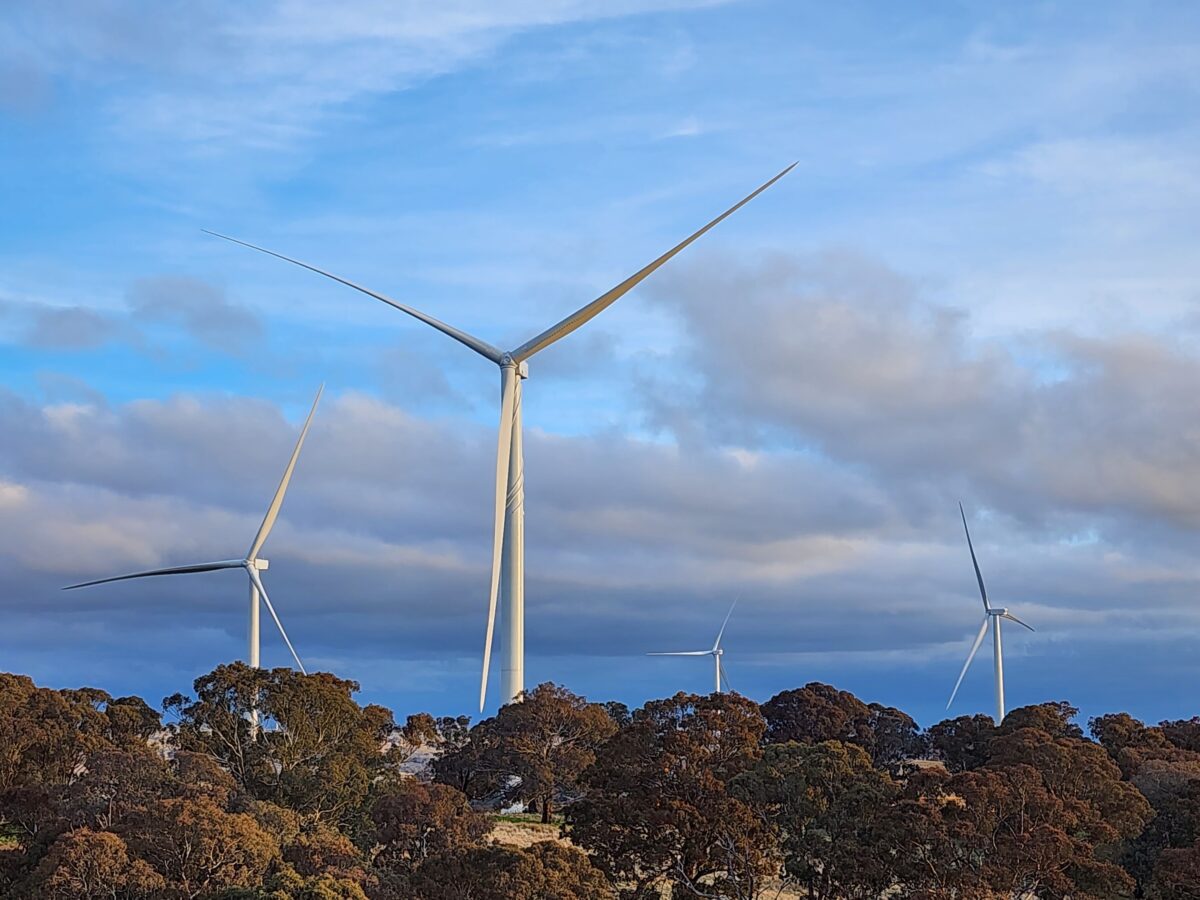
Low Wholesale Prices Signal Challenges for New Wind and Solar Investments
The current wholesale electricity prices are insufficient to sustain the construction or even the maintenance of existing generation capacity. This lack of investment signals will lead to a hiatus of two years after the completion of the existing 4 gigawatts (GW) of large-scale wind and solar projects, with no new supply reaching the market except for rooftop photovoltaic (PV) systems.
It is generally preferable to have an oversupply of electricity rather than a shortage. New capacity must be established and brought online before existing facilities can be safely decommissioned. Hence, while both types of supply are operational, excess capacity will result in lower prices, failing to stimulate new investments.
The Need for Subsidies in New Generation
In order to facilitate new generation, subsidies are essential. After new projects are established, the dynamics of the spot market should prompt existing facilities to begin phasing out. The necessary level of subsidy for new generation can be roughly estimated by calculating the levellised cost of energy (LCOE) against the anticipated average spot prices.
This situation is not particularly complex; however, numerous intelligent individuals have complicated a straightforward issue with sophisticated government-funded underwriting schemes like the LTESA, CIS, and now ESEMs. All investors and consumers truly require is a straightforward swap Power Purchase Agreement (PPA), similar to those successfully executed by Simon Corbell and his team in the ACT.
The finance sector is capable of responding to bids in just a week when necessary. Investment banks can react swiftly, meaning that prolonged negotiations are unnecessary and have already been accomplished with the CIS arrangement. What is essential now is transforming an instrument that supports debt into one that fosters investment. This could feasibly be completed within two weeks, or a month at the most.
The Support Provided by the NSW Government
The NSW Government has made considerable efforts to assist developers through various measures, including hand-holding, streamlining processes, and guarantees regarding transmission. It’s hard to identify what additional support they could provide, other than offering PPAs themselves.
Interestingly, more wind and solar capacity reached Financial Investment Decision (FID) in 2018 than in the past year. Despite the impressive rise of behind-the-meter solar since 2018, the demand for new operational wind and solar capacity remains acute.
With demand projected to increase and coal plants aging—averaging six years older now—Australia has yet to achieve a consistent 50% renewable energy contribution on an annual basis.
Current Pricing Trends and their Implications
Electricity and gas prices in the spot market are starkly different now compared to the immediate aftermath of Russia’s invasion of Ukraine. Despite potential demand surges from smelters and data centres, which seem determined to rise from their struggles, the spot electricity and gas prices have significantly declined.
Data centres and AI developments are posing potential divides in the industry. It is important to highlight that low prices can hinder the emergence of new supply sources. Unfortunately, the wind sector appears stalled. Following years of complaints about transmission delays and associated risks, it has become evident that the major challenge lies with developers who expect a high internal rate of return without corresponding investments.
At this juncture, it seems increasingly unlikely that any major wind farms in NSW will reach FID in 2026, mirroring the absence of FIDs in 2025. While ORG’s $300 million investment in Yanco Delta gives some incentive for return, the progress of most other projects seems almost stagnant.
Insights on the Solar Sector and Consumer Benefits
Last year, there was significant interest in hybrid projects without a solar component, but this year enthusiasm seems to have waned even for battery installations. Battery outputs have increased by over 150% compared to last year, yet profitability is declining as the energy storage capacity expands.
For consumers, the current numbers reflect a positive trend, although these figures are only applicable for part of the year and do not account for winter conditions. A significant shift in dynamics due to either a wind drought or a major coal outage could rapidly elevate prices again.
Interestingly, the increasing levels of utility and household batteries seem to positively affect midday prices while substantially lowering peak prices, resulting in an overall decrease in prices. Nevertheless, this doesn’t change the fact that there is a lack of price signals prompting new investment. The LCOE for wind remains at least $100/MWh, and developers would likely assert that the true figure is even higher.
Understanding Transition Dynamics
The transition period is expected to last for at least a decade, making it challenging to align timing. During this phase, both new and old generation capacities will operate concurrently, with the competitive market dynamics driving the timing of exits rather than a central management schedule.
Should we disregard the risk of blackouts, we might rely solely on market mechanisms. However, low prices can create underinvestment until a generator failure or a demand spike occurs, prompting government intervention due to energy shortages.
The prudent approach is to recognise that this transition will result in overcapacity, which keeps prices suppressed below levels necessary for new investment. Therefore, consumers, through government support, must be willing to fund (i) new supply to induce investment and (ii) existing producers’ operations as needed.
Conclusions on State Management
While state administrations like Victoria have faced challenges with community relations, the NSW government has successfully advanced transmission projects without securing new capacity construction. Currently, the likelihood that major wind projects in NSW will achieve FID in 2026 is only marginally better than 50/50.
Although the Spicers Creek project appears to be making headway, the overall outlook remains cautious. Other initiatives like the one from Westwind are promising, yet optimism alone does not guarantee results.
In conclusion, we are left with just 4 GW of solar and wind projects currently under construction, with more complexity ahead if we are to build a sustainable energy future. The path forward will depend on simplifying processes and fostering effective policies.