Home Batteries and Solar Surge Bring 82% Renewables Target Closer
The recent surge in home battery installations and rooftop solar systems has breathed new life into Australia’s ambition of reaching 82 per cent renewable energy by 2030—a target once deemed unattainable by many.
This optimistic outlook comes from Carl Binning, executive general manager at the Clean Energy Regulator, who believes that the substantial investments made by households in solar PV and batteries can alleviate the pressure on larger scale wind and solar projects required to meet the 2030 goals.
Shifting Perspectives on Renewable Targets
Some experts have expressed skepticism about achieving these renewable objectives, citing delays in large-scale renewable projects, particularly in wind energy. Pessimistic projections suggest that the renewable energy share could fall below 60 per cent by 2030. However, federal energy minister Chris Bowen remains confident that the target remains within reach, albeit challenging.
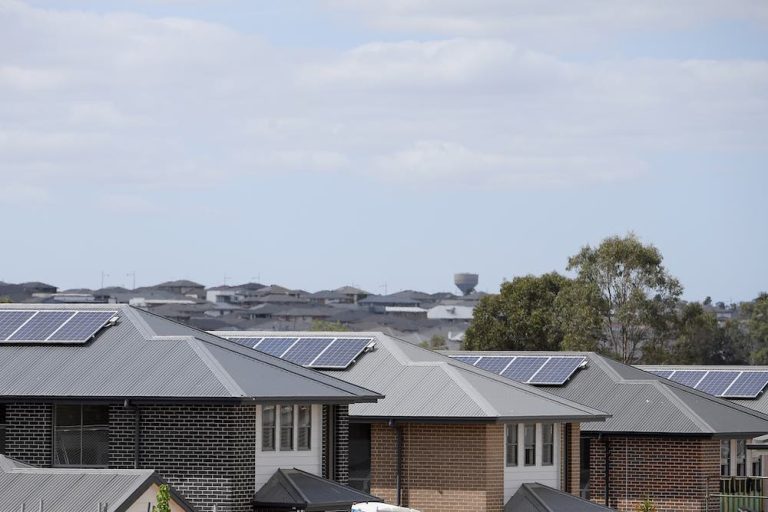
In contrast, Binning highlights that the unexpected increase in rooftop solar and home battery installations—fuelled by federal incentives—has taken even industry insiders by surprise, creating a new pathway towards that ambitious 82 per cent target.
Current Progress and Future Expectations
The Australian Energy Market Operator’s Integrated System Plan indicates that to meet the federal target, an additional 28 gigawatts of large-scale renewables, nearly 10 GW of rooftop solar, and around 5 gigawatt hours (GWh) of home storage will be necessary. Currently, home battery storage stands at 11 GWh, with expectations to soar to 40 GWh, significantly surpassing the ISP assumptions. Furthermore, a record 441 megawatts (MW) of rooftop solar was installed in April, suggesting a promising annual rate of approximately 4 GW—an achievement that would still exceed the ISP projections even if it were only 3 GW.
“If we take stock of this, we can start to see the finish line, and a couple of ways to get there. That is super exciting,” Binning remarked during his address at the Smart Energy 2026 conference.
Binning estimates that less than 20 GW of large-scale wind and solar is required, necessitating installation rates that exceed the current rate of around 4 GW. He also indicated that the Clean Energy Regulator is tracking at least 28 GW of projects currently in progress, although many have yet to secure financing or commence construction.
He acknowledged that securing investments has proven difficult, a concern echoed by David Leitch, principal at ITK and co-host of the Energy Insiders podcast, who questions the feasibility of maintaining an installation rate of 4 GW annually without reforms to the Capacity Investment Scheme.
Potential for Growth in the Sector
Binning remains optimistic, stating, “It looks plausible now. It doesn’t look like a super stretch target. The amazing thing about small scale is how flexible and fast it is. Eleven gigawatt hours (of home batteries) in 12 months just blows your mind.” He noted that in April alone, the Clean Energy Regulator received more than 70,000 applications for home battery installations, with over 20,000 submitted in the last week.
Australia’s largest installer by storage capacity, Fox ESS, reported installing 25,000 systems just in April and sees no signs of demand waning, despite modifications to rebates.
Binning also posits that demand for both rooftop solar and home batteries will continue to rise, as the 381,000 home batteries installed since last July represent only a fraction of the nation’s 4.2 million households, many of which have smaller systems that may require upgrades.
“There is massive upside in coming years,” Binning added. “It’s not just cheaper, reliable energy; it also provides a sense of control in a rapidly changing world.”
Future Prospects Beyond 2030
Looking beyond 2030, Binning remarked, “We are going to need everything—big and small scale—as the passenger car fleet and households and industries electrify. It is not a matter of whether small scale will outstrip large scale’s capacity; instead, it’s about how they can complement each other.”
The CEO of the Clean Energy Council brought attention to the challenges facing investors in large-scale projects, including issues surrounding transmission, market signals, and social licence, which have been exacerbated by misinformation as highlighted in a recent Senate inquiry.
“The longer we keep coal-fired power stations, like Eraring, operational, the harder it will be to attract investments to wind and solar projects,” Trad expressed. “They are competing against coal in a system that runs parallel. The pace of large-scale project development will be increasingly challenging.”
If you want to stay informed with the latest clean energy updates, consider subscribing to our free daily newsletter, which is currently enjoyed by over 29,000 readers.
Your support for independent media and accurate information is invaluable—consider making a one-time donation or becoming a regular supporter of Renew Economy.