How PV Fingerprints Predict Rooftop Solar Trends
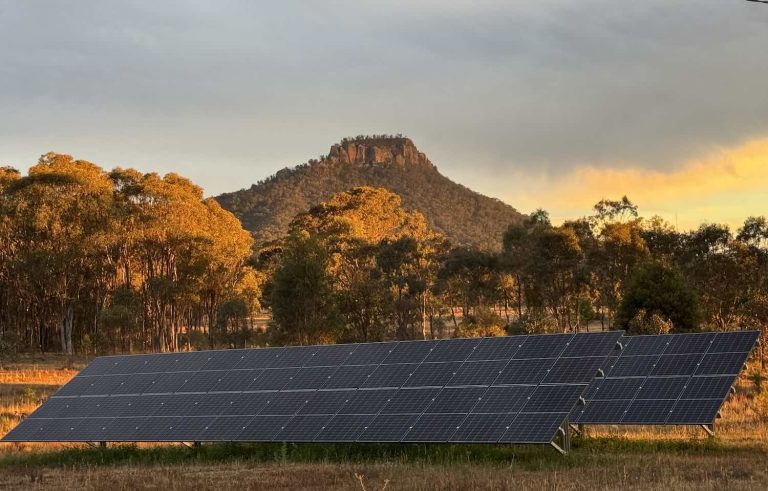
A computer scientist based in Melbourne is taking on a challenge that has stumped regulators: accessing rooftop solar data from Australian homes to enhance predictions of solar energy generation.
According to Julian de Hoog, this initiative stands to benefit not only the market regulator but also virtual power plants and homeowners who will gain insights into the performance of their solar systems.
The Challenge of Rooftop Solar
Rooftop solar energy has long stood apart as an unpredictable player in the energy sector, disrupting the business models of traditional grid-scale solar and coal generators while posing challenges for network operators and regulators alike.
De Hoog, the founder of Solstice AI, emphasises the growing significance of accurately predicting the output from these power sources at particular times of the day. “A more comprehensive regional forecast is invaluable for the Australian Energy Market Operator (AEMO) and all participants in the energy market,” he tells Renew Economy.
Responding to Sudden Changes
He illustrates a scenario where unexpected cloud cover appears near Sydney, leading to a simultaneous halt in solar power generation from many installations. “It’s akin to losing a power plant, and we need to find a replacement for that lost capacity,” he explains, noting that such moments present opportunities for battery systems or gas peakers to enter the market profitably.
Rooftop Solar’s Capacity Insights
Currently, rooftop solar is the second largest energy generator in New South Wales, boasting a capacity of 8.2 gigawatts (GW), with expectations to surpass coal generation soon. Nationwide, rooftop solar is leading the pack in the National Electricity Market (NEM) with a staggering 23.9 GW, compared to black coal’s 17.1 GW, as per Open Electricity data. However, many Australians remain hesitant to relinquish control over their energy systems to a virtual power plant (VPP) or similar entities.
Nonetheless, de Hoog asserts that his software can provide minute-by-minute insights into solar performance, predicting output in real-time and for the short term. The software leverages satellite imagery to locate rooftop solar panels in a certain area, partnering with a VPP or electricity providers, with the consent of homeowners, to obtain precise performance data from select residences.
Moving Beyond Estimates
The collected data creates a performance baseline for each solar system. In contrast to AEMO’s reliance on weather forecasts and approximations from platforms like PVOutPut.org, Solstice AI focuses on actual data from individual houses. For instance, it can identify that homes in eastern Sydney are only producing at 40% capacity due to overcast conditions.
“AEMO strives to forecast rooftop solar output seamlessly, but they mainly rely on estimates,” de Hoog points out, adding that “our system effectively treats each house as a solar sensor, providing real-time data on solar generation.”
The Complexity of Data Collection
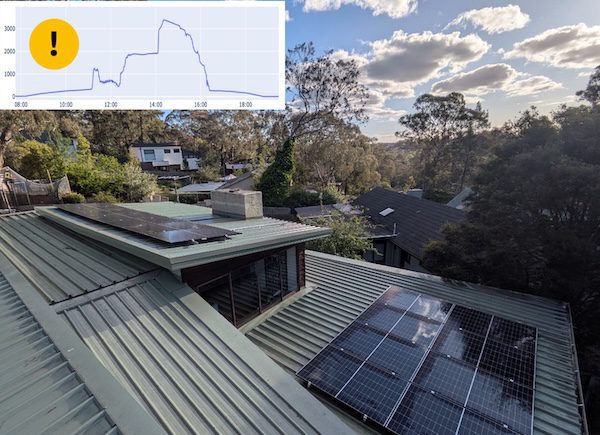
While the concept of using household data might seem straightforward, de Hoog clarifies that it is far more complex in practice. Each home has its unique “fingerprint,” influenced by factors such as the angle of solar panels and seasonal changes in shading. Hence, gathering a reliable performance baseline requires extensive data collection over time.
Transforming these individual data points into a comprehensive geospatial analysis also presents challenges, he admits. Moreover, many Australians, wary of potential commercial exploitation of their home energy investments, may opt out of sharing their data.
Benefits for Virtual Power Plants
However, de Hoog insists that his technology is not solely beneficial for large businesses. VPPs are particularly interested in identifying underperforming homes, allowing them—and the homeowners—to take corrective actions. This is crucial for VPPs that focus on owning and managing residential solar batteries, as well as for others that require a justification for limiting solar exports to the grid.
For instance, a VPP may choose to curtail solar generation during periods of negative pricing to avoid losses. “By demonstrating to customers the savings achieved through these measures, we can enhance their understanding and trust,” de Hoog explains.
Enhancing Forecast Models
Every VPP possesses its forecasting engine that assesses the collective generation abilities of its fleet. When new homes are added, historical data is often missing, complicating the forecasting process. “We can reconstruct the historical data of a home, providing crucial information to optimise forecasting models,” de Hoog concludes.
For those keen to stay informed about developments in clean energy, consider subscribing to our free daily newsletter, joining over 29,000 others in accessing the latest updates.
Your support for independent media and accurate reporting is invaluable, and donations or regular subscriptions to platforms like Renew Economy are greatly appreciated.