Australia’s Major Solar Battery Projects Secure Financing for Heavy Industry
Australia’s largest solar and battery hybrid projects have successfully secured financial backing, marking a significant milestone that is poised to power major aluminium smelters and refineries while influencing the discussion on the future energy grid.
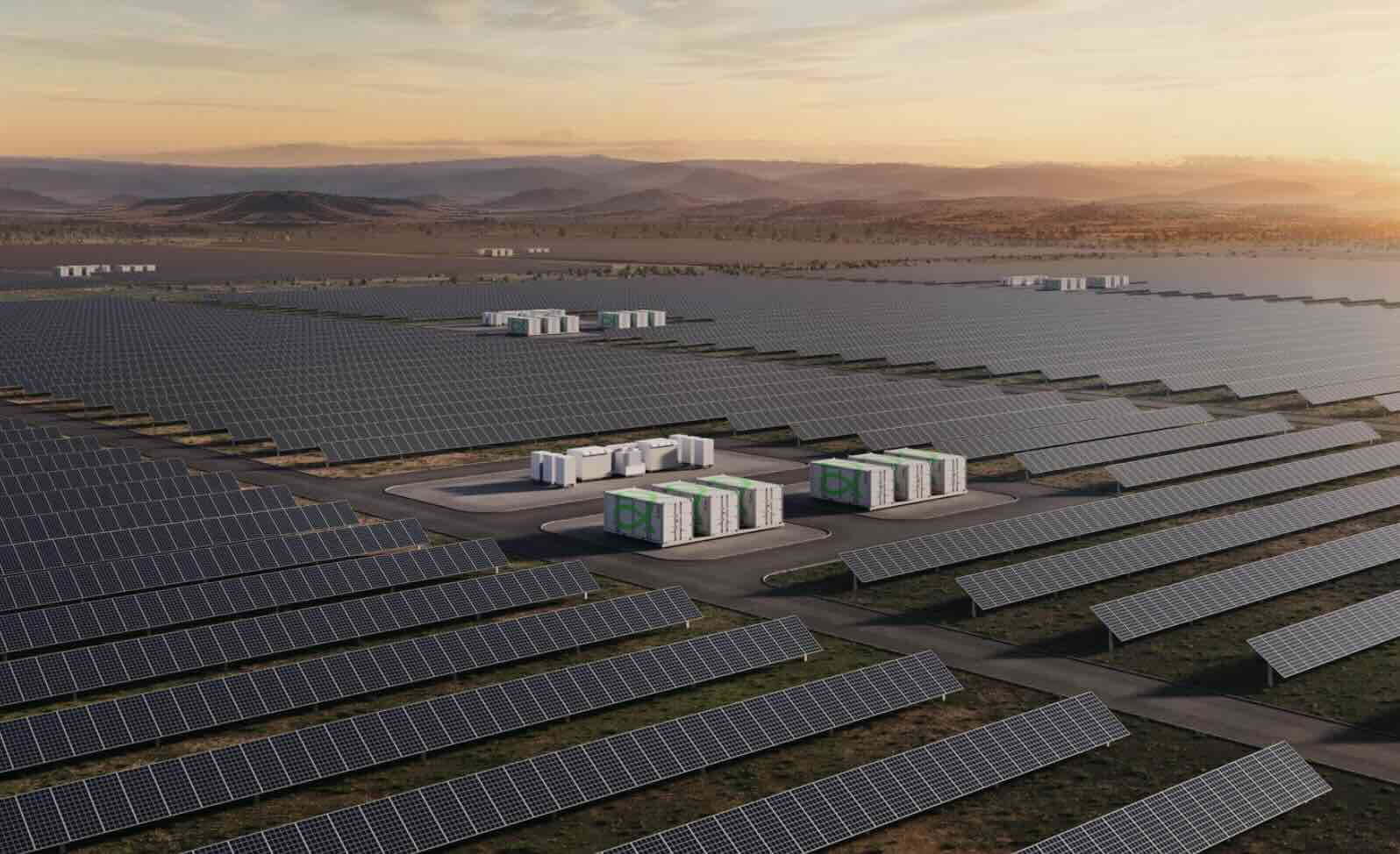
Edify Energy, currently owned by Canadian firm La Caisse, has announced that 14 lenders, both from Australia and abroad, have come together to support the Smoky Creek and Guthrie’s Gap initiatives in central Queensland. These projects will feature a combined power capacity of 600 megawatts (MW) of solar energy along with 600 MW and 2,400 MWh of battery storage.
Supporting the Transition to Green Energy
These adjacent projects are integral to mining giant Rio Tinto’s strategy to shut down the ageing Gladstone coal-fired power station by 2029, replacing it with renewable energy sources and storage from the Smoky Creek and Guthrie’s Gap sites, as well as the Upper Calliope solar farm, the Bungaban wind project, and other forthcoming developments.
“Smoky Creek and Guthrie’s Gap are pivotal to the energy transition, offering economical, dependable, and dispatchable renewable energy,” stated Edify Energy CEO Ben Warne. He emphasised that these are the initial projects to secure financial closure under La Caisse’s ownership, showcasing Edify and La Caisse’s commitment to driving meaningful change in the energy sector.
Long-Term Deal with Rio Tinto
The two projects have established a 20-year off-take agreement with Rio Tinto, securing 90 per cent of their output to supply power to the Boyne Island smelter in Gladstone along with two refineries. This agreement is backed by underwriting arrangements from the federal government’s Capacity Investment Scheme.
This agreement holds significant implications for the federal government’s objective of achieving 82 per cent renewable energy by 2030. This goal has been complicated by recent actions from the LNP government in Queensland, which has halted the state’s renewable energy targets and imposed obstacles on new developments.
Challenges and the Need for Renewable Energy
The LNP’s energy roadmap explicitly states that it supports wind and solar developments only if they assist the Gladstone smelters and refineries, which are the largest energy consumers in the state. Several other wind and battery projects have been “called in” and remain in a state of uncertainty after prolonged delays.
In a somewhat ironic twist, the Smoky Creek and Guthrie Gap projects represent not only one of the largest renewable energy off-take agreements in the industrial sector but also serve as a leading example of firmed solar energy utilisation in heavy industries.
Advancements in Renewable Energy Integration
Edify Energy has indicated that the Smoky Creek and Guthrie’s Gap solar power stations will deliver utility-scale solar generation paired with battery energy storage and advanced grid-forming inverters, specifically designed to produce cost-effective, reliable, dispatchable renewable power.
Together, these projects are expected to bolster Queensland’s energy infrastructure, meet industrial energy demands, and enhance reliability as older thermal power plants are phased out.
Community Impact and Job Creation
Edify has already commenced preliminary works on these sites, with Malaysia’s DT Infrastructure awarded the main construction contract. DTI is also engaged in constructing the Carmody’s Hill wind farm in South Australia alongside the Jinbi solar farm in Western Australia.
The initiative has strong backing from local landholders, the community within the Banana Shire, and the Gaangalu Nation. It is anticipated to generate up to 800 jobs during peak construction and will promote local apprenticeships and training programmes.
“The projects will maximise local procurement, nurturing local suppliers and the Australian domestic steel industry. Our community benefits programme, which spans over 35 years, is designed to ensure a lasting, positive legacy for the area,” noted the company.
Additionally, the “greenfield renewable energy portfolio financing package” represents a first for Australia and aims to establish a scalable foundation for future developments.