Raising Solar Farm Modules for Grazing Cows is Cheaper Than Expected
A small solar farm owner in central New Zealand has uncovered that elevating solar modules to enable cattle grazing beneath them is more affordable than previously estimated. The engineer behind the innovative design suggests that similar installations in Australia might incur even lower costs.
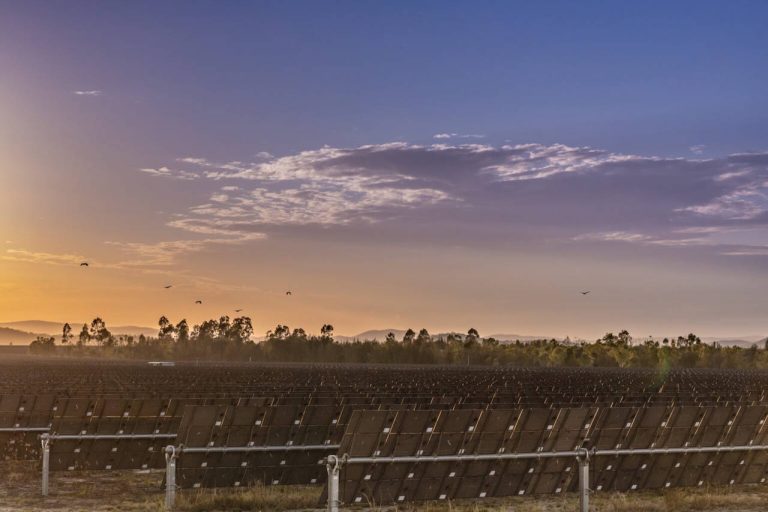
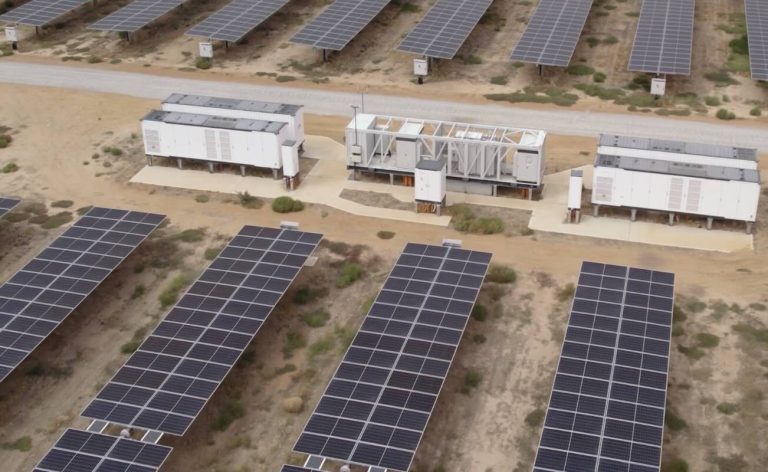
The Gordon solar farm, boasting a capacity of 4.7 megawatts (MW) and located in Galatea, approximately 50km southeast of Rotorua, officially commenced operations earlier this month following a lengthy seven-year journey from conception to realisation.
Cost Analysis of the Raised Solar System
According to Yuneska Harris, head of utility projects at Clenergy, a significant achievement of this project is the cost efficiency of the raised solar systems that accommodate cattle. The expense for the delivery and construction of the 2.2m high solar tracker systems was observed to be just 10 per cent more expensive than the conventional 1.6m versions. Although the foundations, which are 3.3m tall, came at a 47 per cent higher cost than the standard options, this increase is attributed to New Zealand’s distinctive geological challenges, such as proximity to the Waiohau faultline, loose volcanic soils, and the heightened risk of liquefaction during earthquakes.
Harris conducted research on a similar cattle-grazing solar project in Waiuku, which features a 2.4 MW installation, and on a 60-kilowatt prototype set up at the Farrer Memorial agricultural high school in New South Wales (NSW). Initially, she had estimated that constructing such a structure would be at least 160 per cent pricier than standard trackers. Contrary to her assumptions, the total manufacturing costs were only 57 per cent more.
Engineering Innovations and Solutions
“From a manufacturing perspective, the above-ground structures cost less than 10 per cent more to produce,” Harris explained to Renew Economy. “The below-ground expenses were heavily influenced by the local soils and New Zealand’s landscape. If we were to build the same system in soils with a more standard profile, we could anticipate a reduction in foundational costs, potentially by 15 to 20 per cent.”
Harris further emphasised that many erroneously assume that increasing the clearance for grazing would lead to exorbitant costs—in reality, this has proven untrue.
The additional costs do not encompass installation, which faced initial holdups as the team looked for effective methods to operate at the 2.2m height. The challenge was resolved with the use of shoe risers typically employed in orchards, allowing the crew to complete the project a fortnight ahead of schedule.
The Growing Interest in Dual-Use Solar Solutions
After years of being dismissed as prohibitively expensive and complicated, integrating cattle grazing beneath solar panels is now receiving genuine interest. A German company recently unveiled its system tested in Europe in Australia, while an Australian startup is preparing to trial its own cow-accommodating model in NSW prior to commercial sales.
Both firms report strong interest from landowners in solar solutions that cater to agricultural needs alongside electricity production. It remains uncertain whether this will attract the attention of large-scale developers, who might consider this approach as a means to alleviate community concerns regarding solar installations encroaching on prime agricultural land.
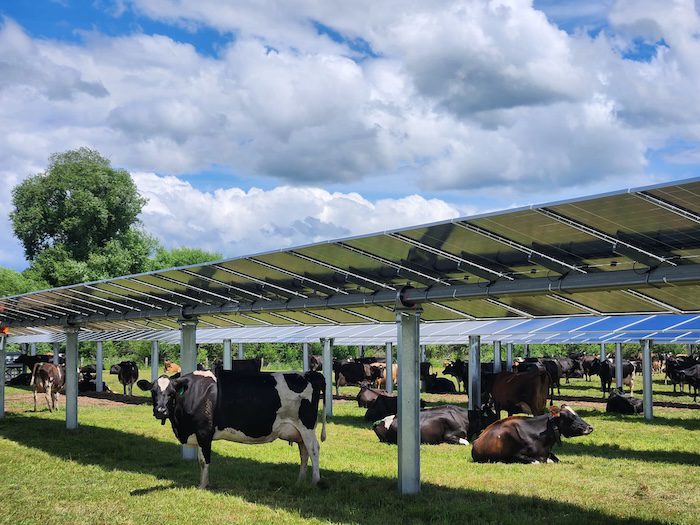
The Gordon solar farm has been specifically adapted to address the requirements of dairy farming, with the solar panels lying flat during the night while approximately 700 cows roam the paddocks. At maximum tilt, the solar system provides a clearance of 1.1m. Cows are relocated for milking before dawn and are away during the daytime while the panels tilt to optimise sunlight exposure. There are plans to adjust to horizontal mode during summer, allowing cows to utilise the shade provided by the panels.
Community Engagement and Planning
The project, encompassing a 10-hectare area, was initiated by farm owners Susan and Rory Gordon along with Gerrard McCarthy from Micropico Systems, who specialise in renewable energy integrations on farms. Yuneska Harris joined the project later, after navigating five exhausting years of planning, consultations, and securing necessary permits, to create a tracker system specifically designed around the farm’s operational needs rather than solely focusing on maximising electricity output.
“We went through six design iterations to determine that 2.2m was the ideal height that wouldn’t compromise the structural integrity,” she noted, despite her initial reservations. “I was one of the earliest to argue for reducing the height, fearing it would complicate things from an engineering standpoint.” However, she ultimately concluded that alteration of height was the only variable, with all other elements remaining constant, from the cabling to the solar panels themselves.