Quorn Park: Australia’s First Solar-Battery Hybrid Sends Power to Grid at Night
In the heart of winter, as the temperatures drop and night falls, a groundbreaking event is occurring in an isolated paddock along Back Trundle Road, approximately 10 kilometres west of Parkes, renowned for its telescope. A solar farm is making history by supplying stored photovoltaic energy to Australia’s main electricity grid at a time usually dominated by darkness: 10 pm.
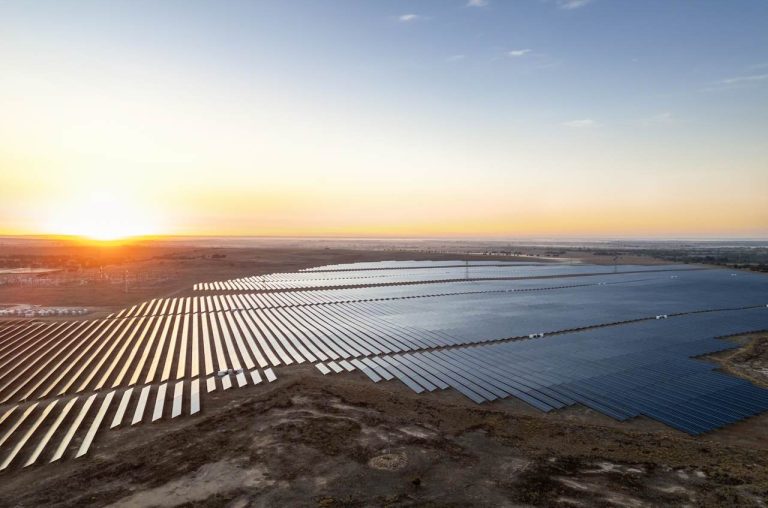
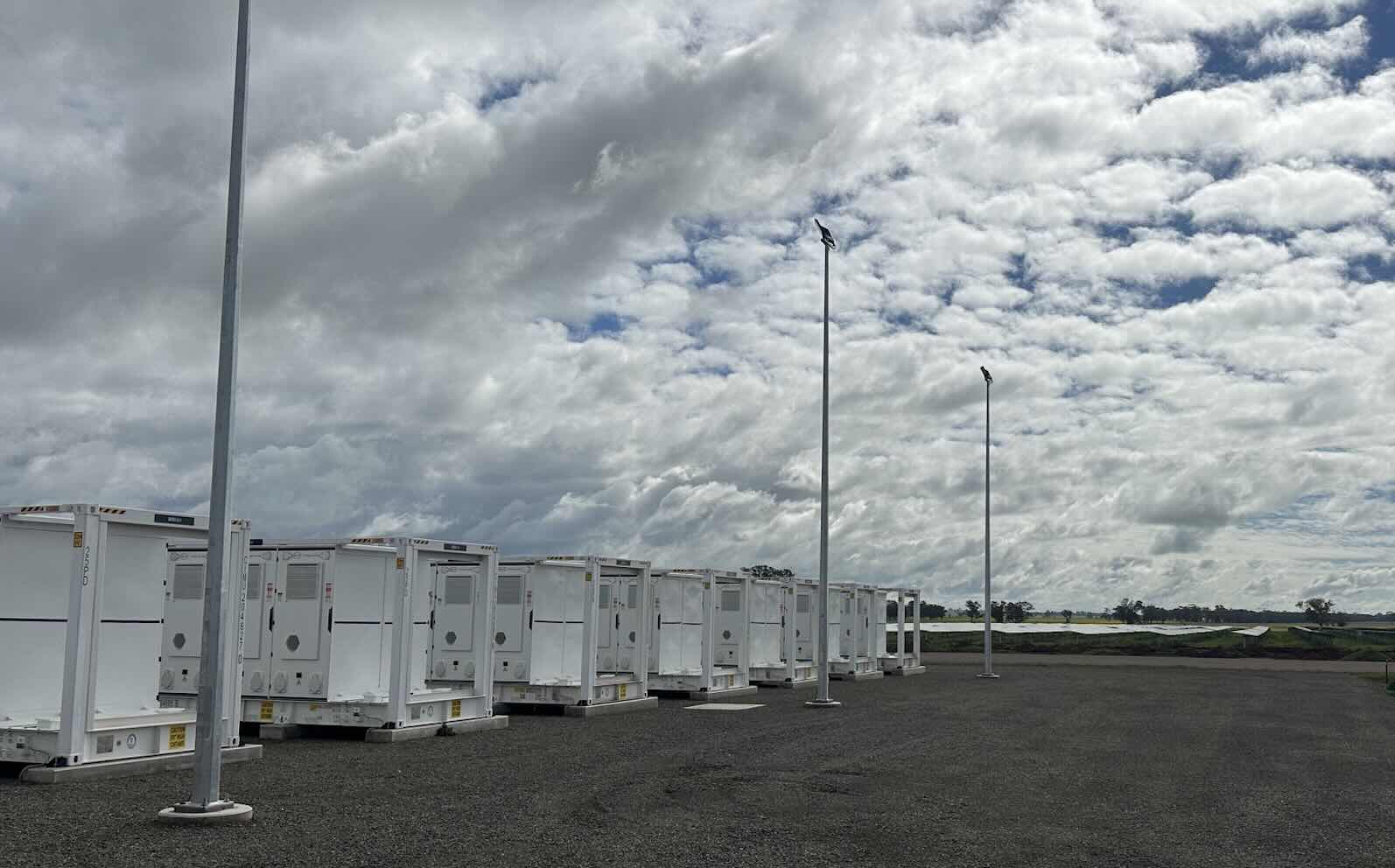
Remarkably, after 14 years since the first grid-scale solar project joined the national grid, the Quorn Park solar hybrid facility, owned and developed by Potentia Energy, is the first large-scale solar-battery hybrid connected behind a single entry point in Australia’s primary grid. While the system combines a total capacity of 80 MW of solar power with 19.8 MW and 39.6 MWh of battery storage, its significance lies in its pioneering role for future developments within the grid.
Transitioning to Hybrid Solutions
As the landscape of solar energy evolves, standalone solar projects are becoming increasingly rare in Australia. Instead, numerous solar-battery hybrids are either under construction or finalising their financial frameworks and contracts. This trend is also extending to wind farms that are now considering the installation of batteries next to individual turbine units.
Several of these emerging solar-hybrid ventures will dwarf Quorn Park in size. Notably, Potentia’s Tallawang facility, located approximately 200 kilometres from Quorn Park, is projected to combine 500 MW of solar capacity with 500 MW of battery storage, alongside an impressive potential of up to 2,000 MWh.
Pioneering a New Approach
During a recent site visit, Gabriele Mallarini, Potentia’s Chief Operating Officer, expressed pride in Quorn Park’s milestone achievement. He highlighted the necessity for flexibility in operations, especially given the grid’s demands. “We need to not only follow the sun’s generation pattern but also be capable of storing and supplying electricity when it is most required on the network,” he stated.
Mallarini further likened the facility’s function to that of households installing batteries alongside rooftop solar systems, as it offers a means to utilise self-generated electricity for reduced bills. “You may be away from home and wish to illuminate your space later in the evening; that’s where a battery comes into play. This concept echoes across the board,” he elaborated.
Contrasting Legacy and Future Projects
While Quorn Park holds the distinction of being the first hybrid facility connected to the main grid, it is not the absolute pioneer in large-scale solar-battery hybrids. That title belongs to the larger Cunderdin project situated within Western Australia’s separate grid, which includes 120 MW of solar and 55 MW of battery storage, launched last year.
Additionally, a number of smaller projects below 5 MW across Australia have adopted similar technologies. There are also facilities that feature large batteries situated nearby, like those in Darlington, Gannawarra, and Limondale, although generally, they must export energy to the grid and then import it back to recharge their batteries.
The distinctiveness of Quorn Park lies in its shared connection point, allowing it to store energy generated at no additional cost and draw from the grid if desired. This means the facility can conserve its output for peak times, capitalising on higher pricing opportunities.
Innovative Technology and On-Site Practices
Mallarini explained that Quorn Park’s battery employs AC-coupled technology, enabling it to function in three distinct modes: solar only, battery only, and hybrid operation, tailored to specific circumstances and customer requirements. These adaptations reflect the evolving dynamics of Australia’s electricity grid and the decreasing costs of battery technology.
When Potentia was seeking grid approvals, the conventional approach suggested matching solar output with battery storage at a 4:1 ratio. However, as costs have diminished, developers now favour a more balanced 1:1 ratio with expanded storage capabilities.
Looking Ahead in Renewable Energy
Mallarini indicated that the increasing size of projects is a response to the need for stability in generation, especially in the face of ageing coal-fired power stations that are not sustainable for the long haul. “The void created by these diminishing fossil fuel sources is best filled by hybrid solar-battery systems alongside wind generation,” he articulated.
The Quorn Park facility also offers a new perspective on solar and wind energy, often criticised negatively. Contrarily, it enhances the grid’s strength in weaker network areas, generating additional income through reactive power support.
For this ambitious project, SMA has supplied the photovoltaic and battery storage inverters, with Samuel Wiggins, head of large-scale service and technology at SMA, noting its importance in showcasing how solar and storage technologies can be effectively integrated.
Utilising advanced inverter technology, Quorn Park not only contributes renewable electricity but also provides essential grid support for stability and reliability. Furthermore, the installation includes single-axis trackers that facilitate solar module optimisation throughout the day and bifacial panels that enhance output by capturing reflected light.
Additionally, to manage natural growth on the site, sheep will graze across the solar farm, maintaining the landscape while benefiting from the shelter provided by the panels. This approach has proven successful in other solar farms, leading to increased flock productivity.