New Solar Recycling Method Recovers 99% Silver from Used Panels
Researchers from the University of Newcastle have developed an enhanced version of the froth flotation mining technique, capable of extracting “virtually all” metallic silver from end-of-life solar panels. This advancement builds upon previous work at the Centre for Critical Minerals and Urban Mining (CRITIUM), where an initial recovery rate of 97 per cent was achieved from a single batch.
By continuously supplying a wet slurry of crushed solar panel components into a tank over a period of 90 minutes, the team successfully raised the recovery rate to an impressive 98.74 per cent. Notably, during parts of the testing, the method even reached a flawless 100 per cent recovery rate.
Progress in Silver Recovery Techniques
Co-author Mahshid Firouzi, who is also the deputy director of CRITIUM, highlighted, “Our earlier small-scale batch research demonstrated that flotation can effectively recover silver from solar panels. This recent work illustrates that the process can function continuously at a larger scale while nearly achieving total silver recovery, which brings us closer to commercial viability.”
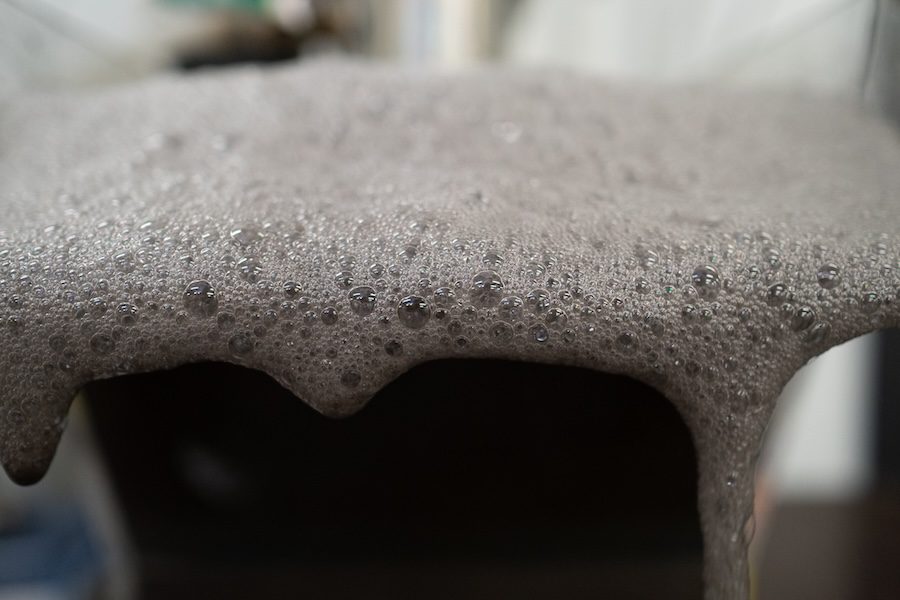
The research team, consisting of three members, prepared the necessary panel fragments and ground them into fine particles. They then utilised a flotation technique—which integrates water, air bubbles, and minimal amounts of flotation reagents—to separate valuable metals from waste materials, allowing the former to rise to the surface while discarding the remaining refuse.
Significantly, this updated method does not require the use of acid, simplifying the recycling process.
Promising Data and Industry Implications
The findings are currently presented in a preprint article, which serves as a preliminary overview before undergoing peer review, indicating that the data may still be adjusted or corrected. Nevertheless, these promising results could bode well for the silver industry, which is currently grappling with supply shortages.
Forecasts from January indicated that by 2030, silver supply may only satisfy 62-70 per cent of demand in Europe. Silver is a critical component in solar technology, used as a conductor in thin layers on silicon solar cells. Despite the small quantities utilised per panel, the high volume of solar panels produced and subsequently discarded results in a substantial total silver quantity.
In 2023 alone, the solar photovoltaic (PV) industry accounted for a remarkable 19 per cent of the global annual silver supply.
Challenges and Future Prospects
While recycling efforts are underway, both commercial recyclers and researchers face challenges in securing adequate feedstock. For their study, the Newcastle team required nearly half a tonne of solar panels, equivalent to around 23 modules, to yield only 22kg of metallisation and aluminium contact layer.
Gathering this 22kg demanded “several months” of collection. The 90-minute testing period was conducted at a low solid concentration, as the available material did not suffice for extensive continuous flow testing. However, the machine itself is capable of processing up to 15 times more solids than were tested, though further trials hinge on obtaining more than 6 tonnes of solar panels.
Firouzi’s team remains optimistic about the commercial potential of their process, given the significant value of silver embedded in solar panels. “Addressing the recycling of end-of-life rooftop solar involves several logistical challenges, notably securing supply and dismantling the modules to access the solar cells,” the paper notes.
It adds that the solar cells contain valuable materials, including silver at approximately 0.6 wt%, which translates to around A$20 per kg of cell material at current silver market prices.