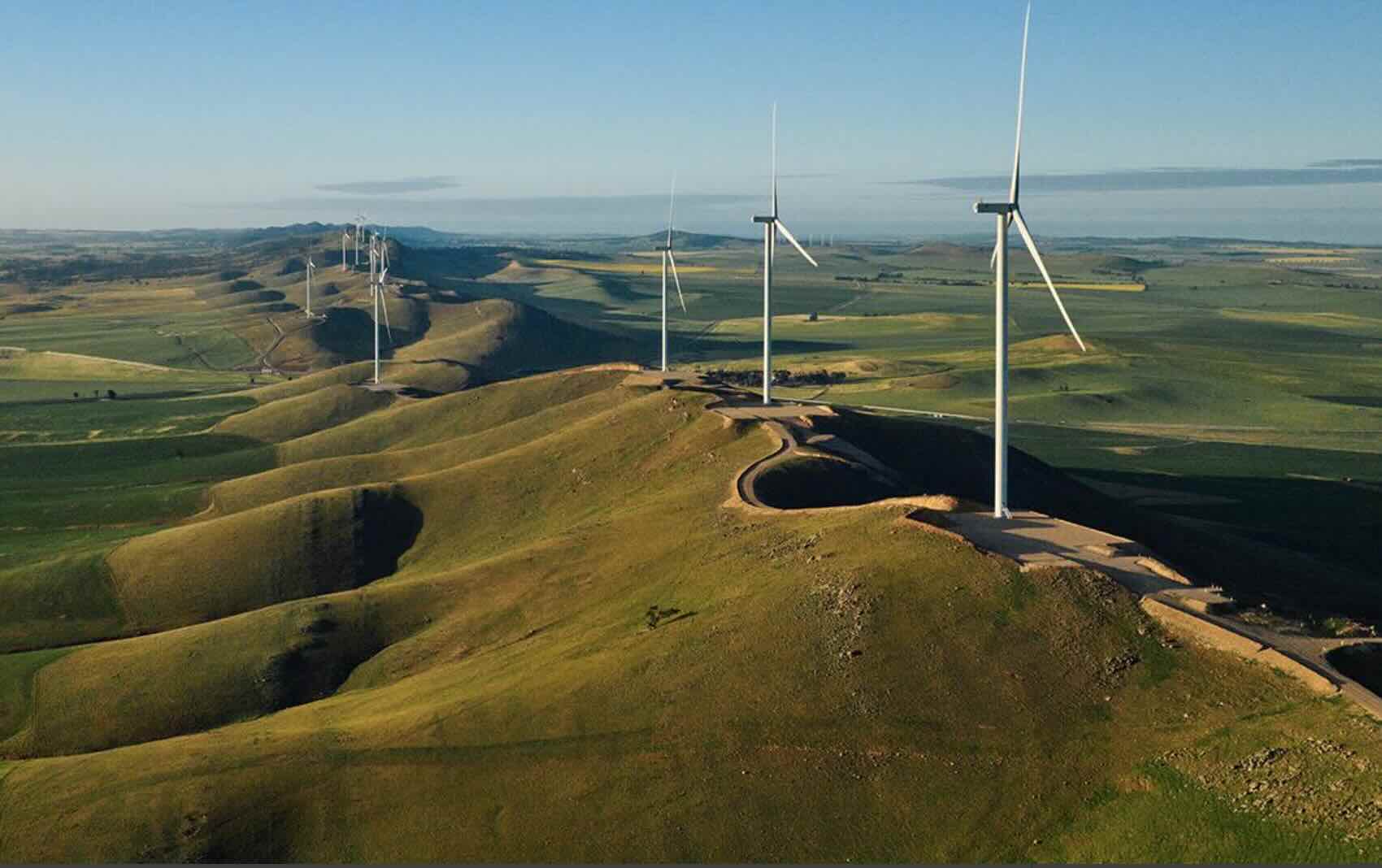
Australia’s Largest Data Centre to Be Built on 100% Renewable Grid
The construction of Australia’s largest data centre, surpassing any previous developments by more than double, is set to take place in South Australia. This decision is primarily influenced by the state’s abundant clean energy resources and its achievement of 100 per cent net renewable energy by the start of construction.
Iren, a US-based company specialising in large-scale data centres and AI, announced plans for an 800 MW facility near the Bundey sub-station, located about 75 km north-east of Adelaide. The projected investment for this project stands at approximately $10 billion.
A Strategic Location for Renewable Energy
The chosen site is advantageous due to its sparse population and its position at the intersection of significant transmission lines, enabling integration with numerous wind projects, thereby contributing to one of the cleanest energy grids globally.
The development is notable for several reasons, such as its potential implications for wind, solar, and battery projects, as well as the affirmation of South Australia’s successful transition to a green energy grid. Its scale is anticipated to inspire similar initiatives from other companies and provide a first-mover advantage.
Government Confidence in Green Energy
The announcement underscores the claims made by both the state government and the local transmission operator regarding the capacity for green energy to attract significant industrial investment. Iren’s statement highlighted South Australia’s target to achieve 100% net renewable energy by the year 2027 and the fibre connectivity to major markets across the Asia-Pacific region.
Co-founder and co-CEO of Iren, Daniel Roberts, remarked, “South Australia provides the essential ingredients for large-scale AI infrastructure: plentiful clean energy, connectivity to the Asia-Pacific region, and a proactive government willing to capitalise on these opportunities.” He expressed eagerness to collaborate with the local government, communities, and industries to enhance accessibility to AI infrastructure, bolster research, and create job opportunities.
Supportive Infrastructure and Surrounding Projects
The Bundey sub-station currently functions as a hub for several significant renewable projects, including Neoen’s massive Goyder renewable energy park, which is the largest of its kind in Australia and encompasses wind, solar, and battery facilities. Neoen has also committed to constructing two adjacent batteries with a total capacity of 400 MW and 1,600 MWh at the Goyder site, which will provide long-term storage for the government and support renewable supply agreements with BHP’s Olympic Dam mine. Furthermore, the Goyder complex has plans for a substantial wind and solar presence, capable of hosting 1,200 MW of wind, 600 MW of solar, and more than 1,600 MW of battery storage.
Iren’s involvement is expected to enhance the scale of these developments and encourage other firms seeking long-term energy agreements. Alongside this, Genaspi Energy has secured approval under the federal government’s Capacity Investment Scheme to establish a 300 MW solar farm and a 300 MW, 1,200 MWh battery near the Bundey sub-station. Zen Energy is also progressing with its Solar River project in the vicinity, among other future projects.
Infrastructure Support and Future Provisions
Additionally, Bundey serves as the entry point for Project EnergyConnect, a new transmission line leading to New South Wales, which is set to provide 800 MW of transfer capacity. Iren’s development diminishes the likelihood of bottlenecks on the South Australian side of this line.
Iren has confirmed the establishment of a transmission connection agreement with ElectraNet, which facilitates four 330kV feeder exits at the utility’s substation and is predicted to support up to 800 MW without necessitating any upgrades to the network.
The company plans to construct the centre in phases, with the initial operations expected to commence by 2028, while the state is on track to realise its 100 per cent net renewable energy target by the end of 2027, though additional energy generation may be necessary to accommodate the new demand.
Economic Opportunities and Industry Impact
Premier Peter Malinauskas of South Australia has warmly embraced the announcement, highlighting that data centres represent a “significant economic opportunity” that could generate high-quality employment, enhance renewable energy infrastructure, and create new prospects for regional areas.
He stated, “South Australia’s leadership in renewable energy, coupled with our robust investment in higher education and the appointment of the nation’s first Minister for Artificial Intelligence, positions us uniquely to capitalise on the opportunities presented by AI.” He underscored the significance of Iren’s Bundey campus as a considerable investment with potential to produce hundreds of jobs and reinforce the state’s status as a technology and innovation hub in the Asia-Pacific region.
Debate on Data Centre Demand and Energy Supply
The rise of data centre demand has sparked considerable discussion within Australian energy circles. Some believe it will stimulate new demand and facilitate long-term contracts that may finally resolve stalled large-scale renewable projects, while others are concerned it could inadvertently favour fossil fuels.
The Australian Energy Market Operator (AEMO) has laid out strict guidelines to manage the integration of these large and often inflexible data centre loads, while state and federal energy ministers suggest—but have yet to fully enforce—requirements for these centres to generate or contract their own renewable energy supplies.
Data centres face stringent “up-time” requirements, which often results in the installation of diesel generators for emergencies due to grid outages. While these generators can be costly and environmentally harmful, they are claimed to be used infrequently. Reports indicate that the Bundey centre will primarily utilise grid power, with backup generators available to ensure operational continuity during maintenance or outages.
The introduction of 800 MW of consistent demand may significantly mitigate the underutilisation of the state’s expansive rooftop solar capacity. AEMO has suggested data centres be located in areas rich in renewable energy resources to benefit consumers with lower costs while maintaining reliability and security.
In its latest Quarterly Energy Dynamics report, AEMO identified 11 large-scale data centre projects underway that total 5.4 gigawatts of potential demand, with CEO Daniel Westerman noting that projects are often in various states of advancement.
“While these projects are not all at capacity on day one, they are developed in stages and ultimate capacity could take a decade to realise,” he explained during an address at an energy conference.
AEMO’s report further highlighted that approximately 60% of capacity is in New South Wales and 40% in Victoria, suggesting the recent addition of South Australia’s data centre to the mix. It also indicated that the operational characteristics of data centres typically necessitate reliability and consistent performance during disturbances, with most projects currently in early development stages.