Bowen Unveils New Wind and Solar Tender to Replace Coal in WA
Chris Bowen, the Federal Energy Minister, has initiated the latest tender under his prominent Capacity Investment Scheme (CIS), aiming to secure an additional 1.8 megawatts of new wind and solar power. This effort comes as Western Australia commits to phasing out its last coal-fired generators within three years.
The CIS has faced challenges in gaining momentum within the national grid due to a scarcity of contracts for large-scale renewable projects, especially in wind energy. However, it has seen some progress with standalone battery systems and solar-battery hybrids, which can be deployed more easily.
Success in Western Australia
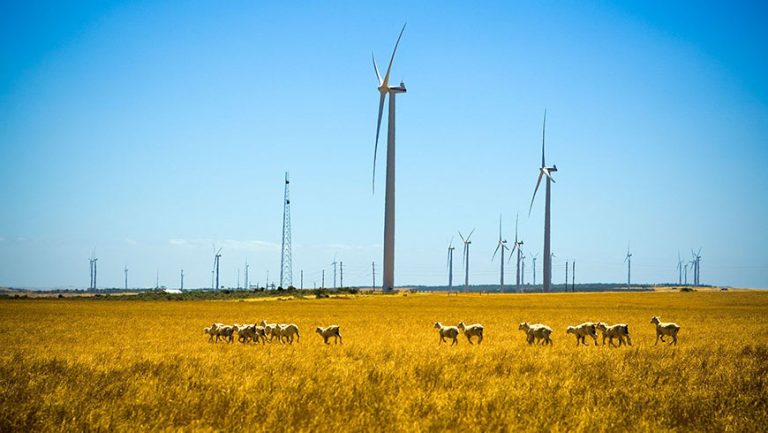
Western Australia stands out as a state where the CIS has shown effectiveness, particularly for large-scale wind energy. This success can be attributed to the long-term purchase agreements being established by Synergy, the state-owned utility. The state is hurrying to confirm sufficient new energy sources to replace its coal power stations, scheduled to close by the end of 2029, and has recently confirmed Power Purchase Agreements (PPAs) with four significant wind projects that together exceed a gigawatt of capacity.
The current tender follows the results of the last generation tender in Western Australia, where six wind projects and one solar-battery hybrid were awarded contracts, summing up to 1.886 gigawatts of capacity. Among these, the Waddi and Narrogin wind projects are already under development, alongside the expansions of Warradarge and the new Kings Rock wind farm. Additionally, Fortescue’s Nullagine wind project is also under construction in the state’s northern region, linked to a different grid.
New Measures for Developers
The new appeal, termed Tender 11, marks the first to necessitate involvement in the government’s Developer Rating Scheme (DRS). This initiative aims to offer local communities and landholders more transparency regarding the performance, capability, and conduct of renewable energy developers and transmission firms. Applicants for the new tender must have begun the DRS assessment process.
Bowen emphasised the necessity for increased power supply to accommodate the state’s growing economy and population, stating, “This tender will expedite another 1.8 GW of new generation to facilitate that.” He added that “We’re also raising the standards for developers – securing Commonwealth backing through this tender means you must demonstrate a commitment to engaging effectively with local communities and landholders.”
He concluded, “An increase in renewable generation means a more reliable power supply and heightened competition, consequently exerting downward pressure on electricity prices for WA households and businesses.”
Current Tenders and Future Plans
The Federal government is presently orchestrating two distinctive tenders—covering generation and dispatchable capacity (tenders 9 and 10)—within the National Electricity Market, with outcomes to be disclosed later this year. Additionally, tenders 12 and 13 will be launched, seeking further generation and dispatchable capacity.
New South Wales has also initiated a separate tender for an additional 2.5 GW, predominantly focusing on its demand for wind energy. This tender has been adjusted to incentivise projects that are ready for construction and demonstrate a clear path to securing finances.
At this point, only a handful of new wind projects are underway in the National Electricity Market (NEM), with just two—Palmer and Carmody’s Hill in South Australia—receiving CIS support, although a total of 31 different wind projects have been granted the chance to establish underwriting agreements.
Challenges Facing Renewable Initiatives
The crucial hurdle remains the lack of buyers, as leading privately-owned utilities have remained inactive, despite the looming closures of several coal-fired power stations. They argue that wind energy is prohibitively expensive.
However, the situation may improve following the announcement that state and federal governments will provide $2.5 billion over a decade to assist the Tomago aluminium smelter’s transition from coal to renewable energy. Moreover, there is an increasing demand from data centres, which will need to secure contracts with new wind and solar projects to fulfill their energy requirements.
The wind projects in Western Australia benefit from a capacity market that introduces a revenue stream not found in the NEM, alongside the effective role of Synergy, the state-owned electricity retailer and generator. Bowen observed, “The market in Western Australia operates quite differently than on the east coast, necessitating a distinct auction to meet the specific needs of the region.”
During a press conference in Perth, he expressed confidence in the auction process, stating it has proven beneficial and is likely to yield a robust pipeline of investments, as has been seen previously.
The Western Australian government’s approach contrasts sharply with that of Queensland’s LNP government, which owns most of the state’s electricity utilities. The latter has dismantled renewable energy targets, halted various new projects, and resisted joining the federal initiative for data centres powered by renewables.
In Victoria, as the next significant coal-fired generator prepares for retirement in 2028 (Yallourn), Coalition parties have threatened to obstruct at least one major transmission project should they secure victory in the upcoming state election, complicating the state’s ambition to achieve 95 per cent renewable energy by 2035.