Quinbrook Proposes Major Solar Farms for Australia’s Silicon Production
Quinbrook, the Australian investment powerhouse, is making strides with the initiation of its first of two major solar projects aimed at positioning itself within the global solar PV supply chain, which is predominantly controlled by China.
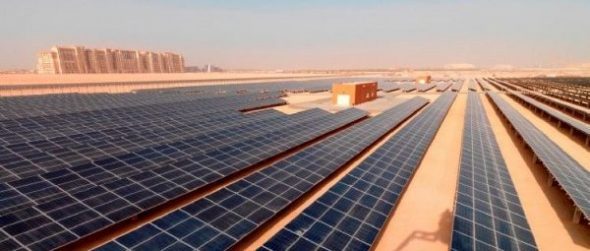
The company has announced intentions to establish a manufacturing hub in northern Queensland, primarily focusing on a microchip-grade silicon plant. This facility is set to be partially powered by up to 500 megawatts of solar energy and a large battery that has already received approval.
Details of the Solar Initiative
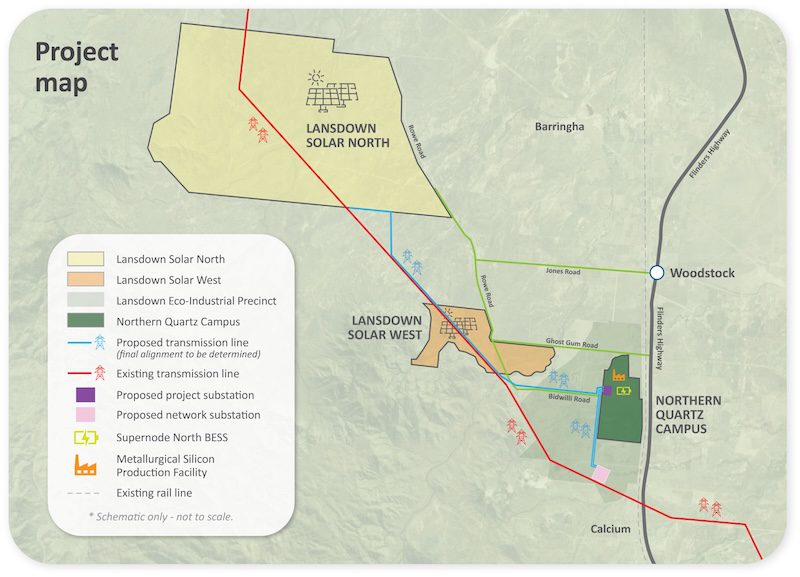
The developer has submitted a proposal under the federal government’s EPBC Act for a component of the initiative known as the Lansdown Solar West project, which has a capacity of 150 MW. Additionally, around 400 MW has been earmarked for the larger northern segment of the development.
The aim of this project is to provide renewable energy to the Northern Quartz Campus located within the Lansdown Eco-Industrial Precinct. This campus will host a variety of advanced manufacturing and battery energy storage initiatives, collectively forming Australia’s first integrated system for converting Queensland-mined quartz into high-purity silicon for solar panels and semiconductors.
The Industrial Hub
Situated approximately 40km south of Townsville, the Northern Quartz Campus is where Quinbrook, through its development arm Private Energy Partners (PEP), is creating an advanced manufacturing site. This facility will include a metallurgical silicon factory and a biochar plant powered by wood to supply the necessary carbon.
Additionally, Quinbrook plans to include the 780 MW Supernode North battery, which is designed to store surplus electricity generated by both solar projects. Notably, the company is also looking to add extra battery storage of up to 250 MW with eight hours of storage capacity at each solar site.
Environmental Considerations
The land designated for the initial phase of the solar project is currently used for cattle grazing, as noted in the EPBC referral. However, certain sections of the 535-hectare site hold environmental significance.
A substantial part of the area has been cleared and is heavily overrun by non-native plant species. Additionally, some remnants of native vegetation remain along watercourses like Four Mile Creek and Lansdowne Creek, which intersect the proposed site. The developers have optimised the disturbance footprint to avoid areas of national environmental importance.
Survey Results and Biodiversity
A desktop survey identified a total of 41 threatened flora and fauna species potentially inhabiting the region. After conducting five additional surveys, PEP has reduced this number to six species observed on-site, including the bare-rumped sheath-tailed bat, masked owl, koala, squatter pigeon, along with the migratory fork-tailed swift and eastern osprey.
The referral also highlighted the presence of a variety of pests within the vicinity, including feral cats and pigs, as well as invasive cane toads.
For those interested in keeping up with the latest clean energy developments, over 29,000 subscribers receive daily news updates delivered directly to their inbox, free of charge.
To support independent media and combat the rise of AI-generated content, consider making a one-off donation or become a regular supporter of Renew Economy.