Pakistan’s Solar Revolution: Empowering Education and Health Through Renewable Energy
Many of you may have come across discussions about Pakistan’s impressive solar surge. However, witnessing it firsthand and engaging with local experts provided me with deeper insights into how this nation, home to 250 million citizens with a GDP per capita of approximately $A2,300, is wholeheartedly adopting solar energy.
Energy adviser Syed Faizan Ali Shah was keen to emphasise that the solar boom was not an overnight phenomenon. In Punjab, where rolling blackouts were common and temperatures often rendered schools uncomfortably hot, the government introduced solar solutions in countless public schools. This initiative involved extensive training for solar installers, leading to the development of an entirely new trade. As a result, students could attend school while essential facilities, like fans and lights, continued to function even during power outages. (For more information, refer to ADB’s account of the Punjab Ujala solarisation project.)
Foundations of the Solar Surge
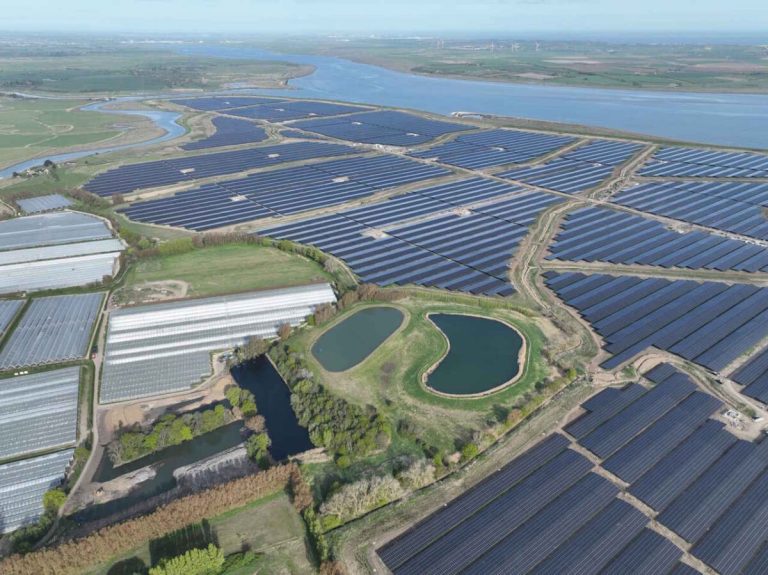
In the years preceding this rush, the Quaid-e-Azam Solar Park in Bahawalpur went live with four utility-scale projects, each boasting a capacity of 100 megawatts (MW) in Punjab during 2015–16. This park was set up under the leadership of the then chief minister Shehbaz Sharif, who now serves as Pakistan’s Prime Minister. These earlier initiatives laid a solid foundation and provided experience, paving the way for the citizen-driven solar revolution that has since unfolded.
The Remarkable Increase in Solar Capacity
The results have been nothing short of astonishing: Pakistan has achieved 38 gigawatts (GW) of installed solar capacity across various sectors, including residential, industrial, agricultural, and commercial domains. According to Renewables First and Ember, a significant 18% of households have adopted solar solutions, and in the fiscal year 2025, 28% of the nation’s electricity generation came from distributed solar, a substantial increase from just 10% in FY23.
Households and businesses alike were quick to embrace solar due to soaring electricity prices, which surged by 155% over three years, alongside a staggering 38% inflation rate recorded in May 2023. Meanwhile, the cost of solar panels has decreased considerably, and early adopters benefitted from an attractive net-metering scheme.
Cost-Effective Energy Solutions
Presently, as per IEEFA, residential solar systems paired with medium-sized batteries generate electricity for around Pakistani rupees (PKR) 20 per kilowatt-hour (approximately $A0.10/kWh), significantly cheaper than grid electricity, which costs PKR 40/kWh (around $A0.20/kWh).
During the Solar.Storage.Flexibility.2026 conference held in Islamabad, former climate change minister Senator Sherry Rehman highlighted the story of a mother determined to keep her children cool during sweltering nights when temperatures reach 43°C, so they can rest and prepare for school. As she put it, “solar is education.”
The Broader Impact of Solar Energy
Solar energy also plays a crucial role in the healthcare sector, with installations on hospital rooftops ensuring that vital equipment remains operational throughout the day. Furthermore, solar power alleviates financial burdens and stimulates economic growth by providing essential cooling solutions during the hot months, often achieved through just one panel at a time.
In our discussions with souvenir vendors in Taxila, I learned about their use of a single solar panel linked to a DC cooling unit, which allows them to stay comfortable while waiting for tourists (as shown in the accompanying video). One vendor boasted nine solar panels at home, enabling him to power his air-conditioning, refrigerator, and even an iron without the stress of soaring electricity bills. His expenses have plummeted from 18,000 to 20,000 PKR (about $A90–$100) per month to just 1,500 to 2,000 PKR (approximately $A8–$10).
Investing in a Brighter Future
Though he’s yet to reach zero electricity costs due to the inability to invest in a battery, he is using his savings for home improvements and contributing towards his daughters’ dowries. Interestingly, solar panels are increasingly being incorporated into dowries as part of the social fabric.
As Alan Pears, a pioneer of energy efficiency in Australia, has imparted to me, the focus should not solely be on electricity but rather on the valuable services that electricity enables. Millions of Pakistanis are now enjoying the benefits of cooling, food preservation, and the convenience of cooking with electric induction stoves, enhancing their lives and those of their families and communities, all while spending significantly less than conventional grid-powered electricity.
These essential services, particularly cooling, are becoming crucial for resilience against the impacts of a changing climate.
Dr. Kuiper visited Pakistan as a guest of Renewables First, the Pakistan Solar Association, and the Global Solar Council to engage in discussions at the Solar.Storage.Flexibility.2026 conference.
Dr Gabrielle Kuiper has been actively involved in shaping policies and regulations supporting Distributed Energy Resources (DER) internationally and within Australia, collaborating with CSIRO and Integrate to Zero (I2Z). More about her work can be found on her portfolio site.