NSW Solar Households Can Earn Up to 33c/kWh for Evening Exports
Households in New South Wales that have solar installations with battery storage can now expect to earn between 17 cents and 33 cents per kilowatt-hour for the energy they supply to the grid during peak evening hours, as detailed in a recent pricing update from the state.
The challenge lies in identifying retailers that will adhere to these new rates.
Pricing Adjustments by IPART
The Independent Pricing and Regulatory Tribunal (IPART) of New South Wales has reviewed and adjusted the benchmark price range it recommends for solar households selling excess energy back to the grid. This latest adjustment brings the prices back in line with figures projected for 2024-25.
According to IPART, consumers can now anticipate a flat-rate solar feed-in tariff (FiT) in the range of 3.4 to 6.5 cents per kilowatt-hour for the energy they export during daylight hours. This represents a reduction from the previous rates of 4.8 to 7.3 cents per kilowatt-hour expected in 2025-26, when there was a noteworthy increase in benchmark FiTs.
IPART member Jonathan Coppel explained that this decrease in feed-in tariff rates mirrors an assessment of falling wholesale electricity prices attributed to the rise in generation from renewable sources and rooftop solar.
The Effect of Rooftop Solar Success
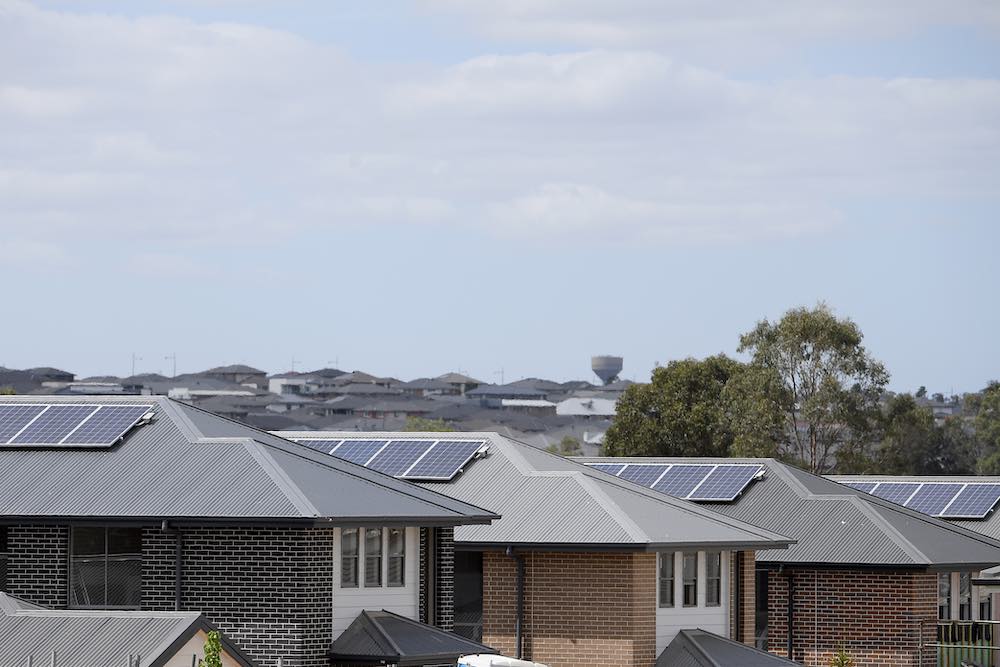
The declining value of feed-in tariffs can be traced back to the large number of homes—over four million—generating solar energy, which saturates the grid during the day. This has been known to drive prices down significantly, often pushing them close to or below zero during midday hours.
However, there’s an interesting effect known as the “solar duck” phenomenon. It describes how electricity prices can surge in the late afternoon and evening as solar generation declines and demand surges. It is during these peak hours that households with batteries can potentially benefit the most from their solar energy production.
Value of Time-of-Use Tariffs
To help consumers understand potential earnings from solar exports, IPART has also released benchmarks showing values for solar exports at different times of the day. While these figures have been slightly adjusted downwards from previous years, they indicate significantly higher returns for later hours, often surpassing 17 cents per kilowatt-hour.
For the upcoming 2026-27 period, Ausgrid customers can expect payments ranging from 17.2 to 18.7 cents per kilowatt-hour between 4 PM and 9 PM. For Endeavour Energy customers, it might rise to between 16.9 and 19.9 cents per kilowatt-hour from 4 PM to 8 PM. Essential Energy customers stand to gain the most, with expected payments of between 26.6 and 33.3 cents per kilowatt-hour during the 5 PM to 8 PM window.
Despite these time-of-use (ToU) rates presenting much higher potential earnings compared to flat-rate tariffs, the availability of such varied tariff options remains a significant hurdle for NSW consumers.
Challenges in Finding Retailers
While IPART allows retailers to offer varying feed-in tariffs throughout the day to align with wholesale prices, there is no obligation for them to do so. As noted in the previous year’s report, the number of retailers providing time-variable tariffs was minimal.
Currently, only one retailer offers a feed-in tariff that changes with the time of day—Red Energy. Most retailers revert to offering flat-rate tariffs. Some virtual power plant programmes include time-sensitive feed-in tariffs, but participation typically necessitates a specific type of home battery.
This year, there hasn’t been an update on the number of retailers offering ToU solar tariffs in New South Wales. However, according to Wattever.com.au, at least four retailers are now providing such options: Red Energy, CovAu, Energy Locals, and Globird Energy. Also, Flow Power’s Flow Home FiT structure offers NSW customers nothing during off-peak hours but compensates with a generous 45 cents per kilowatt-hour during the prime hours of 5:30-7:30 PM.
New Opportunities as Battery Use Grows
With the increasing adoption of home batteries propelled by the federal government’s Cheaper Home Batteries rebate, the landscape is expected to evolve. This growth may entice more retail companies to create attractive offers that encourage solar households to export energy during evening peaks or adjust to changing market dynamics.
For those aware of any additional retailers embracing time-of-use tariffs, sharing that information could be beneficial.
For similar updates and the latest news on clean energy, individuals can join the community of over 29,000 subscribers to receive a free daily newsletter.