Australia Becomes Third-Largest Big Battery Market, Solar and Wind Decline
Australia has taken a significant leap in the global battery market, now holding the position of the third-largest utility-scale battery market worldwide, trailing only behind China and the United States. This remarkable achievement follows the addition of a record 2 gigawatts of new battery capacity across the nation in 2025, marking a staggering increase of 233 per cent compared to the previous year.
The Clean Energy Council’s recently released “Clean Energy Australia 2026” report highlights 2025 as a transformative year for battery development, fuelled by escalating investments, decreasing costs, and favourable government policies.
Investment and Capacity Developments
Despite the achievements in battery capacity, the report underscores a concerning trend regarding the insufficient investment in new wind and solar projects, which are crucial for replacing the ageing coal power infrastructure. This stagnation is partly attributed to the federal government’s Capacity Investment Scheme, which has yet to yield notable results. The CEC pointed out that challenges in state planning and grid bottlenecks are also contributing factors.
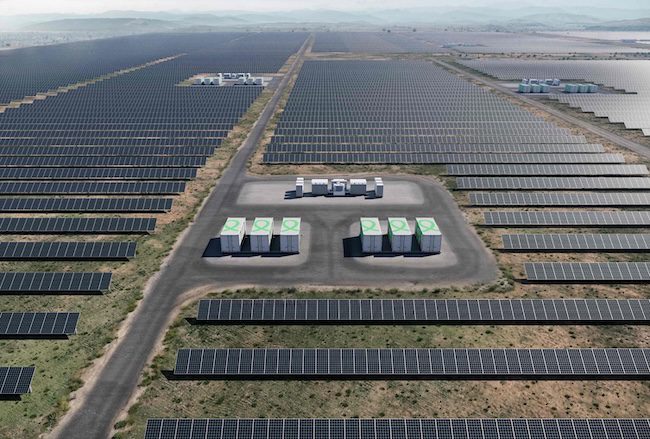
In terms of utility-scale battery projects, the CEC recorded the introduction of 12 new initiatives to the National Electricity Market (NEM) and the main grid of Western Australia, collectively adding 2 gigawatts (GW) of capacity and 5.1 gigawatt-hours of energy storage.
Key Projects in 2025
Among the significant new projects, the Liddell Battery, owned by AGL Energy, contributes 500 megawatts (MW) with a total capacity of 1,000 megawatt-hours (MWh) – or one gigawatt-hour. The project’s first stage, consisting of 250 MW and 500 MWh, commenced its commissioning process at the start of 2025.
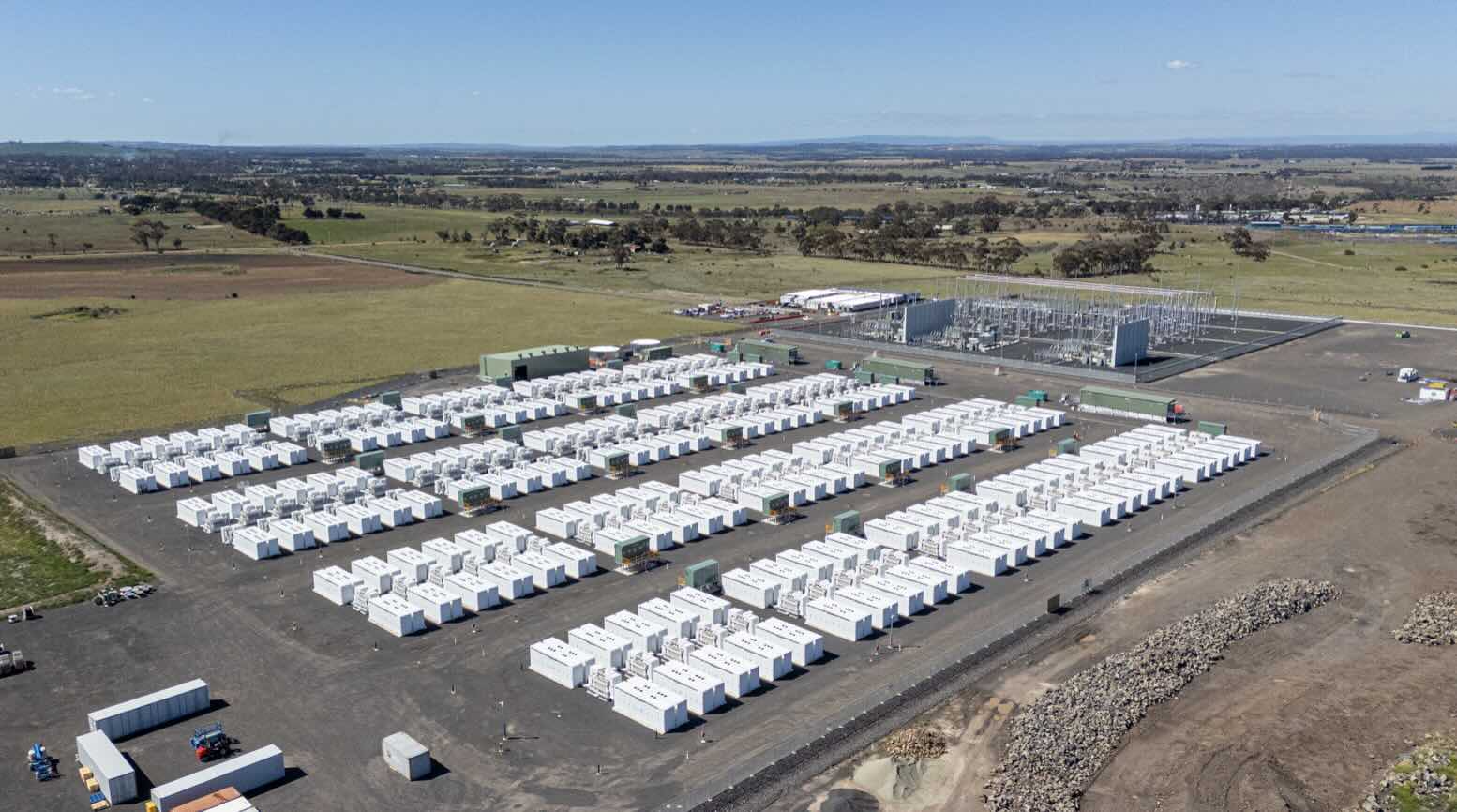
Another noteworthy addition was the Melbourne Renewable Energy Hub (MREH), featuring 600 MW and 1,600 MWh in its initial phase. This project, developed collaboratively by Equis and the State Energy Corporation of Victoria, plays a crucial role in the national battery landscape.
Furthermore, mid-year saw the commencement of Akaysha Energy’s Ulinda Park battery near Millmerran in Queensland, with its 55 MW/298 MWh first phase operational and participating in NEM trading by December.
Significant Financial Commitments and Cost Reductions
In terms of financial investments, the report indicates that an additional 4.3 GW of battery capacity, equating to 13.5 GWh, was financially committed in 2025, amounting to an investment of $4.8 billion – a notable increase of 67 per cent over the prior year. Furthermore, battery capital costs decreased by 20 per cent, reflecting the benefits of economies of scale.
The report describes batteries as increasingly vital to Australia’s electricity framework, effectively managing excess energy during peak production and redistributing it during periods of high demand. It notes that batteries are increasingly influencing wholesale electricity prices, often setting lower spot prices than gas peaker plants.
Hybridisation of Energy Projects
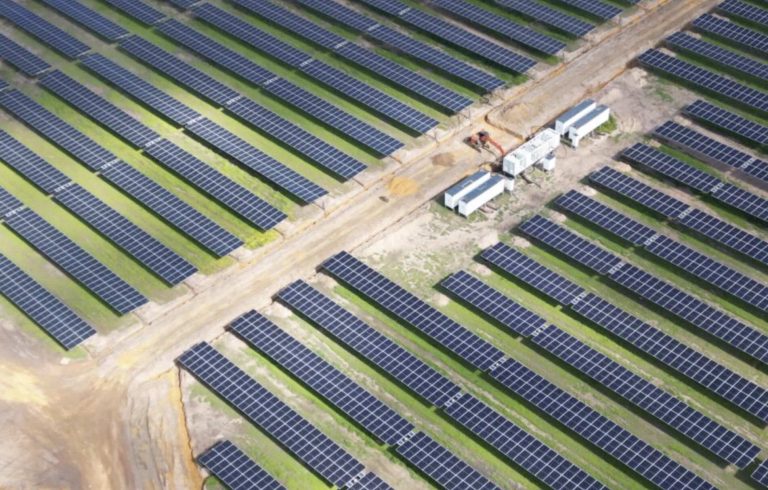
There has been a marked trend towards hybrid projects, wherein large batteries are being paired with new renewable energy sources, predominantly solar farms. According to AEMO modelling, this strategy has evolved as a critical method for managing network congestion.
The CEC report illustrates that solar and wind projects have progressively integrated battery storage, which aids in stabilising price fluctuations, minimising curtailment risks, and enhancing connectivity to the grid. For instance, Neoen Australia’s 412 MW Goyder South wind farm became operational in April 2025 and was paired with the 238.5 MW/477 MWh Blyth Battery, showcasing how hybrid configurations enabled previously constrained projects to thrive.
Home Battery Installations Surge
In a different but related sector, home battery sales soared by 260 per cent year-on-year, with over 268,000 units installed by December. Most of these installations were facilitated by the federal government’s successful rebate scheme, launched midway through the year. The report noted that household battery discharge levels more than doubled across all states.
Renewable Energy Milestones and Challenges
Beyond battery advancements, 2025 saw renewable energy comprise 42.7 per cent of Australia’s electricity mix, up from 39 per cent in the previous year. Remarkably, for the first time, clean energy outproduced fossil fuels in the last quarter of 2025, contributing to lower wholesale electricity prices.
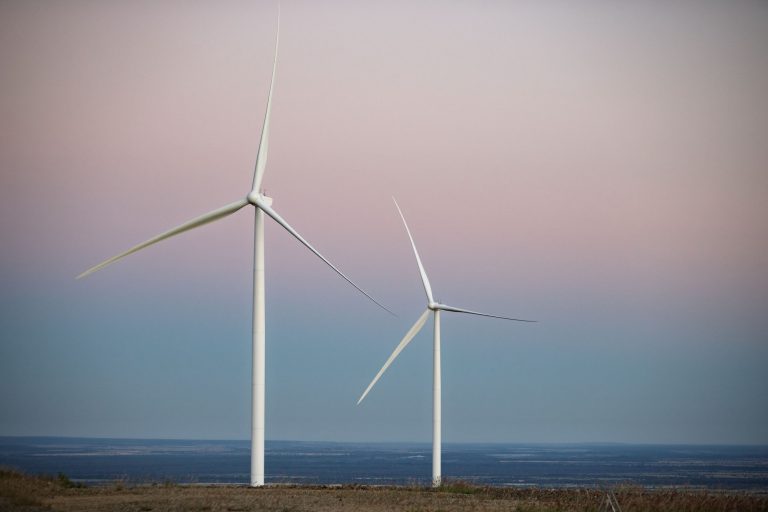
However, the report uncovered a setback, revealing that only 2.3 GW of new renewable energy generation reached financial closure in 2025, a steep decline of 46 per cent from 2024. Onshore wind investments faced a significant downturn, with financial commitments plummeting by 59 per cent.
Jackie Trad, Chief Executive of the CEC, acknowledged the record-breaking achievements in renewable energy and battery installations but emphasised the urgency of addressing the decline in financial commitments for large-scale wind and solar, which have hit a ten-year low. Trad asserted that addressing these gaps in investment is paramount for ensuring a secure energy future for Australia.
Trad highlighted that while critical government initiatives are in place and private investment is primed for deployment, project delays and structural barriers—such as connection issues and planning bottlenecks—must be resolved to unlock the full potential of renewable energy projects.