Australia’s Opportunity in Solar Poly-Silicon Industry
Australia may be poised to become a key player in the polysilicon market—essential for the solar industry—if it can effectively transform a $1.3 million report into a practical industry.
The Australian Renewable Energy Agency (ARENA) has allocated $1.3 million from its $1 billion Solar Sunshot fund to investigate the viability of establishing a polysilicon production facility in the Hunter Valley.
Feasibility of a New Polysilicon Plant
The report concludes that the plant could indeed be viable, provided it has access to inexpensive electricity, readily available manufacturing materials, and low capital expenditures, along with the ability to offer sustainable pricing for its products.
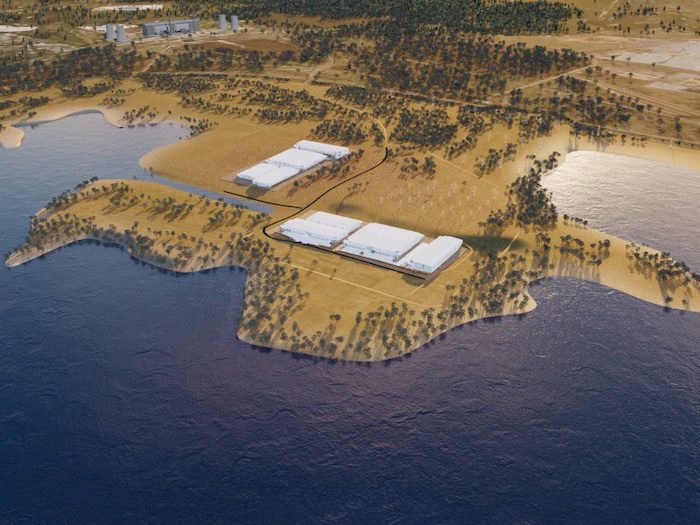
According to the findings, a polysilicon facility capable of producing 50,000 tonnes annually at AGL’s Hunter Energy Hub—located where the Bayswater and Liddell coal power plants operate—could bring significant advantages, including the potential to replace thermal coal exports as Australia’s primary energy export.
Market Opportunities and Production Insights
This output volume could cater to the installation of approximately 27 gigawatts (GW) of solar panels. The process of producing polysilicon, which transforms metallurgical silicon into photovoltaic-grade material, is regarded as the most energy-consuming stage of solar panel manufacturing. Currently, the main producers are limited to regions with cheap electricity, typically China, the US, Germany, Malaysia, and Oman.
With Australian solar prices at around $0.04 per kilowatt-hour (kWh) last year, the report suggests that the nation is well-positioned in terms of energy costs.
A structural shift in the global polysilicon market is creating a unique opportunity for Australia, allowing it to meet increasing demand for non-Chinese polysilicon and potentially establishing a vital industry capable of exporting processed minerals with high energy content.
Price Premiums and Emerging Supply Gaps
Despite the fact that prices for Chinese-produced polysilicon plummeted to below $10 per kilogram in 2023 due to oversupply—a market situation where production capacity reached 3.5 million tonnes against a demand for only 1.2 million tonnes—the report argues that non-Chinese polysilicon could still achieve a price premium of three to five times higher.
Transitioning from coal exports to manufacturing polysilicon or even solar panels would require a significant change in mindset. However, the ambitious report supported by ARENA posits that this shift might indeed be achievable.
It also indicates a projected demand shortfall of approximately 240,000 tonnes of non-Chinese polysilicon by 2035, escalating to 350,000 tonnes by 2040.
Investment and Timing Considerations
The report highlights that an Australian polysilicon facility starting production by the early 2030s could effectively address this emerging supply gap. However, to realise this potential, immediate action on planning, engineering, and financing is essential to ensure the factory is operational on time.
Establishing a facility in the Hunter Valley would entail an investment of between $2.5 billion and $3.5 billion but is expected to generate an annual economic contribution of approximately $1.1 billion.
Future Prospects and Competition
This vision aligns with the Future Made in Australia initiative launched in 2024, although the recent budget saw $300 million in uncommitted funding removed from the Battery Breakthrough Initiative and Solar Sunshot programmes.
A Hunter Valley polysilicon plant would not face competition from Townsville, where significant clean energy investor Quinbrook is supporting a factory project. Townsville’s proposals include a solar materials precinct, which is supported by a substantial 2,200 megawatt-hour (MWh) battery, however, it is focused on creating metallurgical silicon from locally sourced quartz, which is a precursor to refined polysilicon.
The planning processes for Townsville’s initiatives are now in motion.