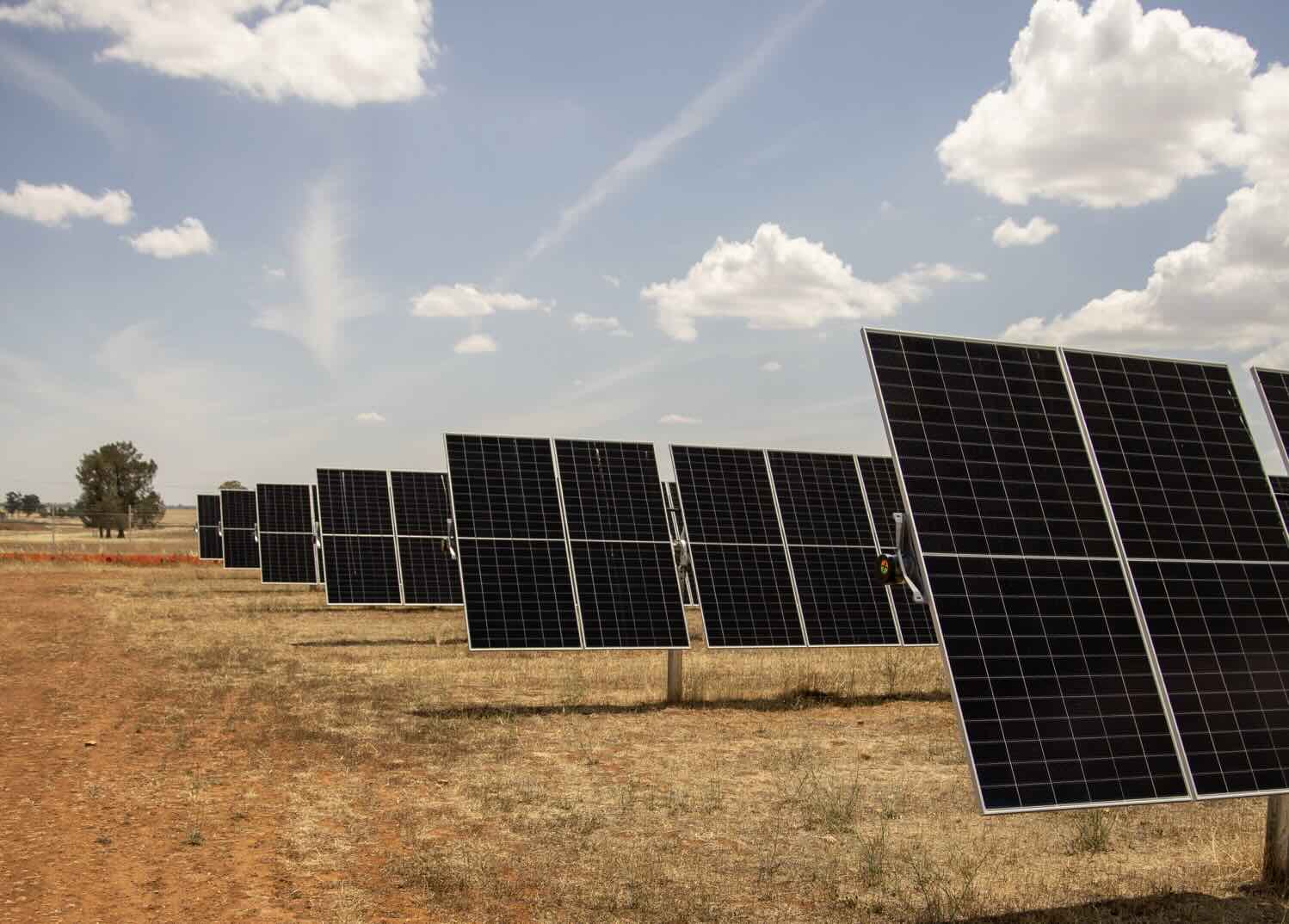
Renewables Reduce Electricity Bills Amid Global Fuel Crisis
Households and businesses across most of Australia’s main electricity grid are set to see a decrease in their power costs, thanks to the influence of wind, solar energy, and battery storage. These developments are helping to reduce wholesale electricity prices and provide some insulation against global market fluctuations driven by conflicts in the Middle East.
The Australian Energy Regulator (AER) announced its final determination regarding the Default Market Offer (DMO) on Tuesday. This offer sets a limit on the prices that electricity retailers can charge certain households and small businesses on standing offers throughout the National Electricity Market, with the exception of Victoria.
Price Cuts Across Regions
In regions covered by the DMO—excluding Victoria, which established its default offer separately—the AER indicated that residential flat-rate standing offers could decrease by between 3.4% to 5.0% in New South Wales and by 7.2% in South East Queensland compared to the previous year.
For New South Wales, the impact of the DMO indicates that households may see annual bill reductions ranging from 3.7% (approximately $72) to 7.7% ($211), while small business customers could experience a drop between 9.4% ($449) and 20.9% ($1,303). In South East Queensland, residents can anticipate an annual decrease of 7.2% ($155), with small businesses benefiting from a reduction of 10.4% ($445).
South Australia and Time-of-Use Offers
In contrast, South Australian households are expected to see a slight increase in their annual bills, estimated at 1.4% (or $33). However, those on time-of-use retail plans will experience a small drop in prices, with residential customers seeing a decrease of 1.1% ($25) and small businesses benefiting from a more substantial reduction of 12.1% ($673).
According to the AER, customers across all states may enjoy enhanced savings via time-of-use offers, with potential savings reaching $211 for residential customers in NSW and up to $1,303 for small businesses. In South East Queensland, residential customers could save as much as $229, while small business customers might see up to $601 off their bills.
Market Dynamics and Government Reforms
The reduction in electricity prices is welcomed news amidst recent increases in interest rates and rising costs of petrol and gas, which are being driven by the ongoing global oil crisis. On Monday, a similar announcement from Victoria revealed that electricity costs would drop across all five distribution zones in the state, with household bills expected to decrease by an average of $84 and small businesses by approximately $241 in the upcoming financial year.
AER chair Clare Savage expressed optimism over the price reductions, highlighting that they benefit the majority of households and all small businesses in the regions where the DMO safety net is applied. She noted that the price reductions stem from falling costs in most components of the DMO, particularly in wholesale energy, which has seen lower contract prices and increased output from wind and battery generation.
Despite the geopolitical uncertainties affecting oil prices in the Middle East, wholesale energy costs in Australia have remained stable. Savage added that the price determinations for this financial year reflect the benefits of recent government reforms, which have adjusted the methodology used to calculate the DMO.
Supporting Renewable Energy Transition
As the energy market progresses towards the full implementation of smart meters by 2030, the new approaches to networking costs aim to better account for the diverse mix of old-style and modern smart meters in use. Federal Energy Minister Chris Bowen commented that the reforms to the DMO settings would empower energy consumers across the National Electricity Market, with renewables stabilising the market and driving down prices.
Bowen highlighted that reaching 50% renewable energy marks a significant milestone, asserting that renewables are now the most cost-effective energy source. He explained how the increased utilisation of batteries assists in reducing peak demand, especially during night-time when coal and gas are more frequently relied upon.
Expert Commentary on Price Trends
Tim Buckley, director of Climate Energy Finance, remarked on the correlation between decreased retail electricity prices and the increased share of renewable energy in the National Electricity Market. He described it as remarkable that electricity prices in Australia are deflating amid global fossil fuel price surges due to ongoing conflicts.
Buckley concluded that the essential factor driving sustainably lower electricity prices is an increase in supply outpacing demand, with the majority of new investments in Australia’s electricity sector being directed towards zero emissions renewables, batteries, and grid infrastructure, rather than traditional sources like coal or nuclear energy.