Midday Power Saver: A Challenge for Energy Retailers
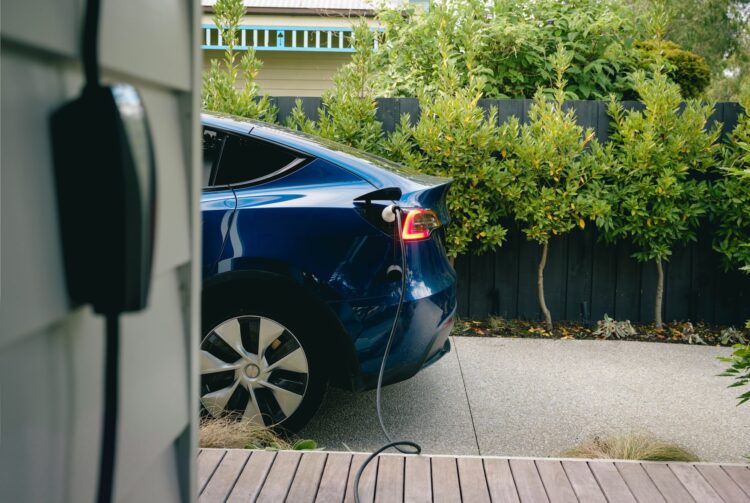
Energy retailers are now grappling with a new challenge: understanding how customers will use innovative products after bringing them into their homes. A notable test for this is Victoria’s upcoming Midday Power Saver offer, launching in October 2026. This initiative allows eligible households to enjoy free electricity from 11am to 2pm daily, potentially resulting in annual savings ranging from £149 to £428. Moreover, electric vehicle owners could see savings of up to £1,102 if they charge their vehicles during this free window.
The policy aims to shift electricity demand to the midday hours when solar energy generation peaks. However, retailers must navigate a more intricate commercial landscape. The Australian Energy Council has cautioned that customers may face higher prices outside the free timeframe as retailers seek to recover the costs associated with round-the-clock electricity supply. Thus, the effectiveness of this offer relies heavily on how much electricity households can shift to the free hours and their understanding of the broader pricing structure.
The Reality of Household Energy Usage
This brings up crucial questions about the actual behaviours of households. While many may sign up for what appears to be a “free power” product, they often find it challenging to rearrange their daily routines due to time constraints, lack of technology, or flexibility. Some may optimise the offer by running washing machines or charging electric vehicles, but others could miss out entirely due to work or other commitments during the designated hours.
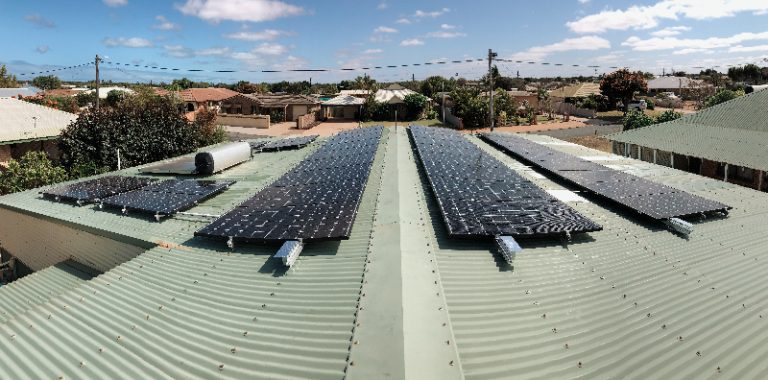
As household energy solutions become commonplace, the challenge grows more apparent. The Clean Energy Council (CEC) highlights that over 4.5 million homes and small businesses in Australia now feature rooftop solar installations. Recent figures show that in the first half of 2026 alone, there were 180,878 new solar setups and upwards of 276,000 home batteries installed.
Even amongst those who attempt to engage with these offers, behaviours may diverge from retailers’ expectations. Instead of merely shifting their energy consumption, some households might increase overall energy usage or exhibit preferences for convenience over cost savings. Many may take advantage of the free energy window to charge their batteries, thus enhancing their energy independence and decreasing reliance on retailers in the long run.
The Disconnect Between Tariff Design and Consumer Action
Recent findings also indicate that merely designing tariffs may not yield the anticipated responses from consumers. In a working paper from September 2026, Bruce Mountain analysed three years of half-hourly data from over 5,000 households across four states. The study revealed no discernible evidence that households adjust their usage based on the differential between peak and off-peak pricing. However, households equipped with both solar panels and batteries did consume approximately 13% less during peak times compared to similar households under a time-of-use tariff system; flat tariff households showed no significant difference in peak consumption.
These results imply that time-of-use tariffs may work better when combined with battery storage solutions, rather than standing alone as a means to manage demand. Emily Rubin from Amber Electric suggests that price signals can still be effective, but the benefits must be substantial. She advocates for “wholesale prices that accurately reflect energy costs and two-way network tariffs that incentivise households for shifting or exporting energy when it benefits the broader system”.
Holistic Approach to Household Energy Management
Research from Monash University’s Scenarios for Future Living project reinforces the notion of viewing households as active players in the energy market rather than mere consumers. Through ethnographic research in Victoria and New South Wales, the project highlights how people tailor energy technologies and programmes to fit their own priorities and routines. These priorities span well beyond price considerations, with an increasing awareness of factors like extreme weather, service outages, cyber threats, and fluctuating costs, all driving the demand for reliability and self-sufficiency.
As a result, households may invest in solar panels, batteries, or smart technologies to ensure essential services remain operational, even when the broader energy system falters.
Product Development and Trust as Key Challenges
This evolving landscape presents both a challenge and an opportunity for retailers to design products that resonate with actual consumer behaviours. Offers must be straightforward, adaptable to various lifestyles, and transparent about costs outside promotional periods. Additionally, retailers will require improved methods to identify which customers can effectively respond and the level of support they need, while also ensuring the offer delivers real value.
Con Hristodoulidis noted that many household batteries are still primarily set up to capture rooftop solar, which may leave their broader potential untapped. He stated, “The next frontier is flexibility: offers that reward customers for aiding the grid at peak times without excessively micromanaging their battery usage.”
Innovations in Energy Retail Services
The CEC’s Flexibility Value Study is currently exploring battery usage and potential reforms that could enhance participation, thus providing retailers insights into what offers will appeal to households. Media reports surrounding Tesla’s retail launch in Australia hint at a shift towards more automated, behaviour-responsive services. Its Tesla Electric plan combines fixed time-of-use rates with wholesale-linked compensation for solar and battery exports, while Powerwall users can earn extra credits by supporting the grid.
In a submission to the AEMC earlier this year, Tesla argued for pricing reforms that reward households for flexibility and efficiency, moving away from burdening them with unavoidable fixed costs. This approach suggests that products may perform best when technology simplifies complexity for the customer, rather than expecting them to continuously monitor prices and adjust their habits.
Amber’s model significantly reflects this automated approach. According to Rubin, “When incentives are aligned, battery storage and automation can enable households to save money without their routines needing to change.” Currently, over half of Australia’s automated batteries are opting for Amber’s wholesale pricing combined with automation, demonstrating the potential unlocked by energy offers that provide true value to households.
The most effective products will allow households to engage with energy offers on their own terms, designing solutions that respect and accommodate their everyday realities.
Speakers from Amber Electric, the Clean Energy Council, and Tesla will explore innovative products and services tailored for Australian energy retailers at the upcoming Energy Retail Excellence conference in Sydney this December.