Autonomous Solar Inspection Robots Launch in Australia for Cost-Effective PV Solutions
An innovative electric robot designed for inspecting utility-scale solar farm panels is set to debut in Australia, under an initiative backed by the Australian Renewable Energy Agency (Arena). This project is part of a broader effort to explore and implement new technologies aimed at achieving ultra-low solar costs.
On Wednesday, Arena announced the award of $25 million in funding to Equans Solar & Storage for a three-year initiative known as the Lightspeed project. This trial will explore a variety of innovations within Equans’ solar and storage framework.
Innovative Technologies to Enhance Solar Efficiency
The main goal of the Lightspeed project is to trial and integrate up to ten innovative technologies across five critical sectors: civil works, mechanical works, electrical works, operations and maintenance, as well as digital coordination. These advancements have the potential to significantly lower the levelised cost of energy from solar generation.
Currently, solar photovoltaic (PV) technology is the most economical method for generating electricity. However, Arena’s ambitious 30-30-30 vision seeks to reach 30 per cent efficiency for PV modules and reduce installation costs to 30 cents per watt by the year 2030, along with bringing the cost of solar electricity down to under $20 per megawatt-hour.
Introducing the Nextpower Ranger
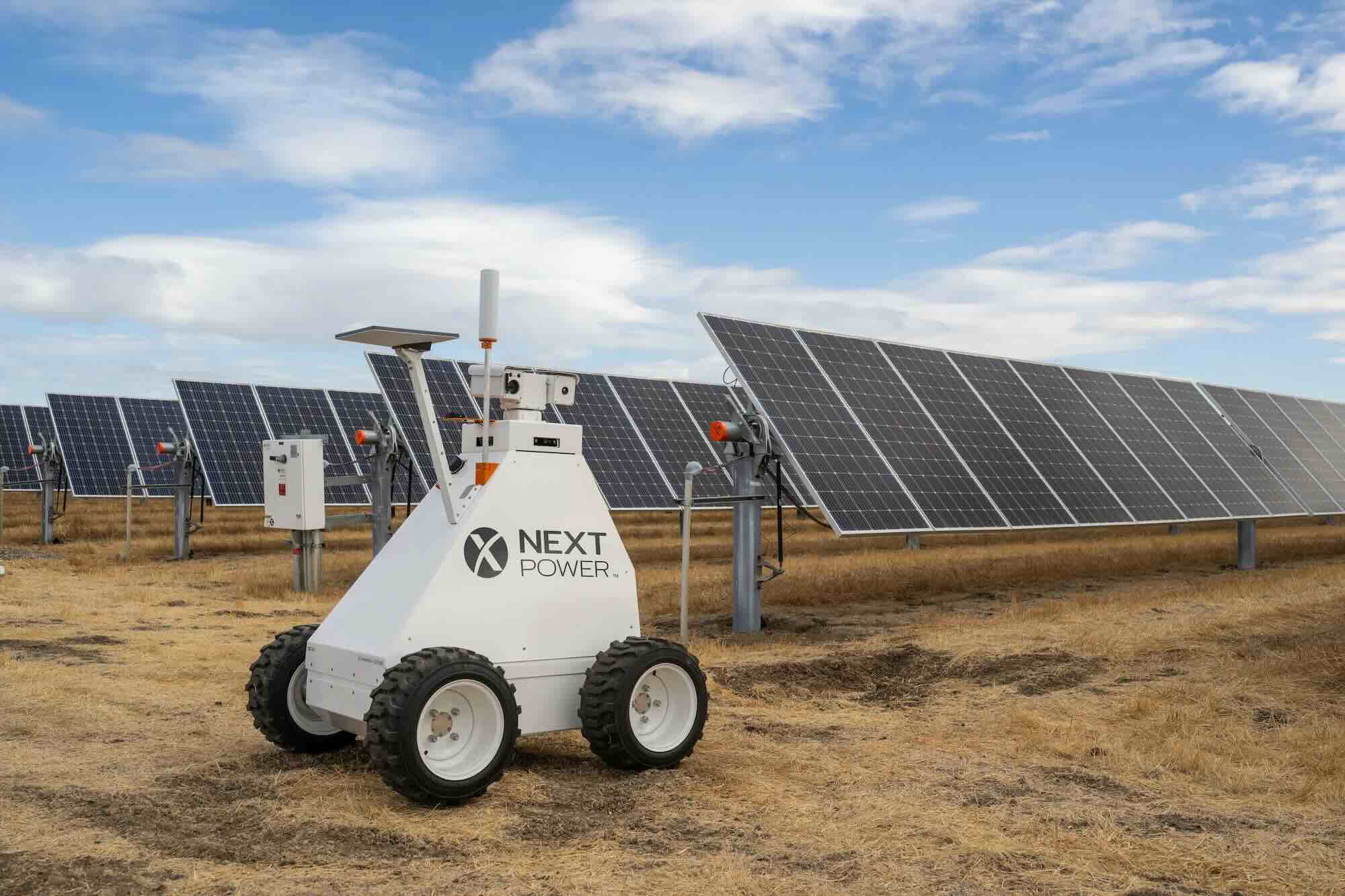
The first technology application in this project will involve the Nextpower Ranger, a fresh entrant into the expanding market of autonomous solar farm inspection robots, developed by California’s PV tracking company Nextpower.
As stated on the company’s website, the NX Ranger operates autonomously to conduct thorough inspections of solar modules, moving row by row while employing sophisticated AI and dual thermal-optical cameras to detect and signal issues.
The robot is designed to be tough and capable of navigating rugged terrains with its 4WD features, while the onboard edge AI technology allows for prompt results without delays, uploads, or uncertainties.
Building Confidence in Robotic Technology
This trial marks the NX Ranger’s inaugural deployment at an Australian solar farm, helping to showcase its advantages and bolster market confidence in such technologies. Other trials comparing robotic inspections with human assessments are ongoing, such as the CSIRO’s own robot named “Bear.”
In addition to the solar inspection robot, the Lightspeed project will experiment with other automated technologies, including construction robots and automated piling systems, that could streamline labour-intensive tasks, improve construction processes, enhance productivity, and expedite project completion.
Accelerated Technology Testing and Implementation
“By facilitating the trial of various innovative projects within a single funding framework, we can accelerate the testing of technologies in real-world scenarios and at a larger scale,” stated Arena CEO Darren Miller in Wednesday’s announcement.
This strategic method enables the faster transition of promising innovations from the conceptual stage to practical use, while fostering the sharing of experiences across the sector.
Arena has applied a similar collaborative strategy with Fortescue, providing $45 million to create a testbed for up to ten technologies within its gigawatt-scale solar portfolio in Pilbara, which is essential for meeting the mining company’s goal of achieving “real zero” emissions by 2030.
Future Opportunities for Emerging Technologies
This partnership aims to enhance the existing model, creating further avenues for evaluating, confirming, and disseminating insights from emerging technologies that can innovate the design, construction, and operation of large-scale solar projects.
“The Lightspeed Solar project, backed by ARENA, represents a fantastic opportunity to lead the way in utilising emerging technologies for site construction and operations, as well as scaling the application of automated systems,” remarked Benoit Froidurot, Equans’ innovation and development director, this week.
“With the increasing volume of renewable assets that need to be developed in the near future, along with cost reduction trends and solar energy’s grid integration challenges, robotics supported by digital technologies and AI will certainly help us achieve these objectives,” Froidurot added.