BNEF Predicts Australia Won’t Achieve 82% Renewables by 2030
A recent report has indicated that Australia may have difficulty meeting its renewable energy target of 82 per cent by 2030 if the current issues surrounding investment and development persist, along with significant downward adjustments to wind energy forecasts.
Published on Monday, BNEF’s Australia Energy Transition Outlook 2H 2026 captures the chaotic phases of Australia’s energy transformation, highlighting record large-scale solar investments, fluctuating wind energy forecasts, and an unexpectedly robust home battery market.
Investment Trends and Challenges
Despite a 3 per cent increase in coal exports and only limited progress in reducing emissions to meet both international and national targets, investment in solar and wind energy saw a remarkable rise of 341 per cent in the first half of 2026 compared to the same period the previous year. This growth was primarily supported by federal Labor’s Capacity Investment Scheme (CIS).
However, BNEF stresses that even with considerable federal and state backing for renewable energy initiatives such as the CIS and the Long-Term Energy Service Agreements (LTESA) in New South Wales, the forecast for achieving the 82 per cent target by 2030 remains bleak.
Wind Energy Forecasts and Capacity
The report highlights ongoing challenges, particularly in New South Wales, Victoria, and Queensland. Although these states are expected to dominate new solar capacity by 2035, performance in wind energy appears to be lagging. BNEF’s latest estimates for new wind capacity through to 2035 align with those from the Australian Energy Market Operator (AEMO), which forecasts a 75 per cent renewable share in electricity by 2030.
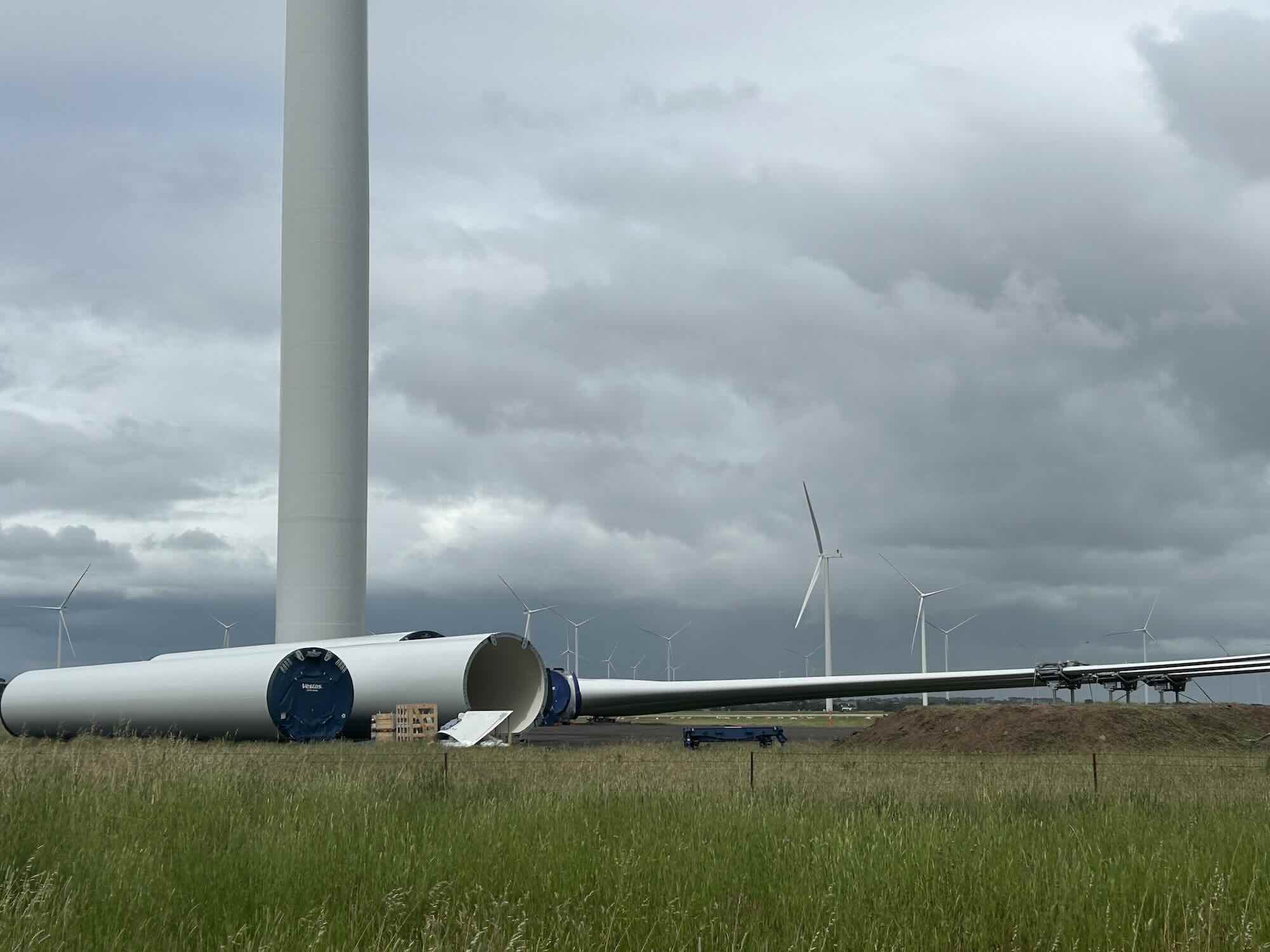
Only 252MW of onshore wind capacity was brought online in the first half of 2026, which contrasts starkly with nearly 1.4 GW of utility-scale solar capacity, raising total operational wind capacity to 14.6 GW.
Looking ahead, BNEF anticipates that 2026 could still be significant for wind additions, with four projects, including the delayed 923 MW MacIntyre Wind Farm by Acciona, expected to contribute an additional 1.7 GW of capacity by the end of the year. However, it has downgraded its long-term outlook for wind energy significantly.
Investment in Solar and Storage
BNEF now predicts that a total wind capacity of 35 GW will become functional by 2035—a 22 per cent decrease from previous estimates owing to a drought in project financing. AEMO agrees that 18 GW of this capacity is necessary by 2030 to achieve the 82 per cent renewable target, but BNEF forecasts less than 10 GW by that date.
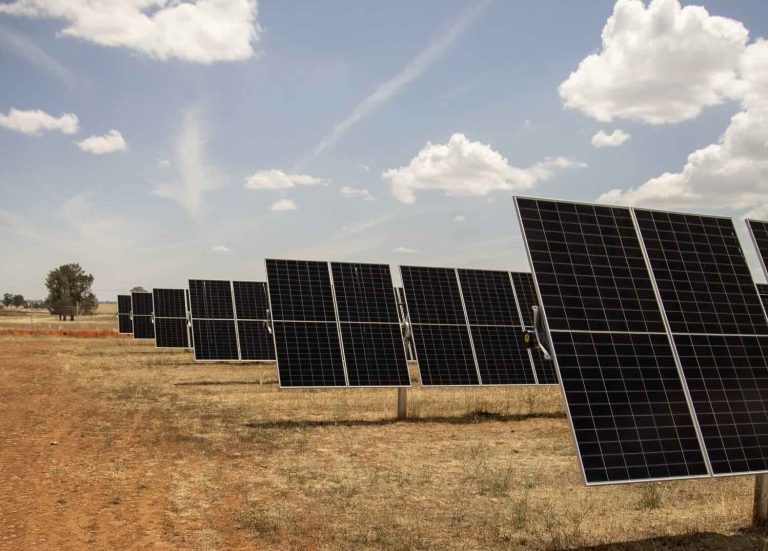
In a more optimistic development, utility-scale solar investments soared to a historic $3 billion in the first half of 2026, compared with $876 million in the final half of 2025. This surge was mainly driven by Edify Energy’s major projects and significant new solar initiatives from Fortescue.
BNEF has begun to report standalone and co-located solar investment separately, reinforcing what it calls a “clear divergence” between the two types. In the first six months of 2026, standalone photovoltaic (PV) projects comprised five of the eight financed in Western Australia, with most of the new project investment stemming from co-located projects.
Battery Storage Developments
BNEF forecasts an additional 9 GW of large-scale solar could be installed by 2030, a rise of 17 per cent from earlier predictions. By 2035, the cumulative capacity outlook has also improved by 32 per cent, now anticipating 35 GW operational or even 42 GW under the most favourable conditions.
The report highlights that record investments in large battery storage are also assisting solar growth. As solar deployment increases, batteries paired with solar installations can enhance economics and lessen curtailment issues.
In the first half of 2026, almost 2.9 GW of utility-scale battery capacity was commissioned, which amounts to a staggering 79 per cent of all installations that year, bringing total operational capacity to 9 GW. With nearly 10 GW currently under development, the market is projected to hit 37 GW by 2035.
BNEF suggests that, under its optimistic scenario, total installed capacity may rise to 27 GW by 2030, and 42 GW by 2035, driven by policy support and hybrid projects.
Curtailed Generation and Market Dynamics
The report also reveals that around 12 per cent of utility-scale solar generation and 8 per cent of wind generation in the National Electricity Market (NEM) was curtailed during the first half of 2026, up from 11 per cent and 7 per cent respectively the previous year. This increase is attributed largely to the extensive coverage of rooftop solar in the NEM, reducing the quota of generation from utility-scale renewables.
With significant implications for project revenues, especially in solar farms, BNEF flags that this issue has been most pronounced in South Australia, where 21 per cent of large-scale solar generation was curtailed in Q1 2026 alone.
Negative pricing continues to affect Australia’s electricity market, with prices dipping below zero 12 per cent of the time across the NEM, a slight decrease from the previous year’s 13 per cent. Additionally, the market experienced noticeably less volatility in wholesale power prices, largely due to increased battery storage.
Renewable Energy Contribution and Emissions Trends
According to BNEF, wind and solar contributed 38 per cent of the NEM’s electricity during the first half of 2026, an increase from 35 per cent in the same timeframe the year before. When hydro is included, this share rises to 44 per cent. The transition to renewable sources is gradually reshaping the energy mix in Australia, with the decline of coal generation marking significant progress in reducing carbon intensity.
However, BNEF cautions that Australia must accelerate both the pace and depth of its decarbonisation efforts across various sectors to fulfil climate commitments, suggesting that while national emissions have decreased by approximately 25 per cent since 2005, progress excluding certain land-use factors has only been about 4 per cent.