Solar Industry Criticizes Anti-Dumping Ruling Impacting Costs and Project Timelines
Owners and contractors behind some of Australia’s major solar projects have reached out to the federal government, urging a reassessment of a contentious anti-dumping ruling. They argue that this ruling poses a risk of delays and increased construction costs, affecting projects that are already in progress.
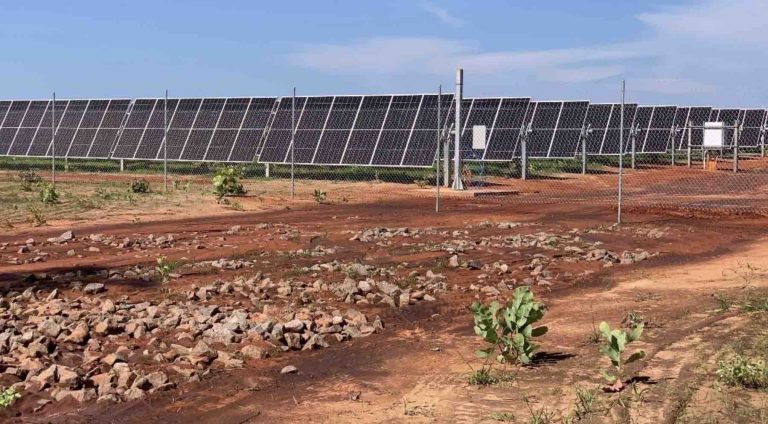
Industry Minister Tim Ayres’ decision, which surfaced in a Renew Economy report in June, threatens to implement a hefty 48 per cent duty on hollow steel tubing imported from China, Taiwan, Malaysia, and South Korea. This tubing is essential for creating torque tubes that support solar modules’ mounting systems.
Industry Concerns over Retrospective Tariffs
The ruling has caused considerable alarm within the solar sector due to its potential impact on expenses and project timelines. Compounding the issue, the measure is retroactive to September last year, which could affect several gigawatts of recently completed projects as well as those that have secured contracts and are ready to commence construction.
The ongoing dispute revolves around the hollow tubes subjected to tariffs, which are said to have been drilled by their manufacturers in Asia. Australian steel producer Orconn contends that such practices are merely an attempt to circumvent existing tariffs. However, the solar industry maintains that these components are a vital supply chain element that local manufacturing cannot currently accommodate in necessary quantities, leading them to demand a review of the ruling.
In a letter authored by solar tracking specialists Nextpower and endorsed by numerous stakeholders, there are concerns that inadequate differentiation between genuine tariff evasion and essential downstream fabrication may lead to significant collateral damage. This includes rising costs for already-funded projects, delays in construction timelines and the risks posed to financing and offtake agreements.
Impact on Investment Confidence and Future Projects
The signatories assert that failing to amend or reverse the ruling could result in decreased confidence in investments across Australia’s renewable energy pipeline. This could thwart the broader objectives of the Government, which is eager to expedite the energy transition process.
“These are not speculative risks; they are tangible consequences for projects already in development, many of which cannot simply adjust specifications or resources without incurring significant costs and disruptions,” the letter states. Prominent industry players, including developers like OX2 and Lightsource, and contractors such as DT Infrastructure and Searo Electrical, have united in this effort.
This tariff issue is the latest challenge for the renewables sector, which is battling to secure substantial long-term contracts that would facilitate financing and project initiation. Additionally, the potential removal of a capital gains discount for large-scale renewables has been postponed, much to the industry’s relief.
Concerns Over Construction Timelines
The Anti-Dumping Commission’s decision and its unwillingness to consider exemptions for solar-related products add to the frustrations felt by industry stakeholders who are striving to align with the federal government’s renewable energy targets for 2030.
European Solar is presently constructing the Winton North solar project in Victoria while aspiring to initiate Australia’s largest solar project, the 1.1 gigawatt Upper Calliope project in Queensland. According to Yannis Vasilopulos, the country director, the ruling presents additional hurdles for renewable projects, particularly concerning costs and timelines.
Highlighting the ruling’s retrospective nature, Vasilopulos expressed that it disproportionately affects projects that have already closed funding. “While we respect the committee’s mission, the ruling’s repercussions on the industry will be significant, particularly given the country’s ambitious goals,” he noted, warning that the added tariff could inflate tracker costs by 20 to 35 per cent.
Pressure on Project Financing and Delivery
John Anderson, CEO of DT Infrastructure, echoed these sentiments, indicating that the ruling could strain project financing and delay the integration of new generation capacity into the grid. “Australian manufacturing plays a crucial role in constructing the energy infrastructure we require, and while we endorse measures shielding it from unfair trade, we are concerned that these will inadvertently increase costs and lead to delays for reliant projects,” he remarked.
Anderson explained that parts are intricately designed to meet specific engineering demands, which makes simply replacing them impractical; altering suppliers or designs is time-consuming and costly. Nextpower’s call for a review aims to distinguish between genuine tariff evasion and the necessary engineering modification for components’ functional efficacy.
In its submission, prominent EPC contractor Gransolar termed the ADC’s judgment “unreasonable,” noting particular frustration over its failure to consider their previous submissions due to a miscommunication about representation by World Customs Consultants.
However, Gransolar noted that the ADC had corresponded with WCC for months prior without questioning its legitimacy. “It is telling that World Customs Consultants had multiple interactions with the ADC regarding this inquiry, yet the ADC failed to request authority from WCC to act on Gransolar’s behalf,” the company asserted.
Nextpower and industry affiliates are now calling for the reversal of this ruling, emphasising that their intent is not to undermine Australia’s anti-dumping measures but to support the fine-tuning of policies that genuinely address circumvention without negatively impacting downstream industries and infrastructure reliant on global supply chains.