Solar and Wind: Key to Australia’s Low-Cost Net Zero Future
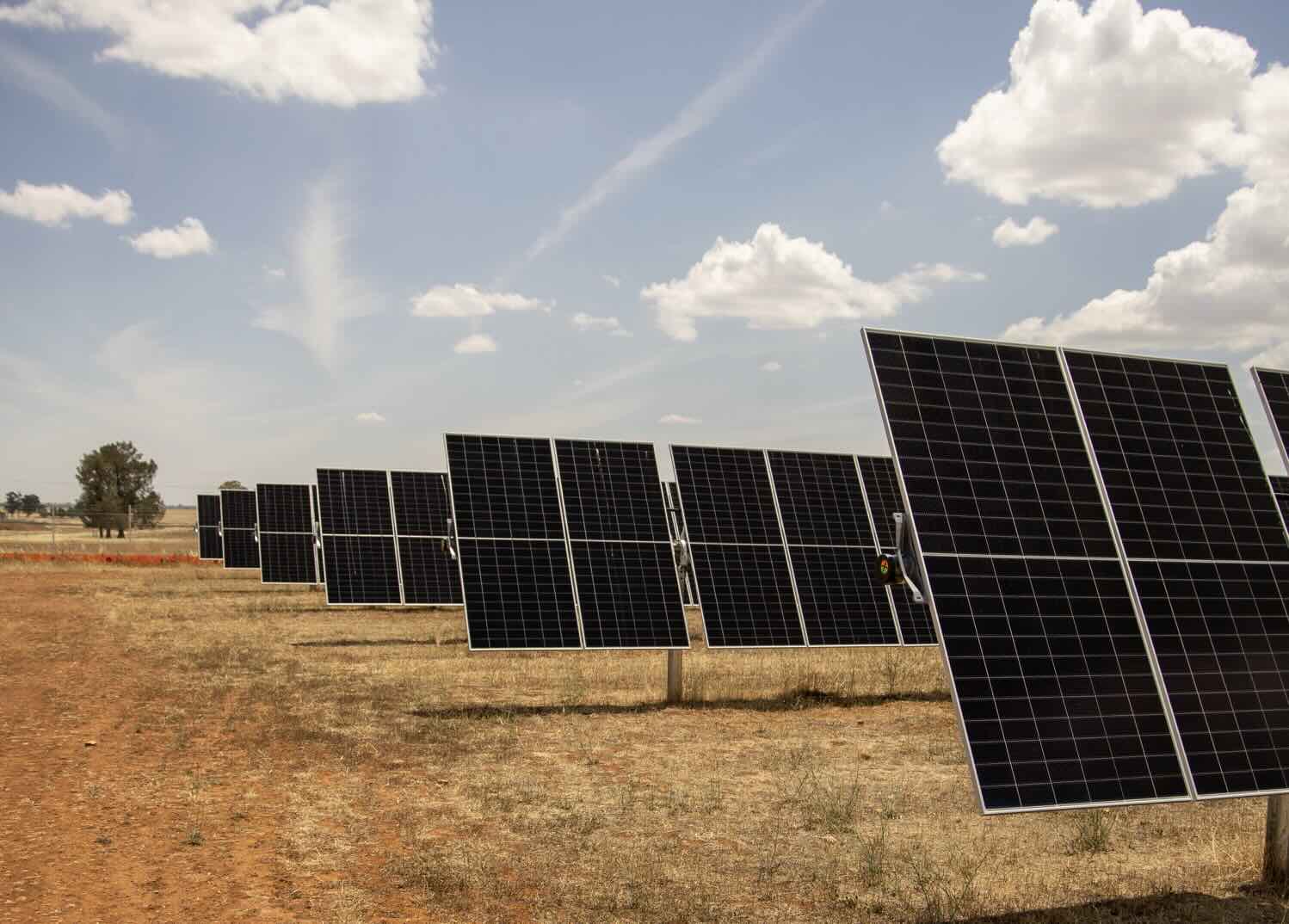
A recent report confirms that a combination of solar energy, onshore wind, and battery storage offers Australia the most economically viable route to achieving net zero emissions. This strategy promises not only to lower electricity costs in the short term but also to protect the nation’s energy market from global economic disturbances.
The final GenCost 2025–26 report, published by CSIRO in collaboration with the Australian Energy Market Operator (AEMO), marks the agencies’ eighth annual evaluation of the costs associated with new electricity generation, storage, and hydrogen technologies. This document aims to serve as an objective benchmark to assist in policy planning through to 2030 and 2050.
Cost Trends in Renewable Energy
In line with the findings of the December draft, the final report asserts that solar PV and onshore wind will contribute approximately 93% of the electrical supply needed for a net zero target by 2050. This is primarily due to the continued reduction in the levelised cost of electricity from these technologies over the coming decades.
The advancements in solar and wind energy, coupled with declining battery storage costs, led CSIRO to predict average generation costs could decrease to between £80 and £90 per megawatt-hour (MWh) by 2025, down from current forecasts of £104/MWh based on electricity futures prices in the National Electricity Market (NEM).
“We’re looking at a positive trend in the coming years compared to where we’ve started,” stated Paul Graham, CSIRO’s chief energy economist and the leader of the GenCost project. “Last year, we faced record costs of £189 per megawatt-hour. Now, we’ve managed to bring that down to £104 by 2025, and current spot prices indicate even lower rates are expected in the next few years.” This brings welcome relief for consumers across the nation.
The Impact of Battery Storage
The surge in battery installations, ranging from large grid-scale implementations to home storage systems, has played a significant role in insulating Australia from the adverse effects of the ongoing US-Israel conflict concerning Iran. “The notable aspect of this situation is the minimal impact it’s had on our electricity sector, in large part due to our reduced reliance on gas, which is supported by battery technology,” Graham explained in an interview with Renew Economy.
However, he cautioned that the continued global unrest pressures international supply chains, potentially leading to sustained inflation. This trend suggests that many other goods may not see price reductions any time soon—though solar PV and batteries might be the exceptions, encouraged by China’s continued advancements in the field.
The Future of Gas Generation
Despite the focus on renewable technologies, the report notes that gas generation will still be present in 2026. Yet, ongoing geopolitical tensions and the burgeoning data centre market are creating additional constraints on this sector. “The escalating demand for electricity due to data centres is causing prices for gas turbine technologies to rise consistently,” the report highlighted. “Costs have increased for four consecutive years and are expected to continue on this trajectory due to this sustained demand.”
Graham pointed out the implications of this development for Australia’s data centre energy strategies. “New gas plant components generally have a waiting period of three to four years, which raises questions about the suitability of gas for powering data centres here,” he noted.
Long-Term Projections and Modelling
As they look past 2030, Graham stated that the CSIRO team has opted to use actual market data to predict costs for that timeframe while applying a new system levelised cost of electricity (SLCOE) model focused on projections for 2050. For the latter, CSIRO plans to assess the most cost-effective pathways to reducing emissions throughout the economy.
“We evaluate various emission intensity targets for 2050 alongside different technology options while bearing in mind that most alternatives to solar and wind are still largely unproven,” he added. The modelling confirms that renewables will remain integral to a cost-effective future electricity strategy.
However, reaching even moderate net zero targets may necessitate an overall increase in electricity prices due to the capital investment required to build replacement infrastructure. Interestingly, CSIRO maintains that these price hikes in the sector would occur irrespective of net zero objectives—using various energy mixes, including gas and coal, projected to reach new build generation costs between £107/MWh and £182/MWh by 2050.
The SLCOE analysis suggests that no technology, fossil or otherwise, will offer new build costs under £100/MWh. If the electricity sector optimally contributes to reaching net zero by 2050, generation costs are anticipated to be around £141/MWh to £152/MWh when accounting for firming and transmission. Excluding transmission, the costs would be roughly £120/MWh to £130/MWh, averaging £125/MWh.
“Our findings indicate that there are no options that will realistically come in under £100 per MWh. Once you factor in the costs of firming solar and wind supplies, you end up back in this price range,” Graham indicated during the interview. “Therefore, a price increase post-2030 seems inevitable, aligning with other modelling uncertainties.” He concludes that a generation cost point of £125 per megawatt-hour would enable a predominantly renewable electricity system based on solar, wind, and batteries.
Graham emphasised the importance of tracking how global circumstances and market technology trends impact generation capital costs, noting that as battery prices continue to fall and gas costs rise, battery solutions are becoming increasingly favourable as flexible generation technologies for the immediate future.
Nonetheless, the GenCost modelling reveals that gas technologies will retain a modest yet crucial role in stabilising the electricity system, contributing approximately three to seven per cent of generation capacity by 2050.