Changes to Renewable Tenders for Wind and Solar Project Success
Crucial modifications have been introduced to significant renewable energy tenders to ensure that successful wind and solar projects not only triumph in auctions but also progress to actual construction.
These adjustments have been implemented by ASL, the organisation responsible for managing key tenders in New South Wales (NSW) and other states under the federal government’s Capacity Investment Scheme (CIS).
NSW Takes Steps to Shift to Renewable Energy
The changes are set to initially take effect in NSW, which is once again conducting its own tenders to guarantee capacity for replacing its ageing coal-fired generators, all of which are scheduled to retire in the coming decade.
The industry remains eager to see if these changes will be widely adopted in the remaining CIS tenders, addressing a fundamental issue with the current tender framework: the rising costs of wind energy and the shortage of corporate and utility buyers have resulted in inadequate underwriting arrangements necessary to facilitate actual construction.
Challenges in the Wind Energy Sector
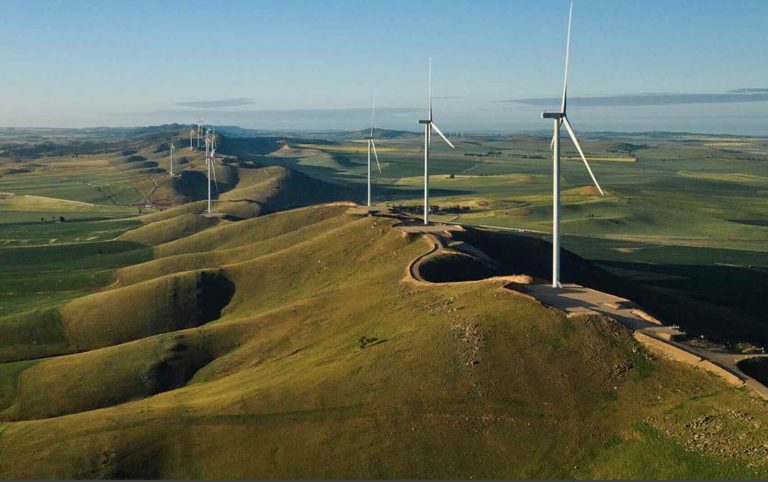
Out of the 31 wind projects that received underwriting agreements under the CIS, few have progressed to financial closure or construction, with only three projects moving forward – Palmer and Carmody’s Hill in South Australia, and Waddi in Western Australia.
Since NSW has fulfilled its capacity allocation under the CIS, it is resuming its own auctions, awarding at least 2.5 GW of capacity in an ongoing auction and another 2.5 GW in a later auction this year.
However, the state has struggled with getting projects to the financial closure and construction stages, especially with wind initiatives. Currently, only one wind project is under construction in NSW – the Uungula project in the central west, initiated by Andrew Forrest’s Squadron Energy.
New Tender Design for Better Project Viability
A significant shift in the tender design means that ASL will now focus on assessing bids based on best value rather than merely the lowest price. This aims to ensure that projects possess the revenue certainty needed to secure financing and proceed to construction.
ASL CEO Nevenka Codeville stated during a recent market briefing, “We cannot wait until coal retires for price signals to stimulate investment. We need the investment to happen now.” She encouraged market participants to bid competitively to secure necessary support for construction rather than simply aiming for excess profits.
Addressing Market Challenges
Thimo Mueller, ASL’s head of commercial, highlighted ongoing challenges such as cost pressures, supply chain issues, and network connection risks that project developers are facing. “The constraint in NSW is not the project pipeline. The challenge is conversion: taking projects from pre-FID to financial close, then construction and ultimately operation,” he remarked, noting that the next phase of the Roadmap aims to facilitate this conversion.
Shifting Market Dynamics and Future Goals
Mueller further pointed out the changing market environment from when the last Generation LTESA tenders were conducted, with corporate Power Purchase Agreements (PPAs) harder to come by and inflationary pressure impacting project feasibility. He stated, “LTESAs priced at debt break-even will not deliver what NSW needs,” emphasising the necessity for reasonable project returns to be embedded in future tenders.
Moreover, he indicated that evaluations will now be based on the developers’ ability to efficiently bring projects to market. “Bidding competitively does not mean bidding unrealistically low. It means bidding just enough to get the project built,” he clarified.
Anticipating Changes in Federal Tenders
Market analysts suggest that these updates are aligning the NSW tenders more closely with the successful contract for difference model seen in previous ACT auctions. There is keen interest in how these changes will translate to the federal scheme aimed at achieving 40 gigawatts of new capacity by 2030, especially as progress has been slow, with only a few gigawatts started under the CIS.
Battery storage, on the other hand, has not faced significant barriers due to its multiple revenue streams, decreasing costs, and modular design. However, the new emphasis on value and buildability will also extend to long-duration storage solutions in NSW, particularly focusing on facilities that can provide eight hours or more of storage.
In contrast to the NSW auctions where ASL sets the rules, in the federal scheme, the federal department determines the guidelines despite ASL’s management role.
Matthew Brine, secretary of the federal department of Climate Change, Energy, the Environment and Water, recently reported that 14 CIS projects have reached financial closure, with 33 more anticipated by year-end, covering solar and battery storage.
“While we are seeing some progress… we would like to see much faster progress,” he stated, expressing the department’s intention to prioritise the deliverability of projects within the tender process and actively manage CIS contacts to ensure progress meets expectations.