Pilbara’s Giga-Scale Wind and Solar Project Submits Final Planning Application
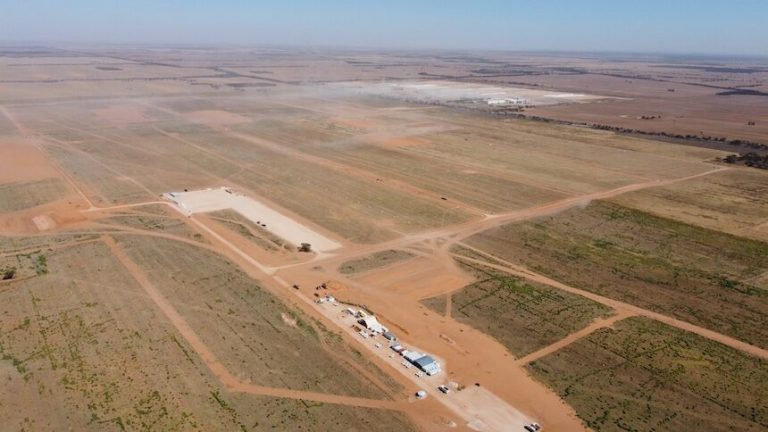
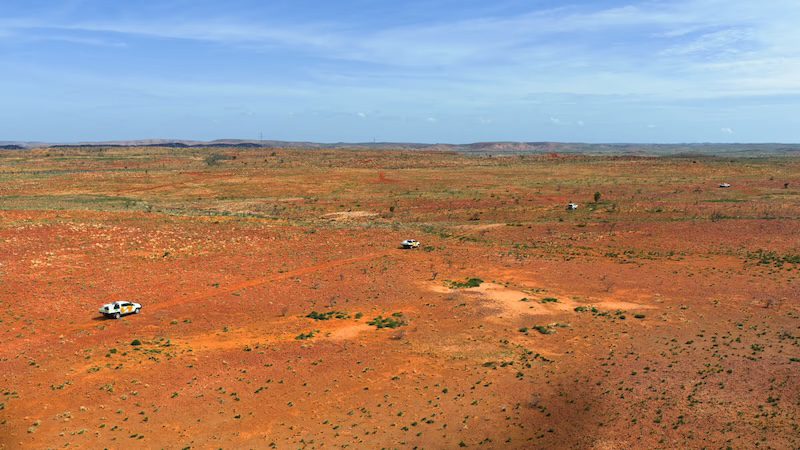
A significant renewable energy initiative, boasting a combined capacity of 1.5 gigawatts (GW) from wind, solar, and battery sources, has submitted its final planning application in the Pilbara region. This ambitious project, named Baru Marnda, is spearheaded by the First Nations group Yindjibarndi Energy Corporation (YEC) and is located approximately 55 km south of Karratha, marking it as YEC’s largest undertaking to date.
The proposal encompasses up to 1000 megawatts (MW) of wind power generated by 143 turbines and an additional 500 MW of solar energy gathered from four arrays alongside a substantial battery storage system. This information was detailed in an Environmental Protection and Biodiversity Conservation (EPBC) referral submitted last year.
First Steps and Existing Projects
Earlier this year, YEC reached a financial closing for its inaugural project, the Jinbi solar farm, which has a capacity of 75 MW and is situated within the same Chichester Range transmission project area as Baru Marnda.
The Pilbara region is renowned for its highly lucrative economic landscape, driven largely by iron ore mining operations run by major companies such as BHP, Rio Tinto, Gina Rinehart’s Hancock, and Fortescue. Historically, it’s been heavily reliant on fossil fuels, but this scenario is shifting rapidly as Fortescue leads the initiative towards achieving “real zero emissions” by 2030.
Infrastructure and Development Plans
Currently, Fortescue is in the process of establishing over 2 gigawatts of wind and solar capacity, coupled with more than 4,000 MWh of battery storage to support its mining operations and electric equipment. In May, YEC disclosed that discussions with BHP were ongoing regarding supplying green energy for their operations.
The Development Application for Baru Marnda is comprehensive, addressing various factors including planning, environmental assessments, cultural heritage, water and transport considerations, bushfire risks, noise, visual impacts, aviation impacts, and land tenure. YEC has achieved Priority Project status for the 70 km Chichester Range Corridor, which has been identified as one of four essential common-use transmission areas in the Pilbara.
The proposed corridor aims to link the Maitland Strategic Industrial Area with potential renewable energy sources to the south, potentially incorporating the Baru Marnda project.
Partnerships and Future Prospects
YEC has formed a partnership with Acen Renewables, a firm based in the Philippines, to establish YEC and advance a series of projects on lands where First Nations groups possess a combination of exclusive, non-exclusive, and extinguished Native Title rights.
The goal is to reach a financial investment decision by next year, commence construction in 2028, and initiate power generation by 2031. Notably, the Baru Marnda project was initially designed as two separate projects, referenced in the planning documents for Jinbi submitted to the local council in September last year. Originally, Project Baru was set for up to 450 MW of wind capacity, while Project Marnda was earmarked for up to 600 MW, both inclusive of additional solar and battery options.
Broader Developments in the Region
The EPBC referral has amalgamated these two proposals into one larger project spanning over 42,000 hectares, which received confirmation as a controlled action in August last year. In tandem, YEC has also submitted documentation to the state Environmental Protection Authority (EPA) concurrent with the federal referral, though the process has not progressed beyond a comprehensive request for more information made in September last year.
Additionally, YEC is working on the Eastern Development Zone in the Pilbara, which is of a similar scale to Baru Marnda and located approximately 50 km from the proposed Hamersley Range transmission corridor, and 80 km from major mining operations, according to information shared on YEC’s website. This project is expected to follow a one to two-year timeline behind the Baru Marnda initiative.