Councils Urge Solar Panel Recycling to Prevent Landfill Crisis
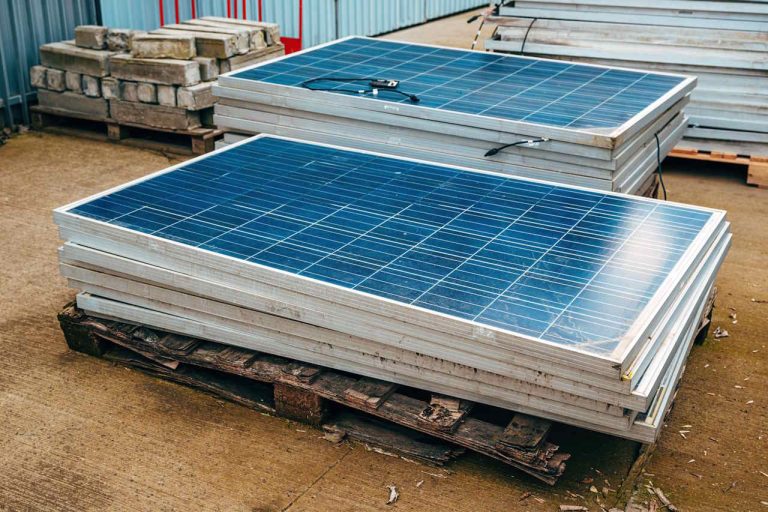
The head of Australia’s local government association has expressed serious concern over the mounting issue of discarded solar panels, arguing that sending them to landfill places an undue financial burden on ratepayers. The warning comes as councils brace for an anticipated 50 million solar panels to be abandoned by 2035, should an effective stewardship scheme fail to materialise in the coming years. Matt Burnett, the Gladstone mayor and president of the Australian Local Government Association, voiced these fears during a public inquiry this week.
Burnett highlighted the significant risk posed to municipal waste services by the sheer volume of panels, stating, “That volume of panels carries a very real risk of breaking our municipal waste services.” He made these remarks during the House of Representatives Standing Committee’s inquiry into solar panel reuse and recycling, urging that the issue at hand transcends financial burdens and reflects on the government’s commitment to prioritising community welfare in the transition towards net zero.
Delays in Recycling Pilots and Their Consequences
This week’s hearings coincide with the ongoing three-month suspension of a pilot scheme intended to bolster solar panel recycling across Australia. Originally slated to launch last month, the initiative aimed to establish 100 collection points nationwide and provide a gate fee for each panel recycled. However, it was put on hold mid-May following a complaint regarding its implementation.
Solar recyclers have expressed their dismay at the postponement, fearing that this setback will hinder progress towards a formalised stewardship scheme that would dictate the proper disposal and management of waste solar panels.
The Urgent Need for a National Policy
If a national stewardship scheme does not materialise promptly, Burnett warns that local councils will unfairly shoulder the costs associated with the disposal of old solar panels. “Local government will shoulder an unfair burden of disposal, whether that’s in landfill, dumped by the side of the road, or facing stockpile risks for their communities,” he explained. “The buck stops with local government. Communities rely on local councils to take care of their waste.”
He emphasised that this issue is not a distant problem but one that is presently impacting many areas across the country. Current council-operated landfills may appear cost-effective, yet they fail to account for the valuable resources contained within solar panels, such as silver and aluminium. Furthermore, manufacturers do not currently contribute to the costs of collection and processing.
While the federal government has allocated $24.7 million for the recycled pilot, Burnett insists that a rapid expansion of provisions is critical in order to effectively deal with what he describes as an “avalanche of panels.” He urged the federal Department of Climate Change, Energy, Environment and Water (DCCEEW) to take a stronger role in establishing a nationwide approach instead of allowing states to devise individual policies.
Seeking Consistency in Disposal Regulations
The local government association is advocating for the establishment of a compulsory national model that would promote uniformity in the disposal of old solar panels across the country. This approach would help close existing loopholes, such as the practice of circumventing Victoria’s ban on landfill disposal by transporting panels to New South Wales, where disposal is cheaper.
Chris Mohen, co-founder of Environmental Solar Recycling Australia, noted that the current situation allows those in Victoria to either pay for recycling or take a short trip to NSW to dispose of them more inexpensively, stating, “That is just too easy if that’s an option.” Mohen underscored the necessity for a national framework to prevent people from exploiting discrepancies between state regulations.
As a solution, he suggested that a fee of £10-12 for the disposal of solar panels could be reasonable and should not significantly increase costs for solar developers or homeowners.