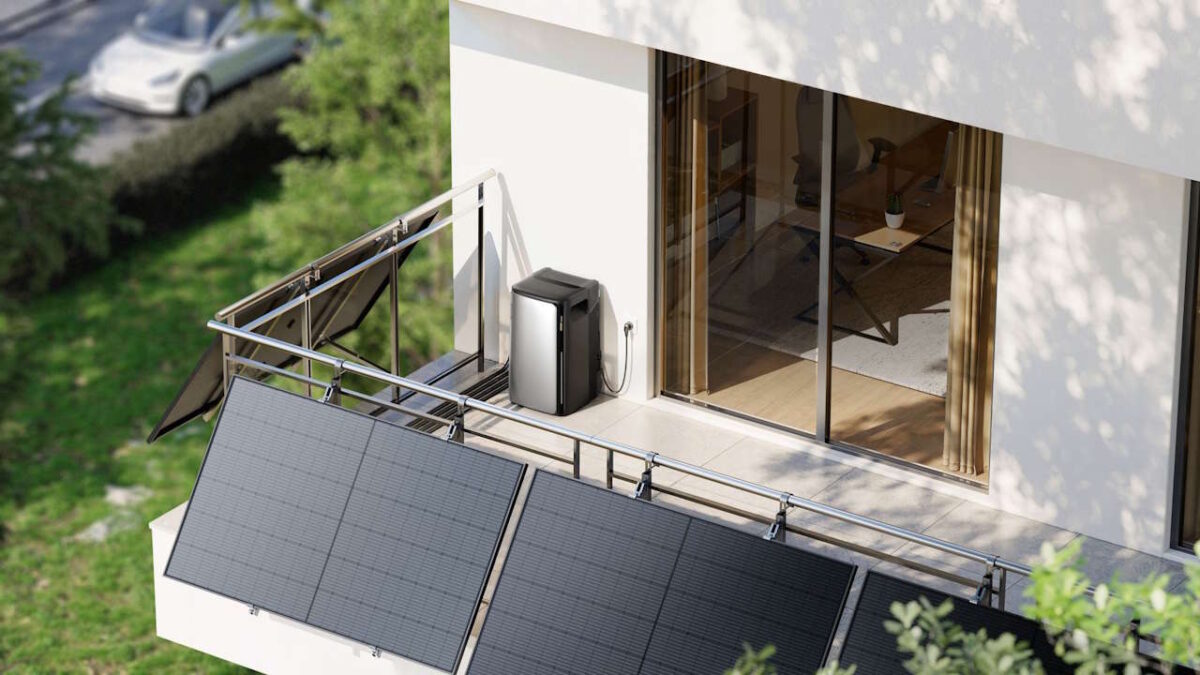
New Zealand Moves to Legalize Plug-in Solar, Outpacing Australia
The government of New Zealand is advocating for the legalisation of plug-in solar power in Aotearoa, taking a significant step towards unlocking a transformative market for distributed photovoltaic (PV) systems—potentially ahead of Australia.
Plug-in solar, often referred to as ‘balcony solar’ due to its typical application on balconies, has already seen impressive success in parts of Europe, particularly in Germany. This innovation has allowed renters and apartment dwellers, who have previously been excluded from traditional solar options, to benefit from substantial reductions in their energy bills.
Challenges in Australia
In contrast, plug-in solar remains illegal in Australia. As Glenn Morris, general manager of Smart Energy Lab, explained to Renew Economy, Australia’s and New Zealand’s electrical standards differ somewhat from those globally, particularly regarding network configurations and safety protocols.
While various state governments in Australia express willingness to remedy the legal, technical, and regulatory obstacles hindering plug-in solar and battery systems, the federal government has yet to prioritise the issue.
In-Depth Review in New Zealand
The Ministry for Regulation in New Zealand has recently concluded a comprehensive review of the country’s solar installation framework, unveiling a slew of recommendations aimed at simplifying and standardising the installation process for both households and commercial ventures.
The leading recommendation suggests the legalisation of plug-in solar—a development that the review indicates can be realised within a timeframe of nine to twelve months.
David Seymour, the regulation minister, stated, “The Report recommends legalising plug-in solar because there was no good reason for preventing Kiwis from using it. Plug-in systems can serve renters and apartment dwellers who lack access to conventional rooftop solar. If they’re suitable for Germany and the UK, they surely are for us.”
Navigating Technical Barriers
However, the report points out that existing regulations for grid-connected photovoltaic systems, such as AS/NZS 4777.1—which also applies in Australia—currently disallow the connection of PV systems through a plug-and-socket mechanism.
To facilitate the legalisation of plug-in solar in New Zealand, the review recommends targeted regulatory amendments, the formulation of appropriate safety standards, and modifications to existing safety regulations. This framework would specify permissible conditions, including essential safety standards, system capacity limits, certification requirements, and connection protocols.
Furthermore, the review notes that several electrical safety risks associated with plug-in solar have been identified, including concerns about household wiring, protection devices, and potential reverse power flow.
Uncertainties regarding how plug-in solar products would function across New Zealand’s varied housing stock—including different ages and qualities of electrical installations—are also acknowledged.
Fast-Tracking Implementation
Encouragingly, the review posits that reforms enabling plug-in solar could be implemented relatively swiftly, possibly within the aforementioned nine to twelve months. Notably, the energy minister has already initiated early steps toward determining how best to revise or establish necessary standards.
Energy Minister Simeon Brown remarked, “New Zealanders desire increased control over their energy expenses and wish to harness solar power effectively. These proposed measures will empower the public by making solar energy more affordable and accessible.”
To stay informed on the latest developments in clean energy, you can subscribe to our free daily newsletter, which is already reaching over 29,000 subscribers.