Australia’s Renewable Energy Projects Lag Behind 2030 Goals, Report Warns
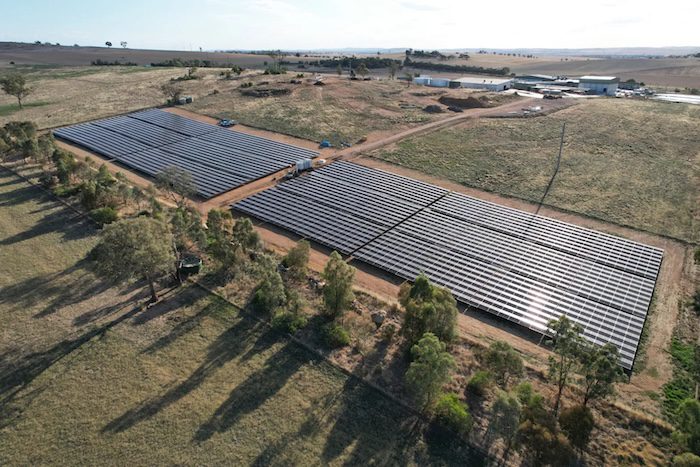
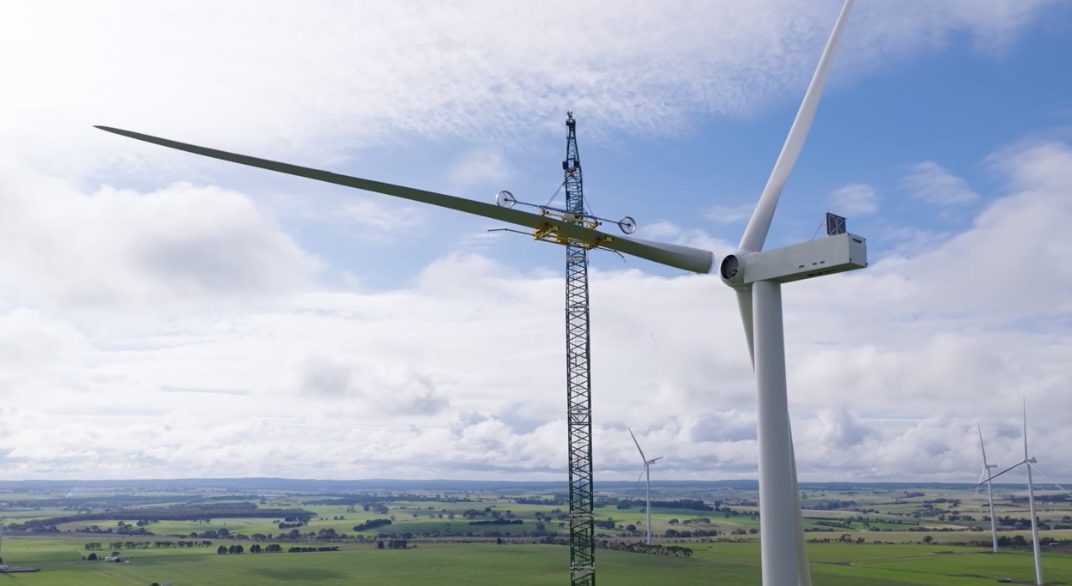
A recent report highlights that although Australia possesses ample renewable energy and battery projects necessary to reach its 2030 goals, the nation may still stumble unless the pace of construction accelerates.
The Institute for Energy Economics and Financial Analysis (IEEFA) released this cautionary message on Wednesday within its renewable energy report card, which unveiled that an additional $44 billion in investments could be tapped into if the approved projects transition smoothly into construction.
Current Renewable Energy Landscape
This optimistic outlook comes in light of record amounts of wind and solar energy flowing through the National Electricity Market, along with a significant uptake of rooftop solar and battery systems by both households and businesses.
Utilising data from Green Energy Markets, the Australian Renewable Energy Scorecard assessed the quantity, scale, and current status of large-scale renewable energy initiatives across all states and territories, with the exception of the Northern Territory.
The analysis measured these initiatives against Australia’s ambitious target of sourcing 82 per cent of its electricity from renewable means by the year 2030.
Project Readiness and Construction Delays
The report illustrates that Australia has far more solar and wind projects in the pipeline than what is necessary to fulfil this target, along with an abundance of projects already fully approved.
Tristan Edis, chief executive of Green Energy Markets, remarked that a considerable portion of these pipeline projects possess both environmental and planning approvals—33,993 megawatts (MW) of solar and 17,340 MW of wind—with authenticated approvals across both the primary national grid and the main grid in Western Australia.
However, IEEFA’s electricity lead analyst, Johanna Bowyer, pointed out that a minimal number of these projects are currently under construction, despite the potential for them to take up to four years to commence operations. “Projects which are in the construction phase will still be drastically insufficient to meet the necessary targets by 2030,” she noted.
Bowyer further explained that in numerous states, less than 10 per cent of the required new wind and solar capacity is being developed, while even the most proactive states have only about one-third of the new needed capacity in the construction phase.
Barriers to Progress
The principal obstacle identified is the scarcity of power purchase agreements, which are contracts allowing consumers to buy renewable energy from specific projects for a period of up to 15 years, as detailed in the report.
Edis acknowledged that government initiatives have facilitated the progression of various projects; however, these schemes alone do not provide sufficient backing to bring them to fruition.
The report also indicates that the Capacity Investment Scheme and underwriting initiatives in New South Wales (NSW) have not been particularly effective in catalysing the transition of renewable energy projects to a state of active construction or operation.
“Our findings indicate that the absence of long-term power purchase agreements presents a significant hurdle in advancing projects to the construction phase,” Edis stated. “If large energy consumers do not secure more agreements, many fully approved projects will remain idle.”
Investment Potential from Data Centres
The report posits that if these sanctioned renewable energy projects move forward into construction, they have the potential to infuse an extra $44 billion into the economy.
One promising avenue for securing agreements could come from data centres, as the Australian Energy Market Commission suggested that developers invest in renewable resources to satisfy their energy requirements.
Additionally, the report card notes that NSW and Queensland boast the most substantial pipelines of proposed renewable energy and large-scale battery schemes. These two states, along with South Australia, also lead the country in terms of installing the largest rooftop solar systems, although Tasmania has made notable progress as well, particularly in the second quarter of 2026.