Australia’s Largest Wind, Solar, and Battery Hybrid Project for Gold Mines
The developer behind what is poised to be the largest wind, solar, and battery hybrid project in Australia has commenced the regulatory process necessary to secure a licence for power sales to one of the nation’s major open pit gold mines.
Zenith Energy, recognised for its expertise in off-grid renewable hybrid systems that have significantly reduced diesel dependency in various mining operations, is planning to implement a more extensive hybrid system for the Kalgoorlie Super Pit joint ventures. This new system is expected to achieve an impressive 70 per cent renewable energy utilisation.
Project Specifications and Capabilities
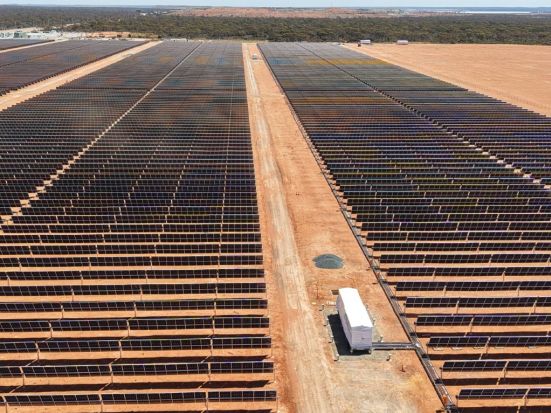
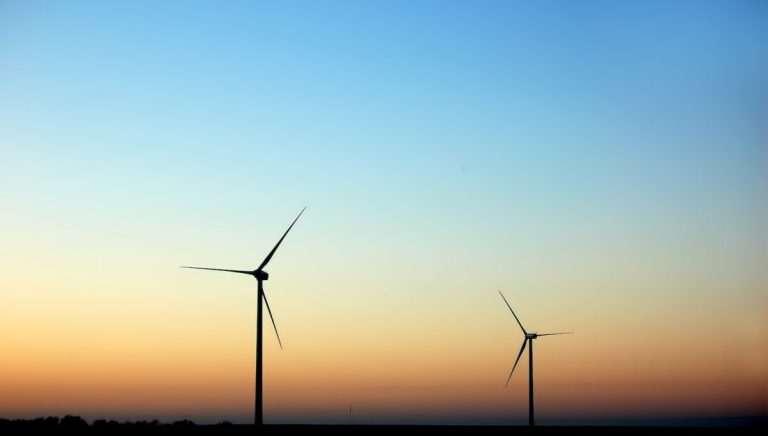
The proposed system will integrate a substantial 256 megawatts (MW) of wind energy, 110 MW (ac) of solar energy, along with 138 MW and 300 MWh of battery storage capacity. Furthermore, the upcoming 8 MW Goldwind turbines are set to surpass the current 7.8 MW turbines being installed at Fortescue’s Nullagine wind project and Neoen’s Narrogin project, making them the highest capacity turbines in Australia.
Supporting Infrastructure and Benefits
The Eastern Goldfields Power Project is being developed for North Star Resources and its joint venture partners, specifically tailored for operations at the Kalgoorlie super pit gold mine and associated ventures. While it will remain connected to the main electricity grid, the primary purpose is to supply the energy needs of the mining operation. This initiative is a response to the escalating costs and reliability issues associated with existing power sources, further supplemented by a new dual-fuel thermal plant (gas and diesel) consisting of 10 Wärtsilä 20V31DF generator units.
Zenith Energy has consistently achieved over 70 per cent renewable energy rates for various off-grid mining clients using smaller hybrid systems. For instance, during the March quarter, they reported an impressive 95.7 per cent renewable energy usage at the Mt Weld rare earths mine owned by Lynas Rare Earths, which is ironically supported by Gina Rinehart, Australia’s wealthiest individual and an opponent of renewable energy.
The hybrid system at Mt Weld managed to save 870,000 litres of diesel in just one quarter, whereas another project located at the Bellevue Gold mine recorded 155 hours of continuous operation entirely on renewable energy, utilising wind, solar, and battery storage.
Impacts on the National Energy Landscape
Zenith’s CEO, Hamish Moffat, commented last week on the national energy discourse, stating, “The national energy debate is often focused on future targets and long-term pathways.” He added that the successful operation of high-renewable energy systems in demanding environments showcases their viability at commercial scales today.
“These sites cannot afford instability or interruptions. Demonstrating that high-renewable energy systems can reliably function in remote mining operations expands the conversation about what is feasible both technically and commercially across the broader economy,” he noted.
Challenges in the Kalgoorlie Region
Reliability has been a persistent concern in the Kalgoorlie region, largely due to its reliance on a single transmission line connecting to the state’s primary electricity grid. Additionally, thermal generators in the area have occasionally failed to start when required, exacerbating the situation. To address these challenges, the state government is also backing a significant battery project and is keen to nurture the emerging vanadium mining sector, having issued calls for bids for a 50 MW, 500 MWh vanadium flow battery to bolster the region’s electricity stability.
As the Eastern Goldfields power project takes shape, it is set to be the largest of its kind in Australia, only to be potentially surpassed in scale by Fortescue’s ambitious initiatives in the Pilbara region aimed at its iron ore operations.