Accelerating Project Approvals to Control Electricity Prices
Australia’s recent investments in renewable energy and storage are yielding significant benefits. The National Electricity Market (NEM) has witnessed a drop in wholesale electricity prices, primarily due to a rise in renewable energy output and battery systems providing power during peak times. In the face of a national affordability crisis, it is crucial to sustain this momentum.
Although wholesale prices are declining, it takes time for these savings to be reflected in consumer bills. Currently, electricity prices for Australian households hover just above the OECD average when factoring in living costs. To ensure electricity remains affordable as demand increases, ongoing investments are essential.
Forecasting Electricity Demand and Legislation Changes
The Australian Energy Market Operator’s (AEMO) Integrated System Plan, looking ahead to 2026, anticipates that consumption within the NEM could nearly double by 2050. This increase will be driven by electrification and the growth of data centres. In response to this burgeoning demand, proposed federal legislation urges data centres to invest in new renewable energy sources to balance their consumption.
New energy supply initiatives also align with Australia’s aim to achieve 82 per cent renewable electricity generation on the grid by 2030. In the third quarter of 2026, renewable sources accounted for a record 44.3 per cent of NEM generation up until September 30. Ensuring that projects are executed swiftly and cost-effectively is vital to meet this demand.
Streamlining Approvals to Accelerate Project Delivery
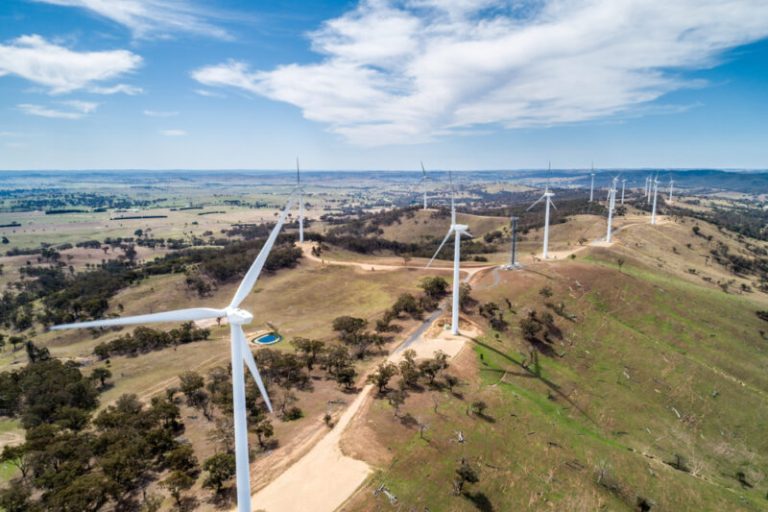
According to RenewMap’s analysis conducted in June 2025, the average duration for planning approvals was found to be 34 months for onshore wind projects and 16 months for solar initiatives. Approvals under the EPBC Act averaged 17 months for wind and eight months for solar. Certain environmental clearances, however, can extend for five years or longer.
As of September 2026, 59 per cent of wind projects were awaiting approvals, while a quarter of solar projects faced similar delays. Such procrastination engenders investor uncertainty and hampers supply development. Enhanced data and modern technology can assist while still upholding environmental protection through three distinct phases.
Improving Processes with Enhanced Data
The first step involves refining the process and data acquisition. The recent Samuel Review highlighted the fragmented nature of environmental information, which is often hard to access and frequently locked away in PDFs. To remedy this, a national standard was recommended to improve the quality of the evidence behind decision-making processes.
The newly established National Environmental Standard for Data and Information, introduced in August 2026, mandates that the information used be “representative, transparent, comparable, reusable, and ethical.” Sharing geospatial data can implement these standards practically, enabling project proponents to identify sensitive locations early and minimising unnecessary information requests.
Utilising AI for Efficient Assessments
The second phase is deploying artificial intelligence to pinpoint gaps in applications before they delay assessments. Broader planning initiatives provide valuable insights for streamlining energy project approvals. New South Wales (NSW) is investing up to $17 million to facilitate State Significant Development assessments through a planned tool that checks application documents against existing planning regulations, signalling any missing information.
Following the wildfires in Los Angeles in 2025, California introduced an AI plan-check tool for residential rebuildings that evaluates designs against zoning and building codes prior to submission. Although energy projects have varying requirements, early detection of application gaps can significantly reduce time spent on revisions.
Integrating Project Contextual Assessment
The third phase revolves around evaluating projects within their actual environmental context. The NSW Spatial Digital Twin is already aiding renewable energy planning, while Western Australia’s Environment Online facilitates environmental assessments.
By integrating project designs with environmental evidence, agencies can assess impacts across multiple locations and throughout the stages of construction and operation. This approach allows project proponents to identify potential conflicts and weigh alternatives sooner, while regulators can understand how design modifications may influence environmental impacts. This may lead to fewer requests for clarification, decreased need for redesigns, and a reduction in repetitive submissions, all while keeping authority accountability intact.
The economic advantages of leveraging better data and technology for energy infrastructure are becoming increasingly apparent. For instance, engineers on the Ohio River in the United States efficiently utilised a digital twin to assess two deteriorated transmission towers, demonstrating the feasibility of retrofitting instead of replacement. This strategy could potentially save up to 10 years in permitting time and around $80 million in replacement expenses.
To keep electricity prices manageable, it is imperative to expedite the construction of new infrastructure. By harnessing improved data and more intelligent approvals, the delivery process can be accelerated through early problem identification, reduced redundancy, and clearer evidence for regulators, all of which reinforce environmental safeguards and build community trust into the framework.