Victorian Midday Power Saver: Save on Electricity with Free Power Hours
The Victorian Labor government has clarified essential details regarding its Midday Power Saver initiative, confirming that residents can benefit from free electricity during the hours of 11am to 2pm. This announcement follows the recent reduction of default electricity prices, which has prompted a reassessment of the potential savings for households participating in the scheme.
Back in March, the state laid out plans for its version of the federal Labor government’s Solar Sharer program, set to launch for residential customers via the Victorian Default Offer (VDO) from 1st October this year—just before the upcoming state election.
Details of the Free Power Initiative
Energy and climate minister Lily D’Ambrosio has recently confirmed the specifics of this free power scheme, indicating that households opting into the plan could see their electricity bills slashed by amounts ranging from $149 to $1,102 annually, depending on their ability to shift electricity consumption to the midday window.
The federal initiative, Solar Sharer, was introduced last November as part of reforms to the Default Market Offer (DMO). This requires electricity retailers in DMO states—excluding Victoria—to provide at least three hours of free power daily. The initial rollout of Solar Sharer will occur on 1st July, with specified free usage times of 11am to 2pm in New South Wales and South East Queensland, and 12pm to 3pm in South Australia, without any adjustments for daylight savings.
Aim of the Free Electricity Plans
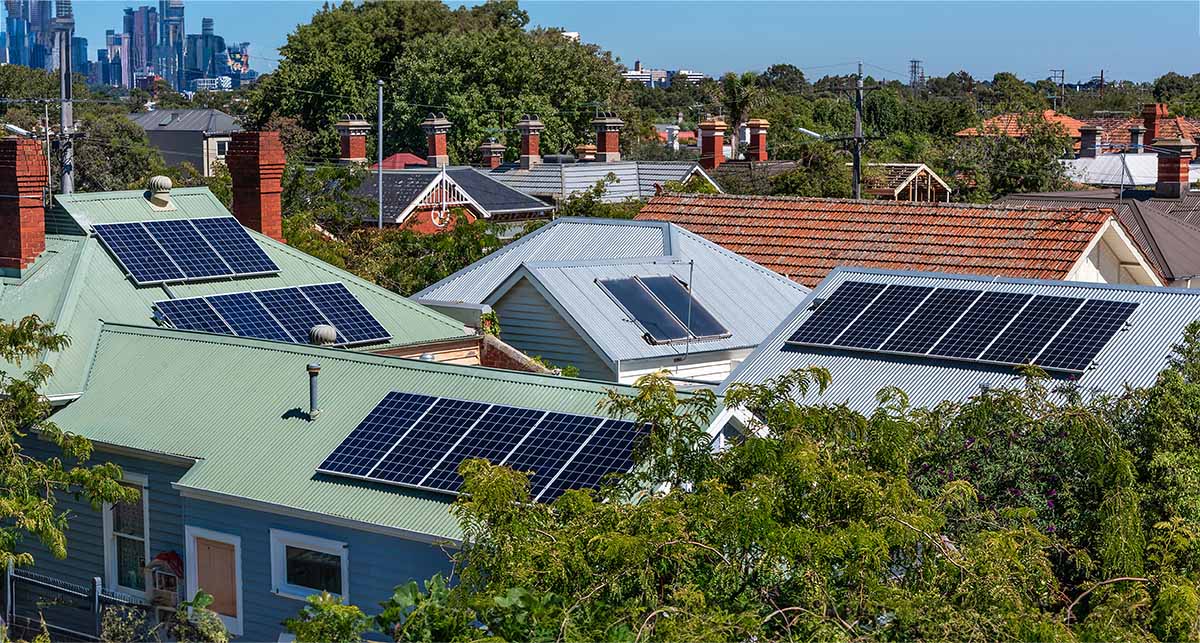
Both the Victorian and federal free power offerings aim to address energy inequality by offering the financial benefits of rooftop solar energy to those unable to install solar panels. The plans also encourage households to adjust their energy consumption to the midday period, effectively utilising the surplus solar energy that frequently overwhelms the grid. This approach is intended to reshape the discussion surrounding the green energy transition by ensuring that more citizens share the advantages of these initiatives.
This week, the Australian Energy Regulator (AER), which oversees the DMO, reminded consumers that from July onwards, retailers will be mandated to offer the default Solar Sharer as an opt-in scheme for customers with smart meters, not just those on the DMO. AER chair Clare Savage mentioned that the new Solar Sharer Offer could lead to significant savings for households that can align their power use—such as electric vehicle charging or running washing machines—with the free power hours.
Understanding the Costs and Savings
Savage emphasised that integrating the Solar Sharer Offer into the DMO provides a regulated price safety net, reassuring consumers against potential overcharges outside the designated free period. However, the AER cautioned that the Solar Sharer may not suit every household and that an opt-in agreement is necessary for participation.
Both the AER and Victoria’s Essential Services Commission (ESC) released their final determinations regarding default pricing for different states and distribution zones this week, confirming widespread price reductions aside from South Australia. According to the AER, DMO regions will experience a decrease in the residential flat-rate standing offer of between 3.4% and 5% in New South Wales, and a significant 7.2% in South East Queensland compared to the previous year.
Conversely, South Australia will see a modest annual increase of 1.4% (£33), while residential customers on time-of-use plans will benefit from a slight price reduction of 1.1% (£25), with small businesses gaining even more at 12.1% (£673) off their costs.
In Victoria, the ESC has determined that prices for domestic customers under the VDO will fall by varying amounts, up to £160 for AusNet customers and £50 for United Energy customers, resulting in an average year-on-year drop of around 5%.
Minister D’Ambrosio’s Comments
In a statement, Minister D’Ambrosio highlighted that VDO customers enjoy better rates compared to those on the average DMO in other states, with the 2026-27 VDO estimated to be £444 cheaper for households and £1,299 less for small businesses. She concluded by asserting that the Midday Power Saver would offer the most substantial package in the country, casting it as a win for the state’s 2.6 million households equipped with smart meters.
However, there are important stipulations regarding the Victorian Midday Power Saver scheme. Consumers should be aware that prices outside the free hours may be somewhat higher, and actual savings will largely depend on their capacity to shift energy usage from peak periods to midday.
To participate in the Midday Power Saver, customers are advised to connect with their electricity retailer starting in October to ensure the offer aligns with their energy needs. Retailers will be required to provide information about potentially more suitable plans, highlight that the Midday Power Saver might not be appropriate for everyone, and outline the impact of the new tariff structure, including possible cost estimates.
For ongoing updates and insights into clean energy, over 29,000 subscribers receive the latest news delivered to their inbox for free. Support for independent media and accurate reporting is encouraged, whether through a one-off donation or as a regular supporter of Renew Economy.