Unlocking Rooftop Solar: Overcoming Barriers for C&I Power Stations
A recent report from the Smart Energy Council (SEC) reveals that delays in grid connections and skyrocketing costs are hindering commercial and industrial (C&I) customers from enjoying the advantages of solar and battery storage solutions. These issues have created a multitude of obstacles that need addressing.
The report, titled “Unlocking the Missing Middle,” identifies Australia’s strong performance in residential and large-scale solar, but indicates that mid-sized C&I projects are hampered by outdated regulations, sluggish grid connection approvals, diminishing rebates, and disputes between landlords and tenants.
Identifying the Problematic Segment
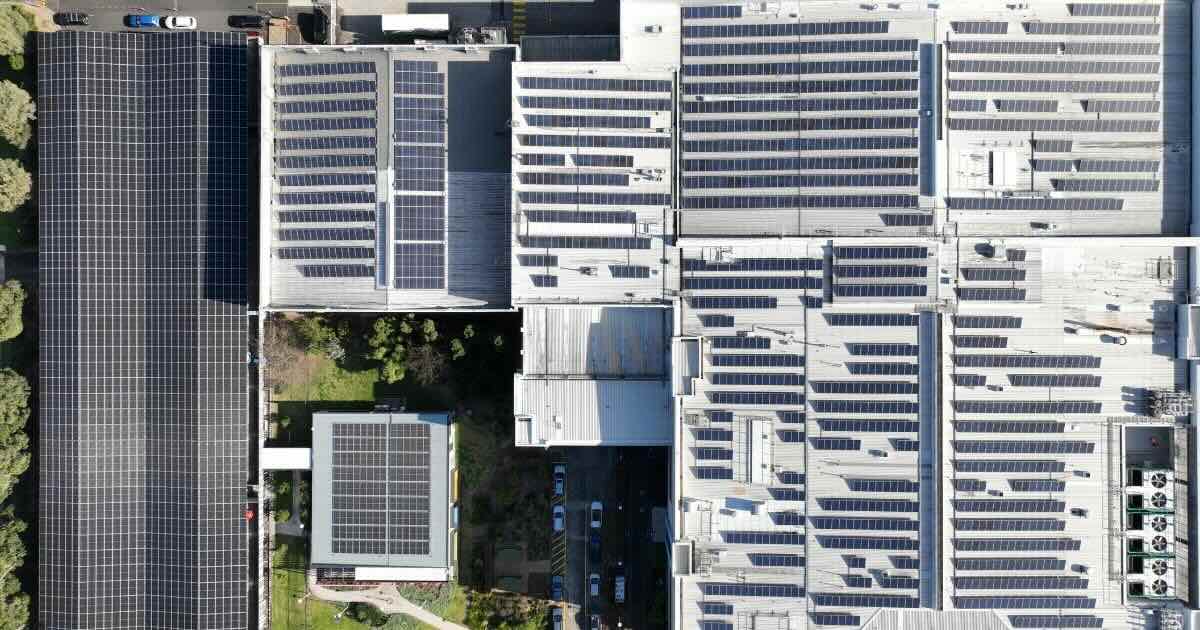
Focusing on installations ranging from 100 kilowatts (kW) to 30 megawatts (MW) for rooftop solar, the report emphasises that these systems do not qualify for residential subsidies like the Small-scale Renewable Energy Scheme (SRES) and are too small for utility-scale generation incentives.
This gap in effective policy, combined with various investment and regulatory challenges, is preventing countless businesses from reaping significant savings through solar and battery solutions. Additionally, it poses a risk to the broader energy transition efforts in Australia.
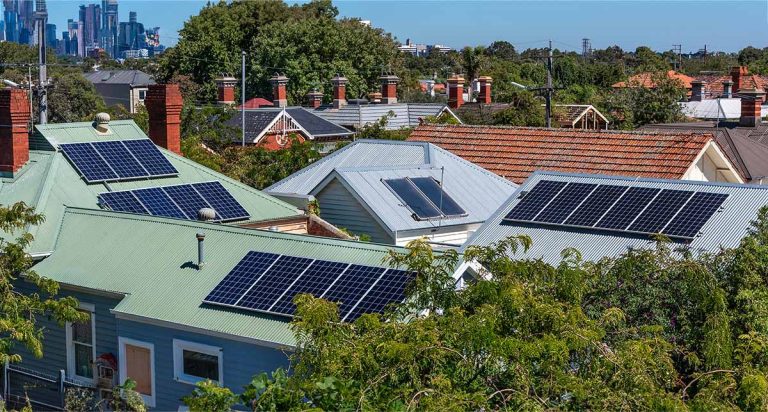
David McElrea, chief of SEC, stated, “Australia is sitting on a rooftop power station the size of ten coal plants. It is time we switched it on.” He lamented that the nation is engineering a lack of investment into its clean energy switch, one rooftop at a time.
Surveyed Experiences and Concerns
The findings of the report are based on over 80 studies, a survey involving 61 SEC members, and 10 expert interviews. It highlights that slow approval times from network companies remain a significant hurdle, with grid connection processes taking up to five months instead of the typical 5-10 business days.
Notably, 71% of survey participants noted the length of DNSP approval as the prime barrier to connection, while 82% pointed to variable connection requirements as a particularly inconsistent governance issue.
In one striking case, the SEC learned about a community energy project whose initial grid connection estimate of $250,000 ballooned to a staggering $1.6 million after the necessary feeder upgrades were completed. Another instance involved a late-discovered requirement for a distributed energy resource management system, adding unforeseen costs that could jeopardise similar projects.
Lack of Policy and Framework Support
The report indicates that the C&I sector is currently lacking a cohesive policy framework to encourage investments in solar and battery technology. The existing SRES scheme stops at 100 kW, and the certificate prices under the Large-scale Renewable Energy Target (LRET) have plummeted to just $3-$4 per MWh from previous levels of $20-$30.
State initiatives, with the notable exception of New South Wales’ recent revamp of the Peak Demand Reduction Scheme (PDRS) aimed at the C&I market, have primarily focused on residential batteries, community energy initiatives, or large-scale projects.
Lease agreements are another source of confusion, as nearly 75% of respondents noted that cost-sharing disputes between tenants and landlords significantly impede progress. An interviewee representing landlords mentioned that power purchase agreements (PPAs), which are often proposed as solutions to tenant-landlord conflicts, are ineffective since most tenants don’t occupy premises long enough to justify the agreement length.
Investing Challenges Amidst Diminishing Costs
Consequently, many C&I businesses struggle to justify investments in solar and battery systems, even as technology costs continue to decrease. The report states that several interviewees highlighted that companies are weighing solar investments against other capital expenditures, such as upgrades to production lines, and solar often loses out if payback periods extend beyond three to four years.
Moreover, electrification pressures, particularly commitments from governments and large tenants to eliminate gas usage and promote electric vehicle charging, are proving to be more influential in lease negotiations than the financial prospects of solar or storage investments on their own.
The report also illustrates a stark contrast in savings between urban and remote settings. A 2 MW solar system paired with a 7 MWh battery located in an urban area (with a tariff of 15 pence per kWh) yields only 8% savings, equating to around £150,000 annually. Conversely, the same system deployed in a remote area and replacing diesel (at 45 to 60 pence per kWh) presents a much stronger economic justification.
Proposed Solutions for Progress
To rectify these disparities, the SEC urges federal energy minister Chris Bowen to form a national taskforce within six months to implement five pragmatic solutions. These recommendations include expediting network approvals and enforcing strict connection deadlines, reforming pricing structures, restoring rebate supports, raising SRES limits beyond 100 kW, standardising lease models to ensure equitable cost sharing, and enhancing grid data accessibility for stakeholders.
The SEC also proposes a Medium-Scale Renewable Energy Scheme (MSRES) that would establish performance-based certificates for installations between 100 kW and 30 MW, with a target floor price of £20-£25. Additionally, they suggest extending the SRES to at least 1 MW, eliminating the frustrations caused by the “100 kW cliff edge.”
Another recommendation is to adopt a “German-style” export-capped model for systems between 135-500 kW, which would help alleviate DNSP workload, bolster grid stability, and unlock potential for mid-scale rooftop solar.
The report concludes that Australia’s C&I sector is significantly under-investing in distributed solar, battery storage, and electrification relative to its potential, attributing this primarily to policy and regulatory barriers rather than technological ones. The economic fundamentals for many C&I projects are solid and improving, but investment enthusiasm is being curtailed by connection delays, threshold inconsistencies, split incentives, and an uncertain policy landscape.